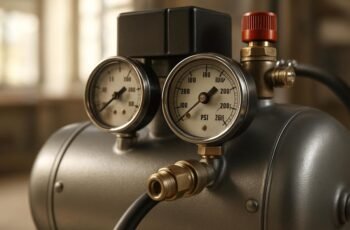
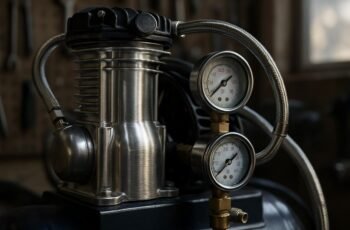
We don’t want to claim certainty where it isn’t: tank size must align with peak CFM, pressure, and duty cycle for a stationary compressor. We’ll break down how a larger tank smooths surges and reduces cycling, while a smaller one minimizes weight and response time. If you’re balancing steady use against tool demand, the reasoning behind mid-to-large options often matters most. Let’s examine real-world setups and why the choice can shift with your workload.
Key Takeaways
- Match tank size to anticipated peak CFM at target PSI to ensure adequate storage for tools.
- Larger tanks smooth demand, reduce compressor cycles, and improve stability under heavy use.
- Smaller tanks allow faster response to demand changes but require more frequent recharging.
- Consider duty cycle, startup surge, and regulator settings to optimize charge-discharge balance.
- Balance tank longevity and heat dissipation with your typical usage pattern and maintenance plan.
What a Tank Does for Your Air Supply
A tank serves as a buffer between the compressor and your tools, storing compressed air so the system can meet intermittent demand without frequent cycling. We explain how this buffer shapes supply stability and system efficiency. The tank acts as a reservoir that smooths pressure fluctuations, reducing start/stop cycling and allowing the compressor to operate at a steadier load. This steadiness translates to improved tool performance and reduced energy waste. We assess tank durability as a design priority, considering material quality, pressure rating, and geometric integrity to minimize failure risks. Maintenance cadence becomes critical; regular inspections and timely venting, drainage, and corrosion checks prevent moisture buildup and performance degradation. By prioritizing durability and disciplined maintenance, you preserve consistent air delivery and extend component life.
Key Metrics: CFM, PSI, and Duty Cycle Explained
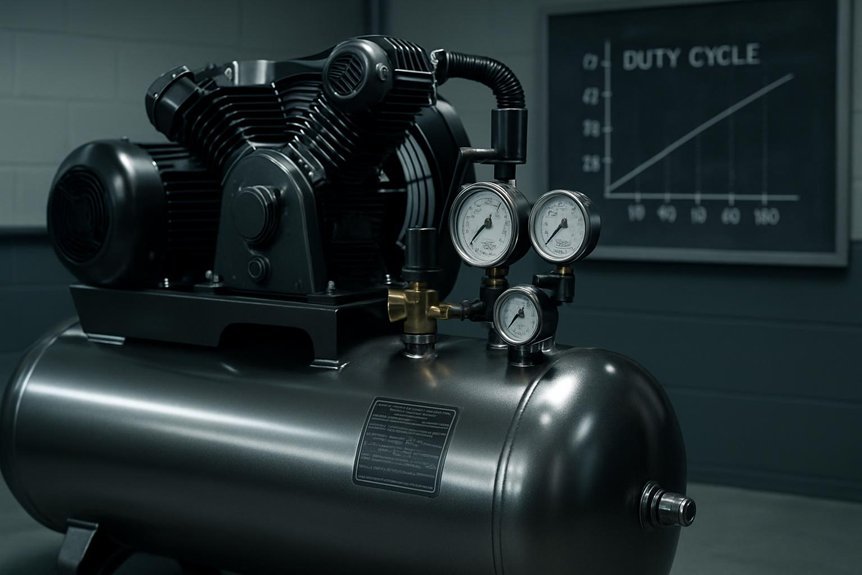
As we move from understanding how a tank stabilizes your air supply, we can now frame the key performance metrics that define system capability: CFM, PSI, and duty cycle. We, together with you, quantify flow with CFM as the volumetric rate at a given pressure, and correlate it to tool demand. PSI denotes usable pressure at delivery, governing fastening speed and accessory compatibility. Duty cycle expresses the on/off balance; a 50% cycle, for example, indicates equal run and rest periods, influencing heat generation and longevity. Together, these metrics guide selection, calibration, and operation. For maintenance scheduling, monitor CFM consistency and cycling duration to detect leaks or inefficiencies. Noise reduction strategies should preserve performance while minimizing acoustic impact.
How Tank Size Impacts Air Availability
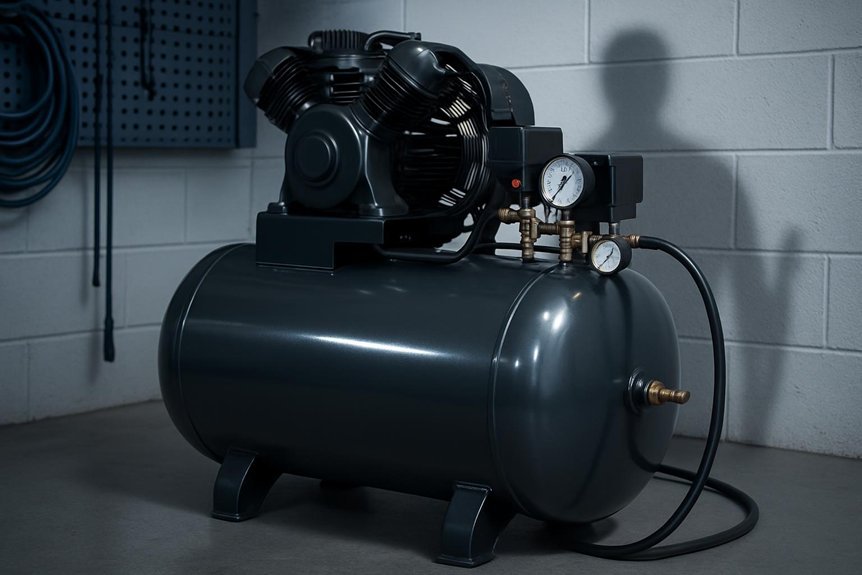
How does tank size alter air availability in a stationary compressor system? We assess air presence by analyzing pressure stability, fill rates, and discharge continuity. Larger tanks store higher volumes, smoothing demand spikes so average outlet pressure remains steadier between cycles. This reduces short-term drops in flow, enabling more consistent tool performance during sustained use. Conversely, smaller tanks respond faster to demand changes but deplete quicker, causing more frequent cycling and temporary pressure dips. The trade‑off affects cycle time, compressor run duration, and startup load, influencing overall system efficiency. We consider tank longevity as a factor: oversized units may incur greater heat gain and slower heat dissipation, while undersized tanks strain the compressor. Noise mitigation strategies often hinge on how tank size moderates cycling and refrigerant or air-stream agitation.
Practical Sizing Guidelines for Common Setups
Practical sizing guidelines for common setups build on our understanding of how tank capacity affects air availability, but they must be tailored to application specifics. We approach typical shop, hobby, and light production workflows by matching charge-discharge cycles to required duty cycles, minimizing short cycling, and preserving regulator stability. We weigh tank sizing against target CFM at operating pressure, ensuring the compressor can replenish demand without exceeding runtime constraints. We emphasize start-up surge management, line losses, and pressure switch settings as core controls. For maintenance, we link tank health to performance, recommending regular inspection for corrosion, drainage practices, and vent integrity to support reliable compressor operation. In all cases, align size with anticipated peak flow, control strategy, and maintenance cadence to sustain consistent air supply.
Real-World Scenarios: Light, Medium, and Heavy Use
Which real‑world scenario best matches your workflow: light, medium, or heavy use? We examine three use cases to align tank size with demand, focusing on efficiency and reliability. For light use, cycle times are short, so compact tanks reduce idle weight while maintaining adequate recovery. Medium use demands steadier air flow and modest storage to smooth intermittent bursts. Heavy use requires larger tanks to buffer high CFM draws and minimize compressor cycling, preventing overheating. Across scenarios, we balance recovery rate, compressor duty cycle, and stored pressure to avoid short cycling. Consider system pressure targets and tool mix to calibrate expectations for runtime. Our recommendations: tailor tank size to actual duty profiles, monitor performance, and adjust for either light use or heavy use realities.
- light use
- medium use
- heavy use
- duty cycle monitoring
- optimized recovery targets
Frequently Asked Questions
How Is Tank Size Affected by Startup Power Requirements?
We acknowledge that startup power requirements influence tank size interaction; larger tanks smooth startup surges, while smaller tanks demand higher duty cycles. We’d optimize by matching compressor HP, pressure switch settings, and allowable voltage drop to minimize spikes.
Do Larger Tanks Reduce Compressor Wear or Fatigue?
Larger tanks don’t reduce wear; they smooth surges and reduce cycling. We believe bypass lubrication and fuel efficiency benefit from stabilized pressure, yet wear fatigue remains governed by load cycles, component quality, and maintenance rather than tank size alone.
What’s the Best Tank Size for Intermittent Use Jobs?
For intermittent use jobs, we recommend a mid-range tank size, balancing flow and cycling efficiency. In practice, sizes like 20–40 gallons suit most tasks. Two word idea 1, two word idea 2. We’ll optimize performance together.
Can a Large Tank Worsen Pressure Stability in Some Setups?
Yes, a large tank can worsen pressure stability in some setups. We’ve seen fluctuations when compressors don’t match volume to demand; a large tank sometimes delays response, impacting regulation. Large tank, pressure stability depend on system dynamics.
How Do Temperature and Altitude Influence Tank Performance?
Temperature effects and altitude effects influence tank performance: higher temperatures raise pressure and reduce efficiency, while lower ambient pressure at elevation can improve compressor headroom but alter cooling requirements and condensate management. We, readers, should monitor these variables closely.
Conclusion
We’ve covered how tank size shapes air availability, pressure stability, and start/stop cycling. In short, pick a tank that complements your peak CFM, operating PSI, and duty cycle: larger for high-demand or intermittent tools, smaller for steady, light use paired with a robust compressor. Think of the tank as a buffer—like a dam holding back a flood. Regular monitoring seals the deal: size wisely, monitor performance, and adjust as your needs evolve.