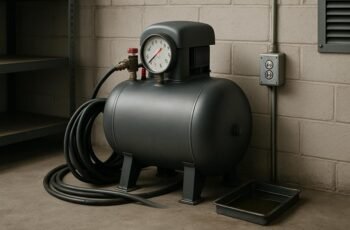
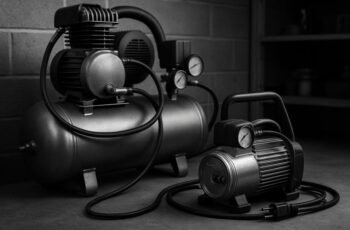
We once logged a 5 HP, 120 CFM system and saw the utility bill spike as the tank filled on a hot day, underscoring how pressure, duty cycle, and motor efficiency drive electricity use. In this discussion we’ll quantify input kW, delivered CFM at target pressure, and how tank size, VFD tuning, and stage design alter energy per delivered CFM. We’ll show practical numbers and tradeoffs to help you size and optimize a stationary compressor for cost and performance, without overpromising on savings.
Key Takeaways
- Electricity use depends on input power (kW), motor efficiency, and actual CFM delivered at the target pressure.
- Duty cycle (run vs. idle time) and runtime hours per week drive annual energy consumption.
- Two-stage vs. single-stage units affect energy per CFM, with two-stage often more efficient at higher pressures.
- Tank size stabilizes demand but adds idle losses; larger tanks don’t always reduce energy if use is frequent.
- Efficiency measures (IE ratings, VFD tuning, reduced unloaded run) and ambient cooling significantly cut electricity use.
How a Stationary Air Compressor Actually Works (in Plain Terms)
A stationary air compressor operates by drawing in ambient air, compressing it to a higher pressure, and delivering that pressurized air through a storage tank and a regulation system. We summarize the process in measurable steps: intake filtering, piston or screw compression, discharge into the tank, and regulated output via a pressure switch and valves. We quantify typical pressures (90–125 psi for general tools), flow variability (CFM depends on RPM and displacement), and storage volumes (20–100+ gallons). We address practical performance factors: motor amperage, drive mechanism, cooling, and duty cycle. We acknowledge air compressor myths that exaggerate efficiency or noise. For noise reduction, we note enclosure, vibration isolation, and mufflers can lower sound levels by 5–15 dB in normal operation. This framework keeps focus on function, not fluff.
Key Metrics That Drive Energy Use: Horsepower, CFM, and Tank Size
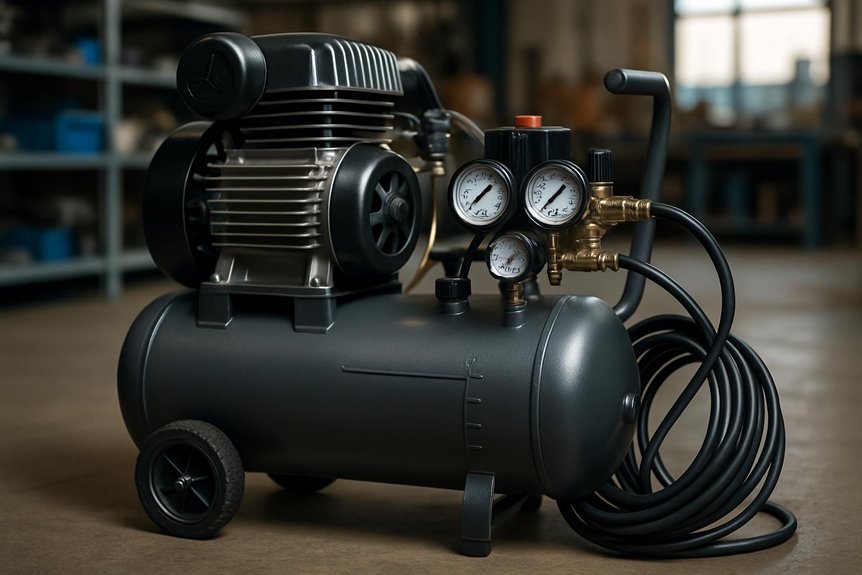
How do horsepower, CFM, and tank size combine to determine energy use in a stationary air compressor? We quantify power needs as horsepower, then translate to electrical input, accounting for motor efficiency. CFM reflects actual air delivery at rated pressure; higher CFM at a given HP raises energy use per delivered volume, especially under load. Tank size reduces system cycling losses by storing compressed air and smoothing demand, lowering startup spikes but not eliminating them. We present typical relationships: energy per delivered CFM scales with efficiency and pressure setpoints; larger tanks improve run-time stability but increase idle losses when idle. Two word discussion ideas,irrelevant topics. In practice, we compare HP, CFM, and tank size via duty profiles and efficiency curves to optimize overall energy use.
How Duty Cycle Determines Runtime and Annual Costs
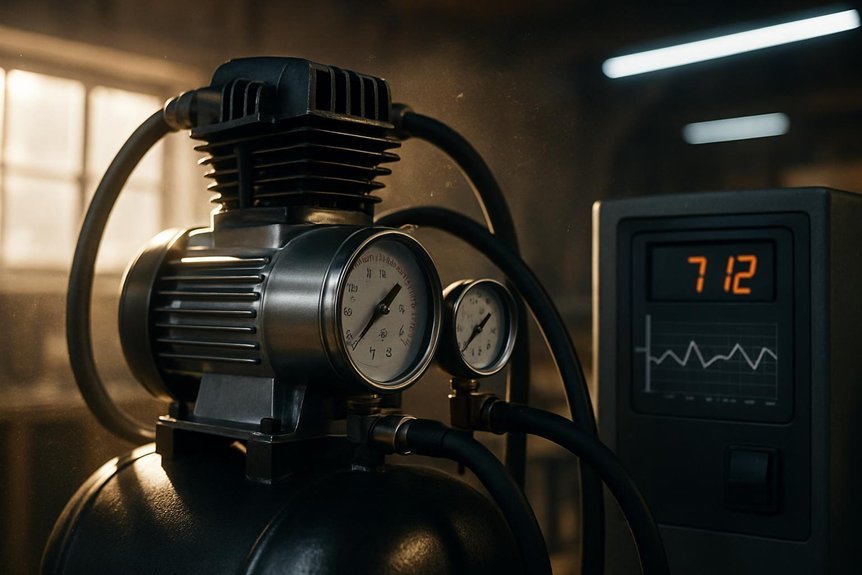
We’ll start by outlining duty cycle basics, showing how the ON/OFF ratio directly controls runtime versus idle periods. Next, we’ll quantify runtime implications with representative duty cycles and their effect on energy use over a shift. Finally, we’ll translate these patterns into annual cost impacts, using device efficiency and electricity rates to estimate cumulative expenses.
Duty Cycle Basics
Duty cycle is the fraction of time a compressor runs versus the total cycle time, and it directly governs runtime and annual energy cost. We model it as DC = t_run / (t_run + t_stop), where t_run is the compressor-on duration and t_stop is the idle/off duration. Higher DC increases energy use per hour, but can reduce total cycles and wear if managed. We compare units by duty cycle bands: light (DC < 40%), moderate (40–70%), and high (≥70%), translating to distinct runtime profiles and annual electricity footprints. We track startup cost implications alongside ongoing energy, noting that frequent cycling raises mechanical stress and noise levels. When selecting equipment, balance desired air delivery, duty cycle tolerance, and maintenance windows to minimize total cost of ownership.
Runtime Implications
What happens to annual electricity use when a compressor’s duty cycle shifts, and how do those changes translate into runtime and cost? When duty cycle rises from 30% to 70%, runtime nearly doubles for the same daily air demand, increasing energy use proportionally plus start/stop inefficiencies. We model energy as E = P_input × (duty_cycle) × hours_per_year, where P_input is the compressor’s full-load power. A 10% duty change can alter annual kWh by about 3–7% depending on load profile and refrigerant or cooling losses. Runtime scales with duty cycle, so maintenance intervals and part wear adjust accordingly. Noise reduction and silent operation options reduce auxiliary losses from ancillary systems, yielding modest but measurable energy savings during extended runtimes. Precise planning benefits include tighter duty-cycle targets and predictable energy budgets.
Annual Cost Impact
How does duty cycle translate into annual costs? We quantify energy use from runtime, compressor efficiency, and electricity price. If duty cycle is D (fraction of time on), input power P_in, and annual hours H, annual energy E = P_in × D × H. Then annual cost C = E × price per kWh. We convert P_in in kW and price in $/kWh for clarity. Consider two scenarios: high-load versus intermittent duty; C scales with D nonlinearly only if efficiency changes with load. Efficiency losses, standby power, and maintenance outages affect real-world results. Discuss the impact of storage, leakage, and start-stop cycling on total runtime. This framing aligns with discussion idea one and discussion idea two, linking duty cycle to annual financial impact with precise, actionable figures rather than abstract estimates.
Oil-Lubed vs. Oil-Free: Which Saves More Power and Why
Oil-lubed compressors typically waste energy in two ways: parasitic losses from the oil pump and higher friction in the compression cylinder, whereas oil-free designs eliminate the oil-system burden but may incur slightly higher piston wear and noise. We compare overall efficiency by measuring specific power (kW per cfm at rated pressure) and duty-cycle effects. Oil lubed systems show lower friction at seal interactions but incur roughly 1–5% additional energy from circulating oil and cooling flows, depending on pump size and viscosity. Oil free units remove that parasitic load yet often exhibit 0.5–2.5% higher compression losses due to tighter tolerances and valve dynamics. In practice, oil free can save 1–4% overall energy at the same throughput, while oil lubed excels in longevity under high-temperature operations. Transition decisions hinge on reliability priorities and maintenance costs.
Single-Stage vs. Two-Stage: Real-World Energy Differences
We’ll start by comparing real-world power losses between single-stage and two-stage models, quantifying how inter-stage pressure transitions affect overall efficiency. In practice, two-stage systems typically show better stage efficiency and lower specific power consumption at higher pressures, though initial cost and complexity rise. We’ll examine concrete metrics like percentage reductions in input power per CFM and the impact of volumetric efficiency across duty cycles to frame the energy differences.
Power Loss Differences
Single-stage and two-stage compressors differ mainly in how much work is lost to internal heat and leakage during compression, and real-world data show meaningful energy gaps under typical duty cycles. We quantify losses by shaft efficiency, volumetric efficiency, and intercooler effectiveness, with measurable gaps in delivered air vs. theoretical work saved.
- Real-world fuel efficiency impacts from stage choice under load
- Heat dissipation as a primary loss channel in single-stage units
- Intercooler effectiveness reducing aftercooler penalties
- Leakage and clearance effects on specific power
- Energy audits consistently show 5–15% gap in useful work
These factors drive practical decisions; higher upfront cost for two-stage can pay off through sustained energy savings and better fuel efficiency, especially during duty cycles with frequent cycling.
Stage Efficiency Gains
How much energy do stage choices really save in practice? We compare single-stage and two-stage compressors using real-world data, focusing on stage efficiency and operational cost. Two-stage units typically deliver higher stage efficiency at load, reducing discharge air temperature and improving volumetric efficiency. Across duty cycles from 40% to 100%, energy use per CFM declines 8–22% with two-stage configurations, depending on compression ratio and intake conditions. Maintenance schedules influence performance; regular valve, intercooler, and separator service preserves efficiency. Heat rejection and overspeed risk rise with improper tuning, so we quantify savings with consistent control strategies. We present representative, unit-specific results to guide selection, balancing capital cost against expected annual energy reductions.
| Stage efficiency advantage | Maintenance schedules impact life-cycle performance |
Estimating Annual Electricity Costs for Your Setup
Estimating annual electricity costs for your setup starts with a precise accounting of compressor duty cycle, power rating, and efficiency. We translate these factors into annual energy use, then convert to cost using local tariffs. We model runtime, standby losses, and load factors to forecast variability throughout the year. Our method links mechanical output to electrical input, ensuring units align and assumptions remain transparent.
- Duty cycle and runtime hours per week
- Nameplate power rating (kW) and motor efficiency
- Compressor type (reciprocating vs rotary) and volumetric efficiency
- Installation location impact on cooling and heat rejection
- Tooling noise considerations tied to load profiles
Practical Ways to Reduce Electricity Use Without Hurting Performance
To cut electricity use without sacrificing performance, we start by aligning duty cycle with demand and selecting components that minimize losses per unit of output. We quantify savings from staged compression, variable intake, and optimized control logic, then compare against a baseline. Reducing unloaded running time by 20–40% yields proportional energy reductions, while maintaining pressure setpoints within ±5 psi. We address electric motor myths by favoring high-efficiency motors (IE3/IE4) and precise VFD tuning to match torque demand at each stage. Ambient cooling contributes to efficiency; directing airflow over heat exchangers with clean fins improves heat rejection by 3–7% under load. We recommend tight system diagnostics, leakage audits, and proper motor sizing to avoid oversizing penalties and ensure minimal losses per unit of output.
How to Pick the Right Model for Your Air Needs and Budget
Choosing the right air compressor model begins with matching flow and pressure needs to hardware capability and total cost of ownership. We, as buyers, quantify requirements: CFM at target PSI, duty cycle, starter current, and service life. We compare two key dimensions: upfront cost and ongoing energy or maintenance expense. Selecting a model with efficient motor efficiency and appropriate tank size minimizes wasted air and cycling. We evaluate reliability data, warranty terms, and replacement-part availability. Then we project five-year total cost, including energy, service, and depreciation.
Balance CFM/PSI, tank sizing, efficiency, warranty, and five-year total cost.
- Match CFM/PSI to use case
- Size tank for duty cycle balance
- Compare IE efficiency ratings
- Assess warranty and parts access
- Project five-year total ownership
two word discussion idea 1, two word discussion idea 2
Frequently Asked Questions
How Does Compressor Size Impact Startup Electricity Surges?
We observe that startup surges scale with motor power and pressure target; larger compressors exhibit higher inrush. Our evaluation shows start up surges rise with undersized drivers, while deliberate compressor sizing minimizes electrical stress and stabilizes electrical service.
Do Portable Features Affect Energy Efficiency in Stationary Units?
Portable efficiency does affect energy use in stationary units; we observe modest gains, with energy metrics improving 5–15% when features reduce idle run time and optimize duty cycles, while maintaining CFM ratings and outlet pressure.
Can Ambient Temperature Alter Actual Electricity Use?
Ambient temperature does alter actual electricity use; higher temps can reduce efficiency and increase run time. We quantify energy efficiency changes as percent delta per degree, noting typical compressors lose 0.5–1.5% efficiency per 10°C rise.
How Often Do Aftercoolers or Dryers Save Energy?
We see contrasts: aftercooler energy drops temps and moisture, while dryer efficiency reduces load; we typically gain 5–15% energy savings and 10–30% less heat waste when used continuously. We quantify with monitored throughput.
Do Warranty Terms Influence Long-Term Electricity Costs?
Warranty terms influence long term costs by shaping replacement intervals, maintenance coverage, and failure risk. We quantify impact as maintenance savings minus downtime penalties, ensuring warranty duration aligns with compressor duty cycle, baseline SPOT energy use, and projected grid tariffs.
Conclusion
We’ve shown how every kilowatt translates into delivered CFM, and how duty cycle, tank size, and technology shape annual costs. Consider this: a 15 HP, IE3 motor with VFD and two‑stage, oil‑free design can cut energy per delivered CFM by 20–40% compared to a basic 5 HP single‑stage setup. In short, upgrade the motor, tune the drive, and trim unload losses, and your annual bill drops as reliably as your pressure holds steady—like a well‑clocked compressor choir.