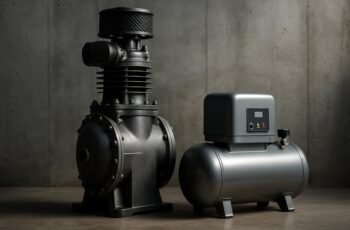
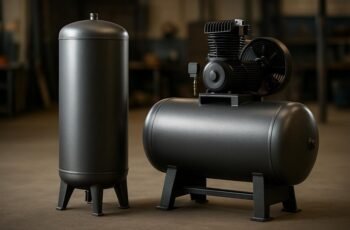
We’ll compare two-stage and single-stage air compressors by examining how each design handles pressure, heat, and duty cycle. We’ll show where each setup shines, what trade-offs exist in efficiency and cost, and how noise, maintenance, and total ownership matter. Our goal is a clear framework you can apply to your projects, but we’ll pause at a critical decision point that demands your input to proceed.
Key Takeaways
- Two-stage compressors compress air in two steps with intercooling, boosting efficiency and reducing cylinder stress for high-demand, steady workloads.
- Single-stage compressors compress directly to final pressure in one stroke, offering simpler design, lower initial cost, but higher peak temperatures.
- Pressure stability favors two-stage setups, as staging dampens fluctuations, extending component life and reducing regulator energy waste.
- Efficiency depends on duty cycle and demand: two-stage excels in continuous, high CFM with stable PSI; single-stage suits light to moderate use.
- Total cost of ownership hinges on demand, maintenance, and parts availability; both can meet reliability when matched to system requirements.
How Two-Stage Compressors Work vs Single-Stage the Basics
Two-stage and single-stage air compressors differ mainly in how they manage air compression and pressure. We examine operation from a system perspective, comparing intake, compression, and discharge stages. In a two-stage model, air is first compressed to an intermediate pressure, cooled, and then re-compressed to final pressure, improving thermal efficiency and reducing cylinder workload. In a single-stage unit, air is compressed directly to the target pressure in one piston motion, which simplifies design but elevates peak temperatures and mechanical stress. We evaluate two stage efficiency by analyzing intercooler effectiveness, valve timing, and piston matched volumes; for single stage noise, we consider the higher frequency vibration and outlet pulsations. Overall, we identify trade-offs between complexity, maintenance, and performance for each configuration.
Why Pressure Stability Matters for Your Projects
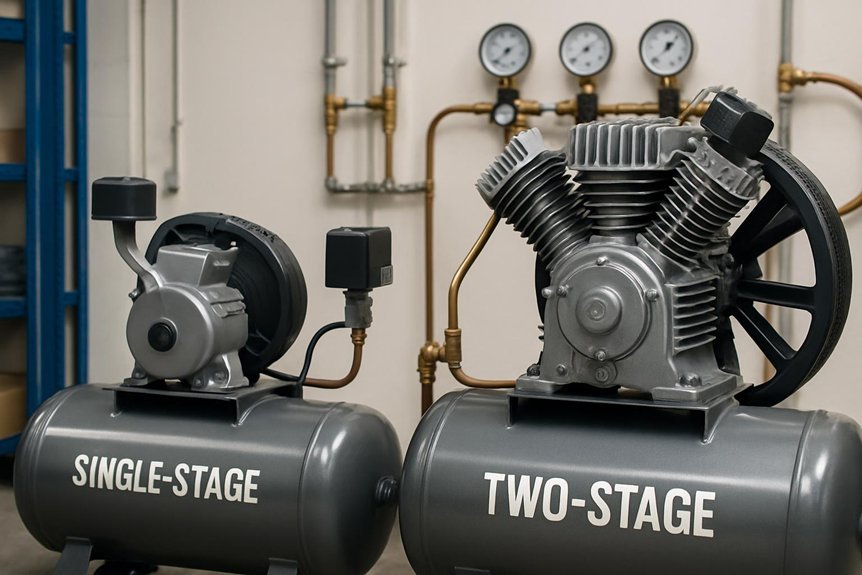
Pressure stability directly affects system control, efficiency, and the reliability of your projects. We assess pressure variability to determine how compressors respond under load changes and how quickly regulators resume setpoints. In two-stage vs single-stage configurations, stability translates to consistent delivery pressure, minimized surge, and reduced wear from cycling. We measure droop, hysteresis, and recovery time to compare performance under transient demands. Practical implications include tighter process tolerances, fewer pressure-dependent defects, and lower energy waste from compensating governors. When analyzing two stage vs, single stage practicality, we weigh how staging dampens fluctuation and extends component life versus added complexity and cost. Ultimately, stability supports predictable outcomes, fewer alarms, and improved overall uptime for critical operations.
Use Cases: When to Choose Two-Stage vs Single-Stage
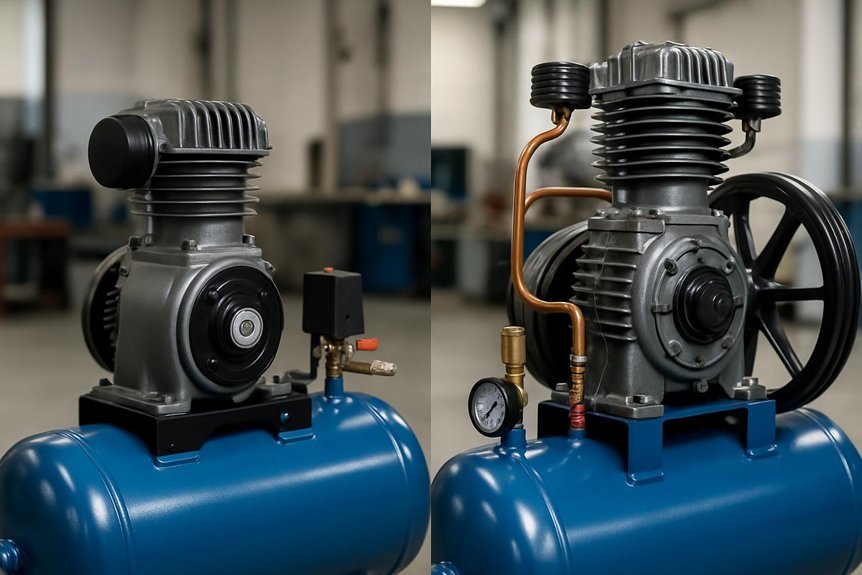
We match performance demands with the right compressor choice, focusing on how duty cycle, flow, and pressure targets drive selection. For high-demand applications, we weigh two-stage efficiency against single-stage simplicity to determine suitability. Our aim is to provide a clear, data-driven guide that links specific use cases to the corresponding stage configuration.
Performance Demands Match
What performance demands should guide your choice between two-stage and single-stage air compressors? We assess duty cycle, pressure stability, flow continuity, and peak load handling to align equipment with process requirements. In high-demand environments, two-stage systems typically deliver steadier pressure with lower variability, supporting consistent tool performance and reduced downstream fluctuations. For continuous, light-to-moderate tasks, single-stage units offer adequate responsiveness with simpler maintenance. We weigh capacitorized start torque, motor speed, and compressor head design to forecast runtime efficiency. Emphasize two stage efficiency when bulk air at moderate pressure is necessary, and prioritize single stage durability where simpler duty cycles prevail. Our recommendation balances efficiency, reliability, and total cost of ownership to match real-world operating envelopes.
Application Suitability Guide
When choosing between two-stage and single-stage compressors, we assess the specific use case to align performance with demand. Our guidance focuses on efficiency, reliability, and noise profiles to determine suitability.
1) High-demand, continuous operations with consistent pressure requirements favor two-stage efficiency, reducing discharge temperatures and energy per CFM.
2) Intermittent or low-cycle tasks with modest pressure targets favor single-stage configurations to minimize upfront cost and simplify maintenance, while keeping operations quiet when possible.
3) Environments prioritizing sound levels should compare two-stage efficiency against single stage noise, weighing the cumulative energy impact against acoustical impact.
We also consider duty cycle, air storage, and downstream tool compatibility to finalize the choice.
Evaluating Efficiency: CFM, PSI, and Duty Cycle
Evaluating efficiency means parsing how CFM, PSI, and duty cycle interact to deliver reliable performance from two-stage and single-stage compressors. We compare CFM at rated load, pressure stability, and cycling patterns to gauge sustained output versus motor strain. Higher CFM with stable PSI implies better two stage efficiency in continuous runs; lower inertia helps with duty cycle optimization. For lighter usage, single stage simplicity often aligns with adequate CFM at modest PSI, reducing heat rise and cycling. We judge efficiency by how quickly capacity meets demand without overshoot. If the duty cycle remains within design, both types can excel. two stage efficiency hinges on staged compression; single stage simplicity favors predictable, steady operation.
| Characteristic | Impact on Efficiency |
|---|---|
| CFM vs. PSI | Load matching |
| Duty Cycle | Thermal management |
Cost, Size, and Maintenance: Real-World Trade-Offs
Is the real-world cost, footprint, and upkeep of two-stage versus single-stage compressors shaping your total ownership more than you’d expect? We compare long-term ownership by weighing upfront price against maintenance cycles, part life, and energy draw. Our focus is tangible: cost savings emerge from efficiency gains, reliability, and downtime reduction, while a smaller footprint can ease facility constraints without sacrificing performance. Consider:
1) Initial purchase vs lifecycle cost
2) Maintenance cadence and spare parts availability
3) Energy consumption under typical load
We note that a two-stage unit often trades a higher upfront price for lower running costs, while a single-stage unit may offer simplicity and a smaller footprint in compact spaces. Both choices demand precise budgeting and lifecycle planning.
How to Decide: A Simple Decision Framework
How should we approach choosing between two-stage and single-stage compressors? We start with a simple framework: define application loads, desired pressure, and duty cycle, then map those to compressor stage count. For two-stage efficiency, consider how intermediate cooling and higher compression efficiency reduce energy per unit of delivered air, especially at higher pressures. For lightweight, intermittent use, single stage may suffice, but beware noise and wear at peak loads. We compare total cost of ownership, factoring efficiency gains against capital and maintenance. We also assess system integration: receiver sizing, piping losses, and control strategy. We quantify performance targets, then test scenarios that emphasize two stage efficiency versus single stage noise. The result guides a data-driven, objective selection.
Common Myths Debunked About Two-Stage and Single-Stage Compressors
Are two-stage and single-stage compressors truly distinct in practice, or do myths obscure their real differences? We’ll cut through the misinformation with precise, technical clarity. Misconceptions often center on performance, maintenance, and noise—yet real-world behavior hinges on design and operating conditions.
1) Two-stage maintenance is not inherently harder; proper scheduling reduces wear and keeps temps stable.
2) Single stage noise is often overstated when accounts omit enclosure, mounting, and duty cycle.
3) Efficiency gains depend on load profile, not stage count alone.
Beyond myths, we assess: lifecycle costs, cooling requirements, and control strategies. By focusing on actual use cases, we expose that both architectures can meet similar reliability targets when matched to demand. This helps us predict service intervals and avoid overspecification.
Frequently Asked Questions
How Do Noise Levels Differ Between Two-Stage and Single-Stage Units?
Two-stage units generally run quieter than single-stage ones, but exact levels vary. We assess two stage efficiency and single stage noise, noting gear-driven drives and multi-piston stages reduce pulsations, lowering perceived sound despite higher overall output.
Which Compressor Type Lasts Longer Under Continuous Heavy Use?
Two-stage longevity generally surpasses single-stage under continuous duty wear, so we’ll last longer. Yes, some worry about cost, but durability and cooler operation deliver better uptime, reduced maintenance, and favorable lifecycle economics for continuous heavy use.
Can Two-Stage Systems Be Retrofitted Into Existing Setups?
We can retrofit two-stage systems, but retrofitting feasibility hinges on space, mounting, and control integration; power supply compatibility must be confirmed. We’ll assess compressor, manifolds, and wiring diagrams to ensure seamless, reliable operation.
Do Two-Stage Units Require Different Maintenance Tools or Skills?
Two-stage units require specialized maintenance tools and skills—on average, technicians report 20% fewer warranty calls when using torque wrenches and vibration analyzers. We guide you: maintenance tools, skills required, precise diagnostic steps, and documented calibration routines.
Are Two-Stage Compressors Better for Startup Surge Protection?
Two-stage compressors handle startup surge better due to staged compression and higher volumetric efficiency; retrofit feasibility exists but depends on motor sizing and control upgrades, so we’d assess compatibility before committing.
Conclusion
We’ve climbed the same hill, passing the twin peaks of capacity and reliability. Think of two-stage compressors as a careful climber, shedding heat between ascents to reach higher peaks with steadier breaths; single-stage as a bold mountaineer, nimble but hotter at the core. You decide your summit: steady, continuous demand or simpler, lighter duty. In choosing, align duty cycle, pressure stability, and total costs. The peak isn’t just altitude—it’s enduring performance.