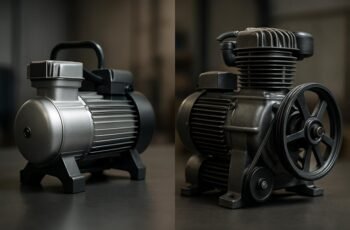
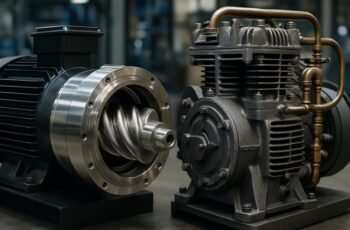
In the gear chambers of choice, a quiet clockwork of oil-free and oil-lubricated paths marks the balance between purity and durability. We weigh cleaner air and simpler filtration against potential wear and stricter cleanliness needs, while the lubricated route offers smoother operation and longer life at the cost of oil management. As we sift duty cycles, contamination tolerance, and lifecycle costs, a clear signal emerges—but the best path isn’t obvious, and the decision hinges on how we quantify risk and value.
Key Takeaways
- Oil-free compressors use advanced polymers and tight tolerances to avoid lubricant films, delivering cleaner air with lower maintenance but higher wear risk under load.
- Oil-lubricated models rely on a continuous oil film for smoother operation and longer component life, but introduce potential oil carryover and filtration needs.
- Air quality and contamination risk drive choice: oil-free suits high-purity or safety-critical lines, while oil-lubricated can tolerate minor oil separation with proper filtration.
- Performance under load favors oil-lubricated systems for sustained pressures and durability; oil-free may wear faster in high-demand duty.
- Total cost of ownership depends on maintenance, filtration, downtime, and energy use; light use leans oil-free, heavy/use cases favor oil-lubricated with robust filtration.
Core Difference Between Oil-Free and Oil-Lubricated Compressors
To distill the core difference, we compare how oil-free and oil-lubricated compressors handle the essential sealing and contact points. In oil-free models, seals rely on advanced polymers and precision timing to minimize gas leakage, with no lubricant film between moving surfaces. This yields lower maintenance and cleaner air, but tolerances must remain tight to prevent wear. Oil-lubricated designs use a continuous lubrication film to reduce friction, smoothing contact surfaces and extending component life, yet introduce potential contamination paths and ongoing oil management. Both systems rely on precise piston-ring or vane-seal geometries and crankcase pressure control to sustain compression efficiency. Overall, Oil free configurations prioritize cleanliness and simplicity, while Oil lubricated configurations emphasize long-term wear resistance and smoother operation under high load.
How to Choose Based on Air Quality and Contamination Risk
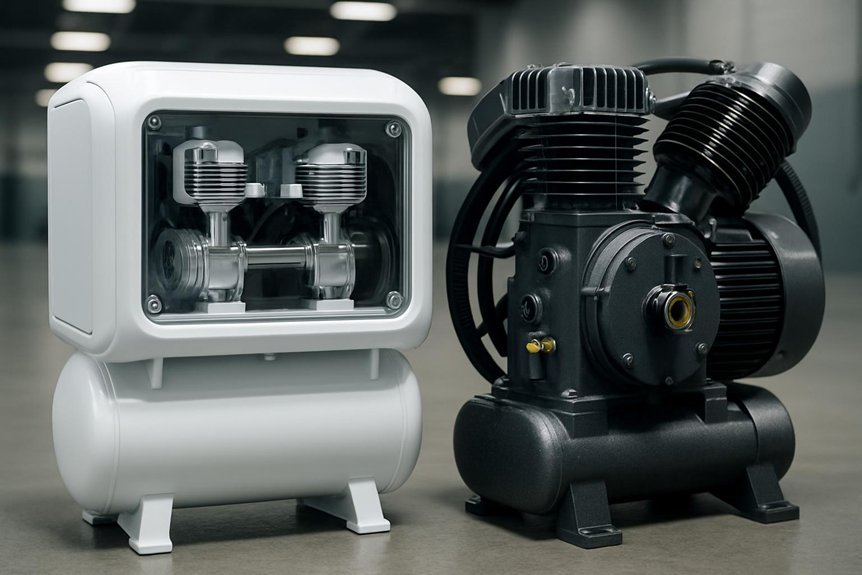
What drives your choice between oil-free and oil-lubricated compressors is how air quality and contamination risk align with your application. We evaluate impurity tolerance, downstream equipment sensitivity, and maintenance feasibility to minimize contamination risk. Oil-free implications demand stricter cleanliness, lower particulate ingress, and easier filter strategies, whereas oil-lubricated systems can tolerate minor oil carryover with proper separation. Our approach weighs total cost of ownership against required air purity, mandatory certifications, and process integrity. In high-purity or safety-critical lines, oil-free options reduce contamination risk exposure; in general manufacturing, controlled oil-lubricated setups may be acceptable with robust filtration and monitoring. Quick visual guide below:
| Air Quality Need | Contamination Control Priority | Recommendation |
|---|---|---|
| Low tolerance | High | Oil-free preferred |
| Moderate tolerance | Moderate | Hybrid filtration |
| High tolerance | Low | Oil-lubricated acceptable |
| Certification targets | Enforcement | Review standards |
Performance and Durability: Which System Lasts Longer Under Load
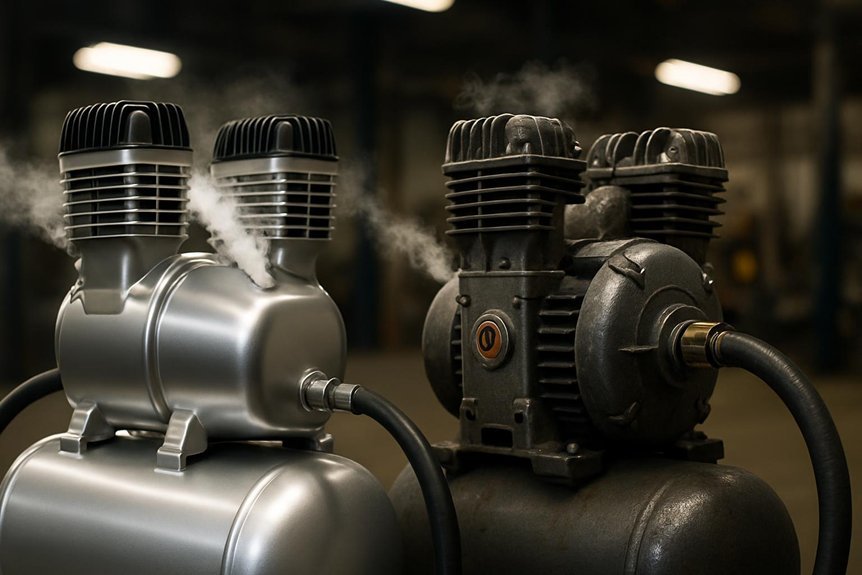
Which system lasts longer under load, oil-free or oil-lubricated? We analyze durability by how surfaces resist wear, thermal cycling, and component fatigue under steady and peak demand. Oil-free designs generally reduce contamination risk and maintain consistent compression dynamics, but their lack of lubrication can elevate wear in high-load segments and faster degradation of pistons and rings. Oil-lubricated units distribute friction more evenly, often yielding superior oil lubricated efficiency and smoother operation at sustained pressures, which translates to better long-term load handling. However, oil paths introduce potential leaks and maintenance demands. In our assessment, oil free longevity hinges on ring and cylinder coating quality, cooling, and duty cycle. Overall, lubrication strategy materially influences lifespan under load, with trade-offs balancing wear protection against contamination risk.
Maintenance Implications: Oil Management, Filters, and Costs
How do maintenance needs shape the total cost of ownership for oil-free versus oil-lubricated compressors? We analyze oil management, filtration, and ongoing expenses to quantify total cost implications. Oil-free units reduce lubrication events but impose stricter air-path cleanliness requirements, influencing filter replacement intervals and energy efficiency. Oil-lubricated models incur ongoing oil costs, potential fouling risks, and additional filtration stages to protect downstream tools. Maintenance considerations directly affect reliability, downtime, and energy use, shaping lifecycle economics. We compare routine service time, component wear, and consumables to project total expenditure over time, emphasizing predictive maintenance.
Maintenance demands drive total cost of ownership between oil-free and oil-lubricated compressors, shaping downtime, energy use, and consumables.
- Oil management and filtration intervals, consumable costs, and their impact on energy costs
- Filter performance, replacement cadence, and how it alters system pressure and efficiency
- Long-term cost modeling, including downtime, part availability, and maintenance staffing needs
Practical Decision Framework: Matching Your Application and Budget to a Choice
Yet when choosing between oil-free and oil-lubricated compressors, we start with a clear decision framework that aligns your application requirements with budget realities. We map performance needs—duty cycle, continuous run time, pressure stability, and air quality—against total cost of ownership. Oil capacity informs maintenance planning and replacement intervals, while noise considerations shape placement and worker tolerance. We quantify energy efficiency, service frequency, and downtime risk to compare lifecycle costs rather than upfront price. For light, intermittent use, oil-free often reduces maintenance complexity; for high-demand, continuous duty, oil-lubricated units may offer lower long-term operating costs if downtime and filtration are managed. Our framework emphasizes durability, reliability, and predictable output, enabling a choice that matches both application precision and budget expectations.
Frequently Asked Questions
Do Oil-Free Units Require Any Post-Filtering for Sensitive Environments?
Yes, in sensitive environments, we generally require post-filters for Oil free air, while lubricated air often needs less stringent filtration. We assess contaminants, flow, and exposure, ensuring compliant, traceable lines without compromising performance or safety.
How Do Oil-Free Systems Handle Moisture and Condensate Without Lubrication?
One surprising stat: oils-free systems offer up to 99% oil-free air with proper filtration. We handle moisture via oil separation and condensate management, using desiccant or membrane traps, ensuring dry, contaminant-free output—calibrated for sensitive environments.
Are There Trade-Offs in Noise Levels Between the Two Types?
Yes, there are trade-offs: oil-free tend to be noisier or have higher peak noise due to plastic components, while oil-lubricated can dampen noise; consider oil capacity and noise impact when comparing models for your application.
Can Oil-Free Compressors Be Retrofitted With Oil Separation Components?
Yes, we can discuss oil separation, and retrofitting feasibility depends on model design. We’ll evaluate seals, housing, and clearances, concluding that retrofitting is sometimes feasible but not universally practical for preserving performance and warranty.
What Are Common Myths About Maintenance Frequency for Each Type?
We debunk maintenance myths about both types, and we’ll separate lubrication misconceptions from real needs; we recommend precise schedules based on duty cycle and manufacturer specs, not vague rules-of-thumb.
Conclusion
We weigh reliability, costs, and contamination risk to guide your choice. Oil-free delivers cleaner air and simpler filtration, but may sacrifice durability under heavy duty; oil-lubricated offers longer life and smoother operation, yet requires oil management and carryover controls. We prioritize total cost of ownership, duty cycle, and cleanliness standards to decide. If contamination tolerance is high and cycles are light, oil-free shines. If sustained loading and long-term durability matter, oil-lubricated proves more economical. Our framework clarifies your optimal path.