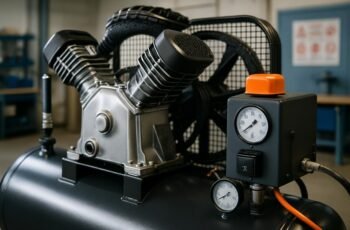
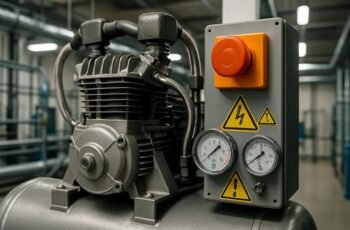
We understand safety can seem like extra hassle, but a solid air compressor checklist reduces risk and downtime. We’ll cover pre-start checks, gauge verification, hose and guard integrity, interlocks, and ventilation, then move to proper PPE, lockout/tagout, and clear communication. As we walk through startup, operation, and shutdown steps, you’ll see how disciplined routines prevent incidents and protect equipment. Stay with us as we outline maintenance, audits, and the red flags that demand immediate action.
Key Takeaways
- Pre-start checks: verify gauges, pressure settings, and system integrity before starting the air compressor.
- PPE and safe work habits: wear appropriate eye, hearing, and respiratory protection; maintain clean tool handling and clear signaling.
- Lockout/Tagout and isolation: ensure proper lockout/tagout procedures and secure controls to prevent unintended startup.
- Start-up, operation, and maintenance: monitor temps, pressures, vibrations; inspect filters, belts, and condensate drains; perform routine safety audits.
- Shutdown and securing: depressurize safely, secure the unit, communicate intent, and verify leak-free seals before restart.
What Makes an Air Compressor Safe to Install and Operate
To determine if an air compressor is safe to install and operate, we start by verifying it meets relevant standards and manufacturer specifications for your application. We assess electrical compatibility, motor sizing, and duty cycle to prevent overloads and overheating. Safety interlocks, pressure relief devices, and correctly rated hoses reduce rupture risk and accidental venting. Regular pre-install inspections confirm mount stability, vibration isolation, and unsecured components aren’t present. We check oil quality, coolant levels, and filter integrity to maintain performance and minimize contaminants. Noise reduction considerations, enclosure design, and outlet routing are evaluated to protect personnel without compromising function. Energy efficiency is central; we compare efficiency ratings, compressor type, and control strategies to optimize runtime, reduce energy waste, and extend equipment life. Clear documentation guides safe operation and maintenance planning.
Grounding, Guards, and Ventilation: Essential Safety Hardware
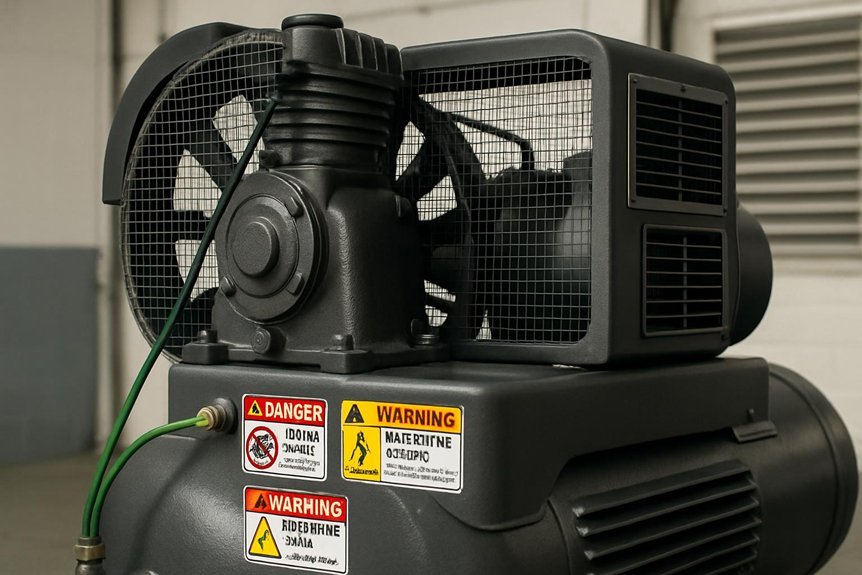
We must address grounding requirements, guarding essentials, and ventilation standards to ensure safe operation. We’ll outline how proper grounding, robust guards, and adequate ventilation reduce risk and comply with specifications. Our goal is a clear, proactive setup that guides you toward compliant, safe use of the air compressor.
Grounding Requirements
Why is proper grounding essential for air compressors? We ensure electrical safety and equipment reliability by establishing solid grounding practices. Our approach aligns grounding compatibility with system design, verifying that conductors, outlets, and starters share a common reference. We also enforce electrical isolation between high- and low-voltage components to prevent fault propagation. Proactive checks include correct conductor sizing, proper grounding electrode conductors, and tamper-resistant connections. We document compliance signals and maintain test records for audits. The table below visualizes core concepts and actions.
| Concept | Requirement | Action |
|---|---|---|
| Grounding compatibility | Match wiring methods to system voltage | Verify approvals; use compatible components |
| Electrical isolation | Separate circuits where needed | Install barriers; test with insulation meter |
| Bonding | Create low-impedance paths | Inspect clamps; tighten bonds |
| Ground fault protection | Detect leakage currents | Test GFCI/ELC devices |
| Documentation | Maintain records | Update schematics; log inspections |
Guarding Essentials
Guarding Essentials integrates grounding, guards, and ventilation as the core safety hardware for air compressors. We center protects around a safe enclosure that limits access to moving parts and hot surfaces, reducing pinch points and exposure to pressurized lines. Guards must be rigid, corrosion-resistant, and compliant with applicable standards, covering belts, pulleys, and intake mechanisms without obstructing airflow or maintenance access. We enforce proper interlocks and secure latches to prevent accidental starts. Ventilation considerations address heat dissipation and dust control, ensuring consistent performance and minimizing overheating risk. We assess the noise level and implement shielding or enclosures where required to protect nearby workers. Regular inspections verify integrity of guards, grounding continuity, and enclosure security, maintaining a proactive safety posture across all operating conditions.
Ventilation Standards
Ventilation standards must be designed to complement grounding and guarding, guaranteeing heat buildup and dust accumulation don’t compromise performance or safety. We approach ventilation design as a core safety control, aligning airflow with equipment duty and enclosure integrity. Proper ventilation maintains indoor air quality by diluting contaminants and removing heat, oils, and aerosols that degrade components. We specify intake/exhaust locations to avoid recirculation, fit filtration where needed, and guarantee access for inspection. We verify duct sizing, noise implications, and seals to prevent leaks. Regular checks confirm vents remain unobstructed and fans operate reliably. Table below illustrates typical layout considerations for a compact system.
| Intake/Exhaust Pair | Placement Considerations |
|---|---|
| Top-exhaust / Low-intake | Corner clearance, unobstructed paths |
| Front-face vents | Shielded access, easy filter change |
Hose and Tool Inspection: What to Check Before Each Use
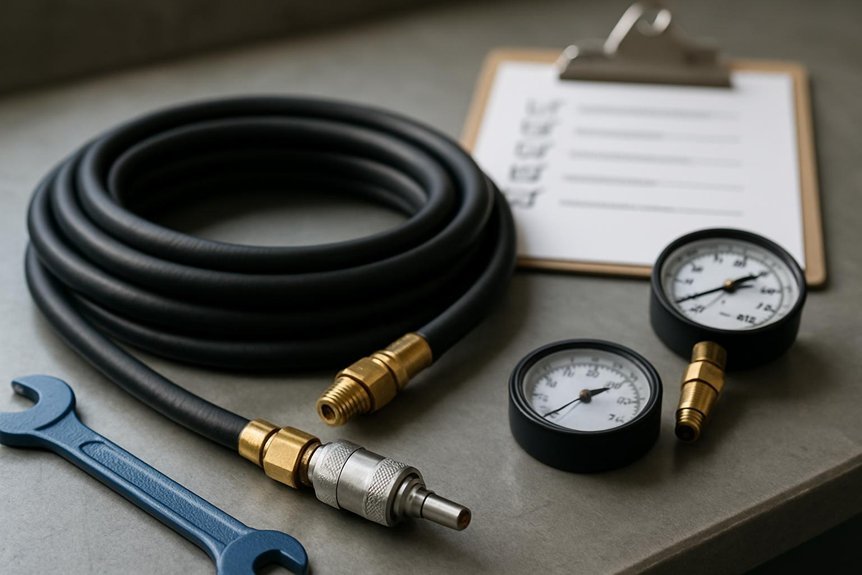
We start each use by verifying our hose condition, checking for cracks, bulges, or insulation damage that could fail under pressure. We ensure tool connections are secure and compatible, inspecting fittings, quick-connects, and threads for loosening or wear. We also perform a leak and wear inspection along the entire assembly, noting any signs of degradation that require replacement or repair.
Hose Condition Check
Before each use, inspect the hose thoroughly for damage or wear: check for kinks, cuts, bulges, cracks, and visible abrasions along the entire length, including the fittings. We assess hose integrity by tracing the exterior and listening for soft spots, and we verify the connector shields and ferrules are secure. Look for signs of weathering, chemical exposure, or ultraviolet degradation that could undermine performance. Check for stiffness or hard spots that indicate internal damage and potential failure under pressure. We confirm that coupling connections seat fully and that the hose remains flexible without leaking. This routine supports regulator safety by preventing remote bursts and unexpected pressure drops, and it ensures continued performance within manufacturer specifications. Any anomaly prompts removal from service and replacement before operation.
Tool Connection Security
Tool connections require close scrutiny to prevent leaks, disconnections, or sudden tool movement during operation. We conduct a pre-use check of all hose fittings, quick-release couplers, and adapters for tightness, wear, and compatibility with our tools. We verify that each connection locks securely and that collars or latches engage fully, preventing accidental detachment. We inspect hoses for cracks, kinks, or damaged ferrules that could compromise integrity under pressure. We assess tool isolation points to ensure they’re accessible and capable of immediate shutoff if needed. We confirm power interlocks on pneumatic and electric tools are functional, preventing startup with a disconnected hose or misaligned coupling. Any abnormal condition prompts removal from service and prompt repair before reuse.
Leak and Wear Inspection
Inspecting for leaks and wear is the next step after verifying tool connections, as any compromised hose or fitting can lead to pressure loss or sudden tool movement. We perform a systematic hose and tool inspection before each use, focusing on continuity of the air path and physical integrity. We check for cut or nicked outer jackets, flattened sections, and any kinks that could restrict flow. Connector and quick-release fittings receive close scrutiny for corrosion, loose threads, or cracks, and we verify clamps are secure. We conduct leak detection around joints, valves, and fittings using a stable pressure and a soapy solution or calibrated detector. We document wear patterns, replace damaged components promptly, and maintain a clear record to prevent unexpected failures. This proactive approach minimizes risk and ensures consistent performance.
Proper Start-Up, Operation, and Shut-Down Procedures
How do we guarantee a safe, efficient start-up, steady operation, and clean shut-down of an air compressor? We follow strict start up steps, monitor gauges, and verify system readiness before any load. During operation, we maintain proper cooling, airflow, and vibration checks, avoiding overload and ensuring stable pressure bands. When powering down, we perform intentional shut down procedures, depressurize safely, and secure the unit to prevent unintended restart. Communication with the system and teammates remains clear throughout.
- Pre-start checks and gauge verification
- Controlled loading, monitoring, and cooling
- Unloading, depressurizing, and securing the compressor
- Post-run inspection and restart readiness verification
Personal Protective Equipment and Safe Work Habits
We’ll carry the safety mindset from proper start-up and operation into how we protect ourselves: we choose and use the right Personal Protective Equipment (PPE) and follow safe work habits that reduce risk at every stage. Our approach emphasizes personal protective, PPE usage, and disciplined risk assessment to prevent injuries. We select eye, hearing, and respiratory protection appropriate to system pressure, noise levels, and potential leaks, and we ensure fit and integrity before tasks. Safe work habits include lockout/tagout awareness, controlled access, and tool handling that minimizes exposure to moving components. We document PPE checks and observe clear communication signals during operations. This proactive stance keeps exposure low and readiness high, guiding everyone to prevent incidents and maintain consistent, compliant performance.
Maintenance and Routine Safety Audits You Can Perform
Given our focus on safe, reliable operation, we conduct routine maintenance and safety audits to identify and address potential issues before they cause failures or injuries. We perform regular checks on air dryers, filters, and condensate drains to prevent moisture contamination and corrosion. Our audits assess belt tension, lubrication intervals, and valve integrity to sustain efficiency and minimize leaks. We document findings and assign corrective actions to owners, targeting root causes rather than symptoms. We also review industrial hygiene practices and noise exposure controls to protect personnel and meet occupational standards. By combining equipment metrics with safety observations, we maintain proactive risk reduction and continuous improvement.
- Inspect filtration, condensate drainage, and moisture traps for obstructions
- Verify lubrication schedules, torque settings, and belt alignment
- Measure operating pressures, temperature, and vibration for anomalies
- Review PPE adequacy and noise exposure mitigation effectiveness
Troubleshooting Red Flags That Require Shutdown and Repair
When we encounter red flags that threaten safe operation, we act quickly to shut down and repair the system. We begin with a precise assessment: verify power isolation, depressurize lines, and document fault codes. If abnormal temperatures persist, pressure spikes occur, or audible knocking appears, we suspend operation and interrogate sensors, gauges, and control logic. Insulation hazards are prioritized; exposed surfaces, damaged jackets, or moisture intrusion demand immediate containment and repair to prevent heat loss or ignition risks. Electrical insulation integrity must be confirmed before restart. For noise reduction, abnormal vibration or excessive decibel levels indicate component misalignment or bearing wear; replace or realign parts as needed. After repairs, conduct a systematic functional check and verify leak-free seals before returning to service.
Frequently Asked Questions
How Often Should Air Compressors Be Retested for Safety Certification?
We retest air compressors every 12 months for safety certification; our air compressor testing adheres to strict intervals, ensuring ongoing compliance. If discrepancies arise, we adjust intervals promptly, maintaining responsible safety certification intervals and proactive preventive maintenance for you.
What Is the Ideal Storage Temperature for Compressed-Air Systems?
The ideal storage temperature for compressed-air systems is around 60–75°F (15–24°C); maintain stable conditions. We emphasize temperature control and moisture management, preventing condensation, corrosion, and microbial growth, and we proactively monitor sensors, seals, and drain systems.
Can Portable Compressors Be Used in Explosive Atmospheres Safely?
Yes, portable compressors aren’t safe in explosive atmospheres. In fact, around 60% of refrigerant-leak incidents involve portable units. We assess portable hazards and prohibit operation in explosive atmospheres unless certified for that environment. Stay compliant, stay safe.
Do Oil-Free Compressors Require Different Safety Checks Than Oil-Lubricated Ones?
Oil-free considerations differ mainly in lubrication differences; we don’t rely on oil for seal or cooling. We’ll emphasize gasket integrity, filtration, and bearing temps, proactively validating lubricant-free operation and recording any anomalies for ongoing safety.
What Indicators Necessitate Replacing Safety Relief Valves Immediately?
We’ll replace safety relief valves immediately when indicators show failure or when the threshold replacement is exceeded, and we’ll act on those signals now. We’ll verify, document, and test to prevent catastrophic release, proactively.
Conclusion
We’ve covered the essentials to keep air compressors safe, from grounding and guards to routine audits and shutdown protocols. Stay proactive: a small failure today can trigger a costly, dangerous incident tomorrow. Did you know that vibration-induced failures account for a significant share of compressor downtime and injuries? Regularly monitor gauges, drains, and interlocks, and enforce lockout/tagout during maintenance. By prioritizing disciplined inspections and timely mitigation, we protect workers, equipment, and production continuity.