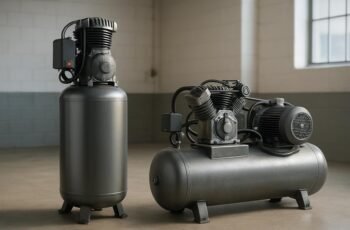
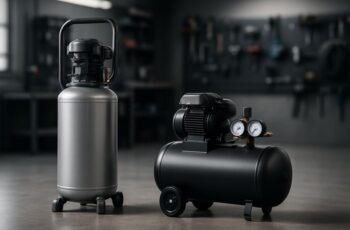
Consider a shop owner who switches from a single-stage unit for light intermittent tasks to a two-stage system for steady, heavier workloads. We’ll compare how each design handles pressure build, duty cycles, and runtime under real-world use. Our goal is to separate myths from measured performance and outline when the upfront choice pays off in maintenance, cooling needs, and long-term reliability, so you can decide with confidence.
Key Takeaways
- Single-stage compresses in one chamber, offering simpler hardware and higher discharge temperatures; two-stage uses two steps with cooling for steadier output.
- Two-stage design smooths pressure ramp, lowers peak torque, reduces piston wear, and improves reliability under heavy use.
- For duty cycles, single-stage has frequent starts and rapid heat buildup, while two-stage stretches ramps and enables better heat dissipation.
- Hobbyists often prefer single-stage for lighter, intermittent work; contractors favor two-stage for sustained high-pressure use and longer runtimes.
- Economics: single-stage is cheaper upfront but higher long-term energy/maintenance costs; two-stage has higher initial cost but better total cost of ownership.
What’s the Core Difference Between Single-Stage and Two-Stage Compressors
The core difference between single-stage and two-stage compressors lies in how many compression steps the air undergoes before it’s stored. We examine arrangement, efficiency, and pressure consistency to identify the key distinction. In a se 2 stage setup, air is compressed once to a moderate pressure and then cooled before a second compression step, reducing temperature rise and piston wear. By contrast, a single stage system compresses air directly to the final pressure in one chamber, yielding simpler hardware but higher discharge temperatures and reduced volumetric efficiency under heavy duty. Our focus here is on fundamental architecture and its impact on output stability, energy use, and maintenance demands, not on operating envelopes or control strategies—those belong to the next topic.
How Each Type Handles Pressure, Duty Cycle, and Runtime
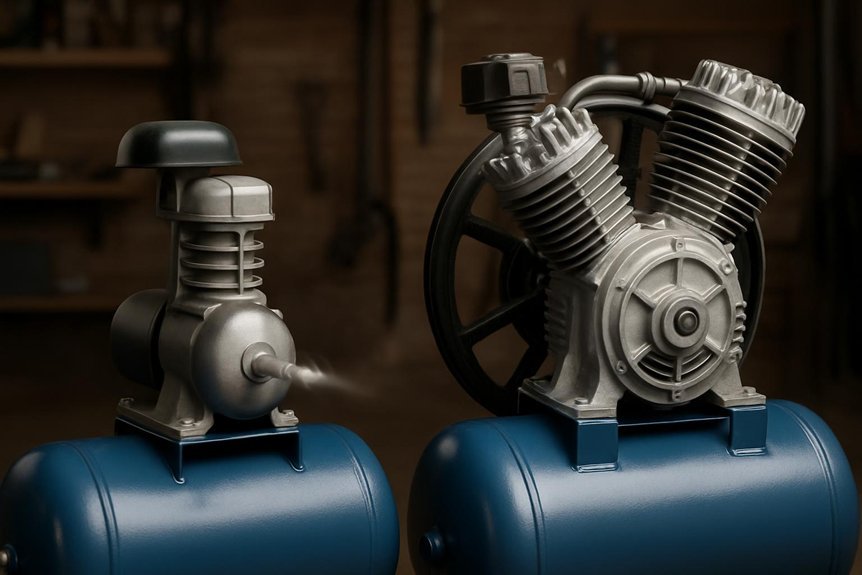
We’ll examine how each type manages pressure changes, considering how single-stage designs respond to surges versus two-stage systems that stage compression for steadier delivery. We’ll next discuss how duty cycle varies with load and runtime, noting that two-stage units often run longer intervals at lower pressures while single-stage units cycle more frequently. This sets up a clear comparison of runtime implications for continuous versus intermittent use.
Pressure Handling Dynamics
How do pressure handling, duty cycle, and runtime distinguish single-stage and two-stage air compressors? We answer by analyzing dynamic regulation, component stress, and efficiency implications. In single-stage units, pressure rise is rapid and limited by a low compression ratio, demanding short, repeated cycles and higher peak load, which stresses valves and bearings. Two-stage designs split compression into two steps, smoothing pressure ramp and expanding the duty cycle, lowering peak torque and reducing thermal load. Across both, efficient lubrication minimizes frictional losses under continuous cycling, while robust cooling preserves runtime consistency. Noise management becomes a byproduct of bearing quietness and valve timing, with two-stage systems typically offering steadier operation. Overall, pressure handling in two-stage models yields more stable output and longer service life under heavy use.
Duty Cycle Variation
Because duty cycle directly ties to how often a compressor starts, runs, and rests, the two designs handle loading and recovery differently: single-stage units cycle quickly with high peak load, while two-stage units stretch the ramp and rest periods, smoothing torque and heat. We assess duty cycle variation by examining start/stop frequency, runtime between cycles, and temperature rise. In single-stage configurations, frequent starts elevate heat dissipation demands per cycle, driving more aggressive heat handling and shorter effective runtimes under continuous load. Two-stage designs mitigate peak loading by splitting compression stages, extending duty cycles and reducing instantaneous heat dissipation rates. This results in steadier operation, improved efficiency, and more predictable maintenance needs, with heat dissipation reflecting broader temporal averaging rather than abrupt transients.
Runtime Implications
Runtime implications hinge on how pressure targets stress the compression stages and how duty-cycle dynamics shape run times. We evaluate single-stage and two-stage configurations: single-stage handles lower pressures with one cylinder and a simplified path, while two-stage uses staged compression to reduce outlet temperature and improve efficiency at higher targets. Pressure trajectories determine stage loading, cycling, and rest periods; higher targets demand more frequent cycling and longer cooldowns, extending runtime. Duty-cycle behavior differs: a two-stage unit often runs portions of its curve more evenly, reducing peak wear but increasing complexity. In practice, oil lubrication and belt drive quality influence friction losses, thermal behavior, and clutch or pulley response. Overall, runtime hinges on stage interaction, control strategy, and mechanical integrity under expected duty.
Best Use Cases: Hobbyist Tools vs. Contractor-Grade Workloads
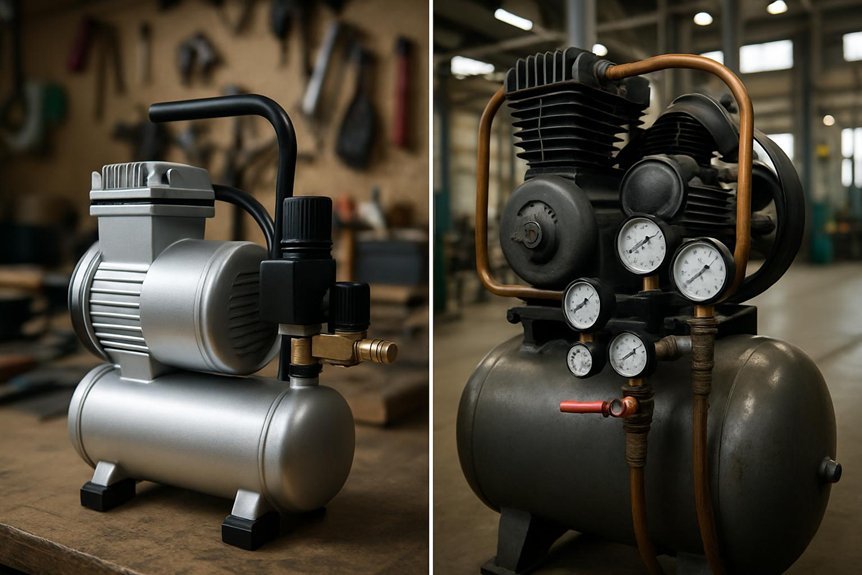
We’ll contrast hobbyist tool use with contractor-grade workloads to highlight how flow, pressure stability, and duty cycles shape component wear and maintenance. We’ll assess system longevity factors—bearing load, heat buildup, and filtration—across both use cases to clarify long-term reliability. This framing sets the stage for practical recommendations on selecting single-stage versus two-stage setups for each demand level.
Hobbyist Tool Use
Hobbyist tools typically fit lighter, intermittent workloads, delivering adequate performance for home projects without the cost or maintenance burden of contractor-grade equipment. We approach this topic with a precise lens, comparing single-stage and two-stage architectures for everyday tasks. For hobbyist use, airflow efficiency matters more than peak duty cycles, since cycles are short and infrequent. We evaluate how piston design affects startup torque, thermal rise, and lubrication needs, since these factors influence consistency across light projects. In practice, single-stage units often suffice for drilling, sanding, and modest nailer work, offering compact foot-prints and simpler upkeep. Two-stage models provide margin for occasional higher-demand tasks, but modest gains hinge on balanced compression stages, matched to tool workloads. Ultimately, select a configuration aligning with anticipated intermittent demand and maintaining efficient airflow.
Contractor-Grade Demands
How do contractor-grade demands reshape the choice between single-stage and two-stage air compressors for occasional professional tasks? We, as evaluators of tool performance, compare duty cycles, CFM at pressure, and thermal behavior under mixed workloads. Contractor workloads demand higher reliability, extended runtime, and rapid recovery between cycles, which favors two-stage units for sustained high-pressure use and reduced moisture carryover. For intermittent, torque-heavy tasks, a robust single-stage can suffice, but material-compatibility and tool longevity hinge on consistent pressure delivery. We assess startup surge, regulator accuracy, and port mapping to minimize subtopic irrelevance during job swings. Two-word discussion ideas emerge: efficiency vs capacity, maintenance vs cost. In practice, select based on real-world duty pattern, tool array, and expected runtime, rather than theoretical peak figures alone.
System Longevity Factors
Differences in system longevity emerge clearly when comparing hobbyist use to contractor-grade workloads, and these distinctions shape how you size, deploy, and maintain compressors. We focus on wear patterns, heat management, and duty cycles to forecast lifespan, noting that single stage efficiency and two stage cooling influence component stress and cooling effectiveness. In hobbyist scenarios, lower duty cycles reduce thermal load, while contractor workloads demand robust cooling, higher pressure tolerance, and proactive maintenance intervals to sustain performance.
- Align duty cycle with duty rating, prioritizing adequate cooling and vibration isolation.
- Track outlet temperatures to prevent thermal creep and premature wear.
- Implement staged cooling strategies where two stage cooling materially extends life under continuous use.
Upfront Cost and Long-Term Operating Expenses Comparison
When evaluating upfront costs and long-term operating expenses, a single-stage compressor generally presents a lower initial outlay but higher ongoing energy and maintenance costs per delivered CFM, whereas a two-stage model typically carries a higher upfront price yet offers better efficiency, reduced wear, and lower energy per unit of output over its lifecycle. We quantify upfront costs as purchase price plus installation and required ancillary equipment, then model long term savings through energy intensity, maintenance intervals, and component life. Our analysis shows that while two-stage systems demand more capital, their improved thermodynamic efficiency reduces kilowatt-hours per CFM and extends service intervals, yielding favorable total cost of ownership. In practice, decision-making hinges on target production volumes, duty cycle, and energy pricing.
Maintenance, Cooling, and Reliability in Real-World Use
In real-world use, maintenance, cooling, and reliability hinge on disciplined scheduling, appropriate thermal management, and component health monitoring. We compare stages by how heat recovers during duty cycles, how vibration translates to wear, and how filter regimes affect air quality and uptime. Conceptual differences in piston geometry and lubrication impact noise implications and service intervals, guiding proactive checks. We prioritize data logging, thermistor trends, and run-time hours to forecast failures and optimize cooling flow. For both architectures, reliability hinges on consistent airflow, clean intakes, and validated lubrication schedules.
- Systematic inspection cadence aligned with duty profile
- Continuous temperature and vibration monitoring with alert thresholds
- Regular filter and lubrication maintenance tied to usage metrics
How to Choose: A Step-by-Step Criteria Checklist
How do we choose between single-stage and two-stage air compressors? We approach this with a step-by-step criteria checklist that centers on application requirements and system constraints. First, define operating pressure, CFM needs, duty cycle, and storage volume, then map these to compressor stage count. Evaluate efficiency targets and total cost of ownership, including energy consumption, maintenance frequency, and replacement parts. Consider space and installation constraints, accessibility for servicing, and noise reduction goals, since acoustics impact workplace culture and compliance. Assess reliability under load profiles, surge handling, and cooling provisions to avoid thermal throttling. Finally, compare manufacturer support, warranty terms, and availability of staged controls or variable speed options. This disciplined framework leads to a rational, data-driven choice aligned with design considerations and performance targets.
Common Myths Debunked and Quick Performance Cheat Sheet
We’ll cut through the noise by debunking common myths about single-stage and two-stage air compressors and pairing each misconception with a concise, performance-focused cheat sheet. We present a precise, analytical assessment that separates fact from fiction, addressing Myth busting and Noise considerations with data-driven clarity. Our aim is to align expectations with measurable performance rather than marketing hype. Below are three clarified points you can act on immediately.
We debunk myths with concise, data-driven cheat sheets for single- vs. two-stage compressors.
1) Myth: One stage always costs less to operate. Cheat sheet: assess duty cycle and CFM at target pressure; total energy use matters more than tag price.
2) Myth: Noise level dominates all comfort concerns. Cheat sheet: consider frequency content and enclosure, plus airflow path optimization.
3) Myth: Two-stage always doubles efficiency. Cheat sheet: match stage count to load profile and pressure differential for your workload.
Frequently Asked Questions
How Does Noise Level Differ Between Single- and Two-Stage Units?
We can say: Two-stage units run cooler and smoother, delivering lower noise levels overall; single-stage often peaks louder during startup. Noise comparison shows two-stage advantages, with reduced maintenance implications due to fewer vibrations and steadier discharge.
Which Comes With Easier Maintenance for DIY Setups?
We find DIY maintenance easier on single-stage units due to simpler components, lower maintenance costs, and longer service intervals; however, we recommend checking specific model manuals because variations can shift maintenance costs and service intervals.
Do Vibration and Mounting Requirements Vary by Stage Type?
Yes, vibration sources and mounting standards differ by stage type, and lubrication considerations vary with load. We’ll analyze peak demand costs, mounting requirements, and mitigation methods to ensure stable operation and minimized wear across setups.
How Does Lubrication Type Affect Efficiency in Each Design?
Lubrication viscosity and oil lubrication considerably influence efficiency in both designs: higher viscosity oils reduce wear but raise parasitic losses, while too-low viscosity causes heat, friction, and leakage. We optimize by balancing viscosity for each stage.
Are There Hidden Energy Costs During Peak Demand Periods?
Yes—we observe hidden costs during peak demand, often driven by compressor cycling and stage transition dynamics, which spike energy usage and demand charges. We quantify peak demand impacts, then optimize controls to minimize these hidden costs effectively.
Conclusion
We’ve walked the numbers, and the verdict is crystal: choose your compressor like you’d choose a partner for heavy lifting. Single-stage jolts you awake with quick hits and simple guts, best for hobby bursts. Two-stage smooths the storm, tames temps, and outlasts long shifts with cooler, smarter performance. The more you demand, the more you gain from the two-stage’s discipline. In short, duty dictates design—matching workload to architecture keeps you productive, protected, and relentlessly reliable.