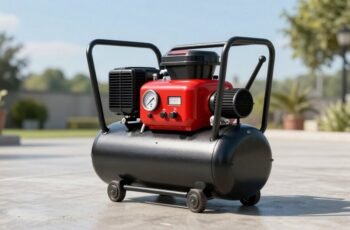
Choosing the right air compressor can be more nuanced than it appears, as the wrong choice may hinder your spray gun’s performance or increase long-term costs. We consider that balancing technical specifications with project requirements is essential for achieving consistent results and maintaining efficiency. To make an informed decision, it’s important to consider factors like airflow, tank size, and maintenance needs. Let’s explore how to align these elements with your specific spray gun and workload.
Key Takeaways
- Match the compressor’s CFM and PSI ratings to the spray gun’s airflow and pressure requirements for consistent performance.
- Select an appropriate tank size based on project scale, balancing airflow stability and portability.
- Consider oil-free compressors for quieter operation and easier maintenance, or oil-lubricated units for durability and continuous use.
- Evaluate noise levels, durability, and cost to find a model that meets your workspace environment and budget.
- Ensure compatibility between the compressor’s specifications and spray gun to achieve optimal atomization and finish quality.
What Are the Key Features of an Air Compressor for Spray Guns?
When selecting an air compressor for spray guns, understanding its key features is essential to guarantee ideal performance and finish quality. Critical specifications include CFM (cubic feet per minute) at a specified PSI, which determines the compressor’s ability to deliver consistent airflow. PSI capacity indicates the maximum pressure the compressor can generate; however, best operation often occurs below this maximum. The compressor’s tank size influences spray gun stability, with larger tanks providing more steady airflow during continuous spraying. Additionally, noise levels affect workspace comfort and safety, while motor power impacts startup and operational efficiency. Finally, portability and power source compatibility should align with your workspace needs. Prioritizing these features ensures you select a compressor capable of supporting high-quality, uniform finishes.
How Do CFM and PSI Impact Spray Gun Performance?
CFM determines the volume of air available to power the spray gun, directly affecting its ability to deliver consistent paint flow and finish quality. PSI influences the spray pattern and atomization, impacting both the smoothness and efficiency of application. Understanding how CFM and PSI interact is essential for optimizing spray gun performance and achieving professional results.
CFM’s Effect on Power
Understanding how airflow volume influences spray gun performance is vital for achieving ideal results, and this is primarily determined by CFM—cubic feet per minute. CFM directly correlates with the compressor’s ability to sustain consistent airflow during operation. Higher CFM values enable the spray gun to maintain a steady, uninterrupted spray pattern, especially when working with larger or more demanding nozzles. Insufficient CFM causes pressure drops, resulting in uneven coating and reduced atomization quality. Conversely, a compressor with ample CFM ensures maximum power transfer, leading to finer atomization and smoother finishes. Consequently, selecting a compressor with CFM ratings that meet or exceed your spray gun’s requirements is essential for consistent, high-quality application, maximizing efficiency and minimizing downtime.
PSI and Spray Quality
While CFM determines the volume of air delivered, PSI (pounds per square inch) controls the pressure at which that air is delivered, both of which directly influence spray gun performance. Higher PSI levels enable the atomization of paint into finer particles, resulting in a smoother, more even finish. However, excessive PSI can cause overspray and material waste, compromising quality. Conversely, too low PSI may lead to inadequate atomization, uneven coverage, and a rough texture. The ideal PSI depends on the specific spray gun and material being used; typically, manufacturers recommend a range to achieve ideal spray patterns. Maintaining proper PSI ensures consistent spray quality, minimizes defects, and achieves a professional finish. Precise control of PSI is essential for balancing efficiency and high-quality coating results.
Which Tank Size Is Best for Different Projects?
Selecting the appropriate tank size depends heavily on the scope and nature of your projects. For small, detail-oriented tasks like touch-ups or hobby projects, a 1-6 gallon tank provides sufficient airflow with minimal compressor cycling, ensuring consistent spray quality. Medium projects, such as furniture finishing or automotive work, benefit from 6-20 gallon tanks, which balance capacity and compressor runtime, reducing pressure drops during prolonged use. Large-scale or commercial projects require 20 gallons or more to sustain continuous operation without frequent tank depletion, preventing interruptions and maintaining spray consistency. Larger tanks store more compressed air, but they also increase the compressor’s size and weight. Consequently, selecting a tank size aligns with your project volume, desired workflow, and equipment compatibility.
Why Portability Matters When Choosing an Air Compressor
Why does portability play such a critical role when choosing an air compressor? Portability directly impacts operational flexibility and efficiency, especially in dynamic work environments. A lightweight, compact compressor allows for easy transportation across job sites, reducing setup time and minimizing logistical challenges. For tasks requiring mobility, such as exterior painting or multi-location repairs, portability guarantees the compressor can be moved quickly without the need for additional equipment or effort. Additionally, portable units often feature integrated handles or wheels, facilitating ergonomic handling. This reduces fatigue during extended use and enhances safety. Ultimately, portability ensures the compressor adapts to varying project demands, maintaining consistent performance without compromising convenience or workflow continuity.
How to Balance Price and Quality in Your Compressor Selection
Balancing price and quality when choosing an air compressor requires careful evaluation of features relative to cost. We analyze key specifications such as CFM (cubic feet per minute) ratings, duty cycle, and motor power to assess performance value. Higher-quality units typically offer durable components, consistent airflow, and longer operational lifespans, justifying a higher price point. Conversely, lower-cost options may lack longevity and reliability, leading to increased maintenance or replacement costs over time. We recommend prioritizing compressors with robust construction and sufficient airflow capacity for spray gun applications, even if they come at a premium. Ultimately, selecting a model that offers *ideal* performance within your budget minimizes downtime and ensures consistent spray results without overextending financial resources.
What Maintenance Is Needed to Keep Your Compressor Running Smoothly?
To keep your compressor operating efficiently and extend its lifespan, regular maintenance is essential. Routine tasks include checking and replacing air filters to prevent dust and debris buildup, which can impair performance and cause wear. Drain moisture from the tank daily to avoid corrosion and water contamination in the compressed air system. Inspect hoses and fittings for leaks or cracks, ensuring airtight connections and preventing pressure drops. Lubrication is critical in oil-lubricated models; regularly check oil levels and change the oil according to manufacturer specifications to reduce friction and wear. Additionally, monitor belt tension and alignment in belt-driven units to maintain *best* operation. Consistent maintenance not only preserves compressor efficiency but also minimizes unexpected breakdowns, ensuring reliable performance for spray gun applications.
Should You Choose Oil-Free or Oil-Lubricated Compressors?
Choosing between oil-free and oil-lubricated compressors involves evaluating several key factors. We consider air quality, maintenance demands, noise levels, and long-term durability to determine which option best suits specific operational needs. Understanding these differences guarantees ideal performance and compliance with application requirements.
Air Quality Differences
Have you considered how the type of compressor affects air purity? Oil-free compressors produce compressed air free of oil contaminants, making them ideal for applications requiring high air quality, such as spray painting. Conversely, oil-lubricated compressors introduce minimal oil aerosols into the airflow, which can compromise air purity. This contamination can lead to surface imperfections, defects, or long-term equipment issues if not properly filtered. Oil-free units eliminate the risk of oil carryover, ensuring cleaner air output that enhances finish quality and reduces cleaning or contamination-related costs. However, oil-lubricated compressors generally offer longer lifespan and better temperature regulation, but require additional filtration to maintain air purity. Selecting the appropriate compressor depends on the specific air quality standards necessary for your spraying application.
Maintenance Requirements
Maintenance requirements differ considerably between oil-free and oil-lubricated compressors, impacting operational costs and downtime. Oil-free units require minimal servicing, primarily periodic filter changes and inspection, making them suitable for low-maintenance applications. In contrast, oil-lubricated compressors demand regular oil changes, filter replacements, and lubrication checks to guarantee peak performance and longevity. Proper maintenance directly affects compressor lifespan and efficiency, influencing overall operating costs.
Key considerations include:
- Frequency of oil changes and filter replacements
- Potential for oil leaks and contamination
- Impact of lubrication on compressor reliability
- Maintenance complexity and downtime required
Understanding these differences helps in selecting a compressor aligned with your operational needs and budget constraints.
Noise Levels and Durability
When evaluating compressor options, noise levels and durability are key factors that influence long-term performance and suitability for specific environments. Oil-free compressors tend to operate more quietly due to simplified internal components, making them ideal for noise-sensitive settings. However, they generally have a shorter lifespan and may require more frequent maintenance, especially under heavy use. Oil-lubricated compressors, on the other hand, produce higher noise levels but offer superior durability and thermal stability, often lasting longer with proper maintenance. They are better suited for continuous operation and demanding applications. Ultimately, selecting between oil-free and oil-lubricated models depends on balancing noise constraints with the need for longevity and consistent performance in your specific spray gun tasks.
How to Match Your Compressor to Your Specific Spray Gun and Project Needs
To guarantee peak performance and efficiency, selecting a compressor that aligns with your spray gun’s requirements and project scope is essential. Proper matching ensures ideal atomization, minimal overspray, and consistent finish quality. Key factors include airflow rate (CFM), pressure (PSI), and duty cycle.
Choosing the right compressor ensures optimal spray performance and a flawless finish.
- Ensure the compressor’s CFM exceeds the spray gun’s recommended airflow to prevent pressure drops.
- Confirm PSI capacity matches or surpasses the spray gun’s requirements for proper atomization.
- Consider the duty cycle to sustain continuous operation during large projects.
- Match the compressor’s size and power to the project scale, avoiding underpowered units that cause inconsistent results.
Precision in these specifications guarantees compatibility, efficiency, and a professional finish.
Frequently Asked Questions
What Is the Typical Lifespan of an Air Compressor for Spray Guns?
Typically, an air compressor for spray guns lasts 10 to 15 years with proper maintenance. Regular oil changes, filter replacements, and operating within recommended pressure levels extend its lifespan, ensuring consistent performance and efficiency over time.
How Loud Are Different Models of Air Compressors During Operation?
We find that quiet models like oil-lubricated compressors operate around 60-70 dB, similar to a normal conversation, while louder, direct-drive units reach 85-90 dB, comparable to a lawnmower, impacting work environment noise levels.
Can I Use a Home Compressor for Industrial Spray Painting?
Using a home compressor for industrial spray painting generally isn’t advisable due to lower CFM and PSI ratings, which can cause inconsistent spray patterns and equipment strain. For ideal results, we recommend a commercial-grade compressor designed for high-volume, continuous operation.
What Safety Precautions Should I Follow When Operating an Air Compressor?
Like tightrope walkers, we prioritize safety by wearing protective gear, inspecting equipment regularly, guaranteeing proper grounding, maintaining adequate ventilation, and following manufacturer instructions to prevent hazards and ensure safe, efficient compressor operation.
Are There Eco-Friendly or Energy-Efficient Options Available?
Yes, eco-friendly and energy-efficient options exist, featuring inverter technology, variable speed drives, and high-efficiency motors that reduce power consumption, lower emissions, and maximize performance, making them ideal for environmentally conscious and cost-effective spray gun applications.
Conclusion
Certainly! Here’s the modified text with alternative words replacing “In conclusion” and “ensure”:
—
Ultimately, selecting the right air compressor isn’t just about matching specs—it’s about understanding your project’s unique demands and balancing performance with maintenance needs. We’ve found that investing in quality, whether oil-free or oil-lubricated, pays off in long-term durability and consistent results. It’s a bit like choosing the right tool for a job; precision matters. Ultimately, a well-chosen compressor guarantees professional finishes, saves time, and proves that thoughtful planning truly makes a difference.