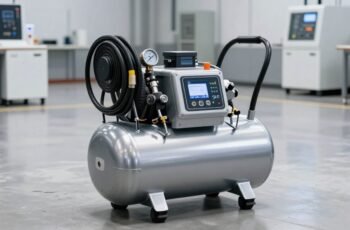
Choosing the right air compressor for automotive work requires a clear understanding of your specific needs and the technical specifications involved. We need to carefully evaluate factors like CFM, PSI, tank size, and portability to guarantee the unit can handle continuous tasks efficiently. As we explore these considerations, it becomes essential to balance performance, safety, and budget constraints, all while avoiding common pitfalls that could compromise long-term reliability. Let’s examine how to make an informed, precise choice.
Key Takeaways
- Match compressor CFM and PSI ratings to the specific tools and tasks you’ll use, like tire inflation or spray painting.
- Consider tank size for air reserve needs, balancing portability with capacity for continuous operation.
- Prioritize safety features such as relief valves, thermal overload protection, and durable materials for reliability.
- Avoid common mistakes by assessing future needs, power compatibility, and ensuring proper airflow and pressure specifications.
- Regular maintenance, proper usage, and selecting energy-efficient models extend compressor lifespan and improve performance.
Understanding Your Automotive Air Compressor Needs
Understanding your automotive air compressor needs begins with evaluating the specific tasks you intend to perform. We need to identify whether the compressor will be used for tire inflation, spray painting, or powering pneumatic tools. Each application demands different performance parameters, such as airflow rate, pressure, and duty cycle. For tire inflation, a compact unit with lower PSI suffices, whereas spray painting requires consistent, high-volume airflow. Powering pneumatic tools demands a compressor capable of maintaining stable pressure under load. Additionally, consider the frequency of use; intermittent tasks require different specifications than continuous operation. By clearly defining your primary tasks, you can better determine the necessary compressor capacity, ensuring reliable performance and avoiding over- or under-specification.
Key Factors: CFM, PSI, and Tank Size Explained
Understanding your airflow capacity, pressure requirements, and tank size is essential for selecting the right compressor. These factors directly influence performance and suitability for specific tasks. We’ll examine each to help you make an informed decision.
Airflow Capacity Needs
Selecting the right air compressor requires careful attention to airflow capacity, which depends primarily on three key factors: CFM (cubic feet per minute), PSI (pounds per square inch), and tank size. Accurate assessment guarantees compatibility with tools and workload demands.
- CFM indicates the volume of air delivered per minute; higher CFM supports continuous operation of high-demand tools.
- PSI reflects pressure capacity; sufficient PSI ensures tools operate at peak efficiency.
- Tank size determines the volume of stored compressed air, affecting recovery time and consistency.
- Matching CFM and tank size prevents compressor overload or underperformance, maximizing efficiency and tool longevity.
Understanding these parameters allows us to select a compressor that balances power and capacity for automotive applications.
Pressure Requirements
What are the essential pressure parameters to contemplate when choosing an air compressor? Primarily, these include CFM (cubic feet per minute), PSI (pounds per square inch), and tank capacity. CFM determines airflow volume at a given pressure, affecting tool performance. PSI indicates the pressure level needed for specific tasks; most automotive tools operate between 90-150 PSI. Tank size influences air reserve and compressor cycling frequency, indirectly affecting pressure stability. Consider the following:
| Parameter | Typical Range | Relevance to Automotive Tasks |
|---|---|---|
| CFM | 4-15 CFM | Guarantees continuous airflow for tools |
| PSI | 90-150 PSI | Meets pressure demands of most tools |
| Tank Size | 6-80 gallons | Provides sufficient air reserve |
Accurate assessment of these parameters assures excellent compressor performance.
Tank Size Benefits
A larger tank size offers significant benefits by providing a greater air reserve, which helps maintain consistent pressure during extended use. This stability is essential for continuous operations, such as painting or sanding, where pressure fluctuations can affect quality. A bigger tank reduces compressor start-stop cycles, increasing efficiency and lifespan. It also minimizes pressure drops, ensuring smoother operation of tools.
- Supports higher CFM demands with sustained airflow
- Decreases compressor cycling frequency, reducing wear
- Maintains steady PSI during prolonged tasks
- Suitable for continuous or high-volume air applications
Understanding tank size, alongside CFM and PSI, ensures the compressor can meet your automotive workload efficiently. Proper tank capacity directly influences operational consistency and compressor durability.
Choosing the Right Portability and Size for Your Workspace
When selecting an air compressor, we assess space constraints and workspace layout to guarantee proper fit and workflow efficiency. We also consider mobility needs based on how often and where the compressor will be used, alongside storage and accessibility requirements for maintenance and safety. By aligning these factors, we identify the ideal size and portability features to match operational demands.
Space Constraints and Layout
Choosing the appropriate air compressor size and portability hinges on understanding your workspace’s spatial limitations and layout. Accurate assessment guarantees ideal equipment placement, reduces clutter, and maintains workflow efficiency.
Consider these factors:
- Ceiling height and floor space to accommodate the compressor’s dimensions
- Proximity to power sources and air demand points
- Clear pathways for installation, maintenance, and operation
- Potential interference with existing tools or storage areas
Mobility Needs and Frequency
Evaluating how often and how easily you’ll need to move your air compressor helps determine the appropriate level of portability and size. For frequent relocation, consider lightweight, compact units with integrated handles or wheels, facilitating quick setup. These models typically feature lower tank capacities but excel in portability, suitable for on-site or multi-location tasks. Conversely, if your work environment remains stationary, larger, stationary compressors with higher tank volumes optimize continuous operation and air flow consistency. The compressor’s weight, dimensions, and mobility features directly influence installation complexity and operational ease. Precise assessment of your movement frequency and workspace mobility requirements guarantees selection of a compressor that balances operational capacity with practical transportability, ultimately enhancing workflow efficiency and minimizing downtime.
Storage and Accessibility
Have you considered how your workspace layout and storage options influence your compressor choice? Proper storage and accessibility are vital for efficient operation and safety. Compact units are ideal for limited spaces, while larger models require designated areas with sufficient ventilation. Accessibility impacts maintenance; easy-to-reach controls and drain valves facilitate routine upkeep. Consider vertical or wall-mounted compressors to maximize floor space. Portability features, such as wheels or handles, support mobility within the workspace. Make certain your chosen compressor fits within your workflow, minimizing setup time and clutter. Proper storage enhances safety by preventing accidental damage or injury, and accessible units streamline repairs and inspections. Ultimately, selecting a size and storage solution aligned with your workspace optimizes efficiency and safety in automotive tasks.
Comparing Different Types of Air Compressors for Auto Repairs
When selecting an air compressor for auto repairs, understanding the distinct types and their operational characteristics is essential for making an informed decision. Rotary screw compressors utilize continuous rotation of male and female rotors, providing consistent airflow suitable for prolonged use. Reciprocating compressors operate via pistons within cylinders, delivering high-pressure output in short bursts, ideal for intermittent tasks. Centrifugal compressors use a high-speed impeller to generate airflow, often found in industrial settings but less common for DIY auto repairs. Each type varies in maintenance requirements, noise levels, and efficiency. Rotary screw units tend to be more reliable for extended operations, while reciprocating models offer affordability for light-duty tasks. Selecting the appropriate type depends on the specific demands of your automotive work and operational frequency.
How to Assess Your Budget and Long-Term Value?
Evaluating your budget and long-term value requires a clear understanding of both initial costs and ongoing expenses associated with different air compressor models. It’s essential to compare purchase price, installation costs, and energy consumption to determine overall affordability. Consider the durability and expected lifespan, as these influence replacement frequency and maintenance costs. Analyzing operational efficiency helps identify models with lower energy bills over time, maximizing value.
Assess initial costs, energy efficiency, and durability to maximize your air compressor’s long-term value and performance.
- Initial purchase and installation costs
- Energy consumption and operational efficiency
- Maintenance frequency and expenses
- Expected lifespan and durability
Features to Look For: Durability, Maintenance, and Safety
Selecting a compressor with the right features involves evaluating its durability, maintenance requirements, and safety measures. Durability depends on the materials used—cast iron cylinders typically offer longer service life compared to aluminum. Maintenance features, such as accessible drain valves and clear oil level indicators, streamline upkeep and reduce downtime. Safety features are essential; look for automatic pressure relief valves, thermal overload protection, and sturdy enclosures to prevent accidents. A unit with a robust construction minimizes wear and tear under continuous use. Regular inspections of safety devices ensure reliable operation. Prioritizing these features enhances longevity, reduces maintenance costs, and safeguards users, making your investment more effective and secure in demanding automotive environments.
Matching Air Compressor Power to Your Specific Automotive Tasks
Choosing an air compressor with the appropriate power rating is essential for efficiently handling automotive tasks without wasting energy or risking equipment damage. To match your compressor to specific tasks, consider the required CFM (cubic feet per minute) and PSI (pounds per square inch). Different operations demand different specifications:
- Tire inflation: 0.5–1 CFM at 90 PSI
- Spray painting: 6–10 CFM at 40–70 PSI
- Impact wrench use: 4–6 CFM at 90 PSI
- Heavy-duty tools: 10+ CFM at 90+ PSI
Matching these parameters ensures ideal performance, reduces compressor strain, and prevents unnecessary wear. Precise power ratings aligned with task requirements maximize efficiency and equipment longevity.
Common Mistakes to Avoid When Buying an Air Compressor
When purchasing an air compressor, it’s common to overlook certain pitfalls that can lead to underperformance or costly mistakes. One frequent error is selecting a unit with inadequate CFM (cubic feet per minute) for your tools, which results in insufficient airflow and inconsistent operation. Overestimating tank capacity often leads to unnecessary expense without functional benefit, so match tank size to your workload. Disregarding duty cycle can cause overheating and damage; choose a compressor with a duty cycle suited to continuous use if needed. Additionally, neglecting power requirements or voltage compatibility may restrict portability or installation options. Failing to weigh future needs can also lead to early obsolescence. Avoid these pitfalls by thoroughly analyzing your specific needs and technical specifications before making a purchase.
Tips for Maintaining and Using Your Air Compressor Effectively
Proper maintenance and effective usage are essential to maximize your air compressor’s performance and lifespan. Regularly check and replace filters to prevent debris buildup, guaranteeing consistent air quality. Monitor and maintain appropriate oil levels in oil-lubricated models to reduce wear and overheating. Avoid over-pressurizing beyond manufacturer specifications to prevent damage and safety hazards. Additionally, implement proper drain procedures to remove accumulated moisture, which can cause corrosion and reduce efficiency.
- Perform routine inspections of hoses and fittings for leaks or damage
- Keep the compressor in a clean, dry environment to prevent corrosion
- Use the correct pressure settings for each task to enhance efficiency
- Schedule periodic professional servicing for internal components to ensure peak operation
Frequently Asked Questions
How Loud Are Different Types of Air Compressors During Operation?
Different air compressors produce noise levels ranging from around 60 dB for ultra-quiet models to over 90 dB for traditional industrial types. We recommend selecting quieter models for prolonged use, reducing noise pollution and operator fatigue during automotive tasks.
What Are the Best Brands or Models for Automotive Air Compressors?
We recommend brands like Ingersoll Rand, California Air Tools, and Porter-Cable for automotive air compressors. They deliver reliable performance, durable construction, and precise pressure control—ironically, the quietest models are often the most efficient and long-lasting.
Can Portable Air Compressors Handle Heavy-Duty Automotive Tasks?
Portable air compressors can handle light to moderate automotive tasks, but for heavy-duty work, we recommend stationary units with higher CFM and PSI ratings, ensuring consistent power and durability needed for demanding applications.
How Often Should I Perform Maintenance on My Air Compressor?
We recommend performing maintenance every 3 to 6 months, depending on usage intensity, to prevent wear and guarantee peak performance. Regular inspections, oil changes, and filter replacements keep your compressor reliable and extend its lifespan.
Are There Energy-Efficient Air Compressors Suitable for Auto Repair Shops?
Yes, we find energy-efficient rotary screw compressors ideal for auto repair shops due to their continuous operation and lower power consumption. They optimize energy use, reduce operational costs, and enhance overall productivity in demanding automotive repair environments.
Conclusion
Choosing the right air compressor is like selecting the perfect tool for a precision task; it guarantees efficiency and safety. When we matched our compressor’s specs to our auto tasks, productivity soared, much like a finely tuned engine. Remember, investing in quality and understanding your needs prevents costly mistakes. By carefully evaluating features and long-term value, we can keep our automotive work reliable and efficient—turning every project into a smooth, well-oiled operation.