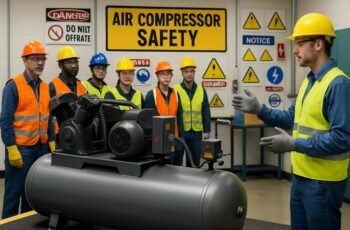
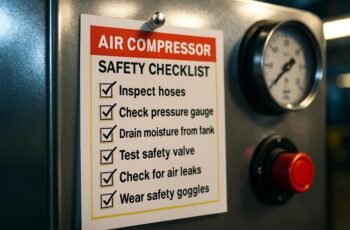
We understand PPE might slow us down, but skipping it isn’t an option when air compressors run at full risk. Our approach is precise, codes-oriented, and proactive, ensuring eye/face protection, hearing defense, respiratory fit, and proper hand, body, and foot safeguards are in place and verified at each shift. We’ll outline clear checks, documentation, and integration into the maintenance workflow—and we’ll show how small, consistent actions keep the system ready, even as questions emerge about gaps or failures.
Key Takeaways
- Eye and face protection must meet ANSI Z87.1 standards and integrate with overall PPE for the compressor workflow.
- Use hearing protection as a mandatory control for compressor noise; prioritize engineering controls alongside PPE.
- Respiratory protection selection depends on hazard level; elastomeric half masks or N95-like options for low exposure, P100/HEPA for higher loads.
- Hand, body, and foot protection must be ANSI/ASTM-compliant with proper inspection and fit at shift changes and after impacts.
- Align PPE with the entire compressor safety lifecycle, linking protection to controls, permits, lockout/tagout, and maintenance schedules.
Eye and Face Protection PPE
Eye and face protection is essential when operating air compressors because flying debris, dust, and splashes pose serious injury risks. We, as a team, align with concise codes-driven practices to minimize exposure. Start with eye protection that meets recognized standards, ensuring impact resistance and optical clarity in all tasks. We select ANSI Z87.1–certified models; shade, if applicable, is reserved for radiant sources and specific operations. Face shields provide additional coverage for splash events, grinding, or cutting tasks, and must fit with proper helmet compatibility. We verify fit, replace damaged units promptly, and enforce a no-compromise rule: PPE is worn at all times during setup, operation, and maintenance. Regular inspections, cleanings, and documentation ensure readiness and accountability.
Protecting Your Ears From Compressor Noise
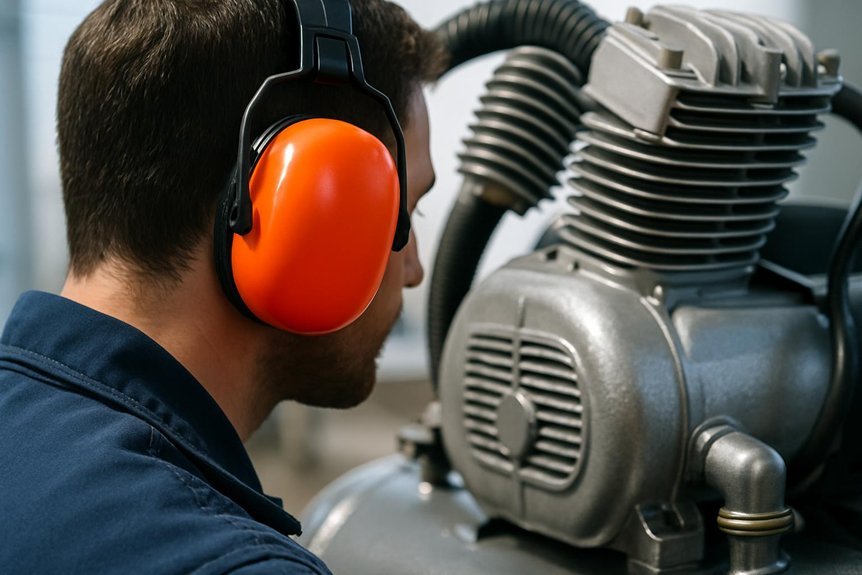
How loudly can a compressor get, and how do we guard our hearing as a routine? We approach ear protection as a mandatory control measure, not a courtesy. We identify sound sources, measure with calibrated devices, and document decibel management targets. We implement engineering controls first—enclosures, mufflers, and vibration isolation—before relying on personal protection. When PPE is necessary, we select ANSI- or OSHA-compliant ear protection that fits the user and the risk; fit testing and proper insertion become part of the protocol. We establish noise exposure baselines, monitor ongoing levels, and enforce hearing conservation practices for all operators. Clear guidelines, routine calibration, and timely maintenance ensure consistent protection and compliance with code requirements.
Respiratory Protection: Selecting Masks and Respirators
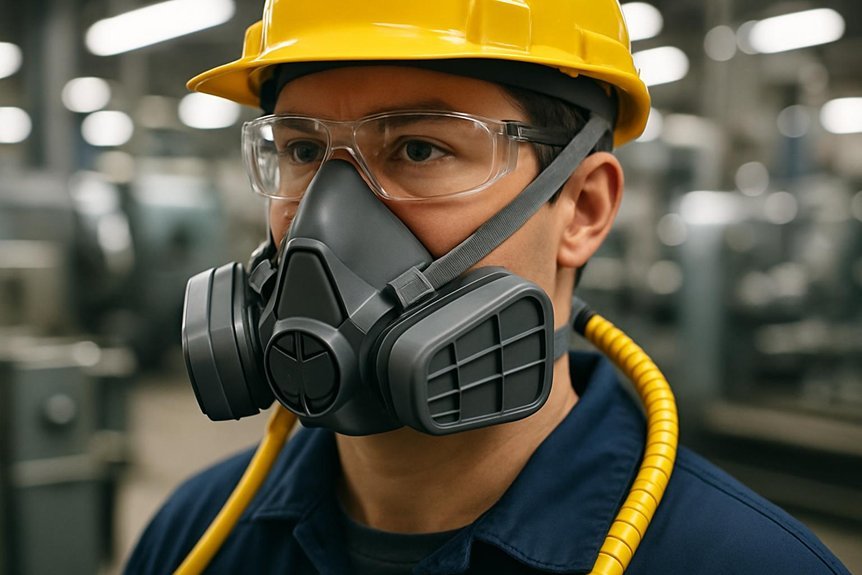
We’ll start with clear mask selection criteria and fit essentials to ensure you’re protected during compressor use. We’ll outline how to assess filtration efficiency, face-seal integrity, and workload compatibility before choosing respirators. This sets the foundation for a precise, code-driven approach to respiratory protection.
Mask Selection Criteria
Selecting the right mask or respirator starts with identifying the hazard and the exposure level, then matching protection to that risk with proper fit, filtration, and usage. We evaluate facepiece type, filter class, and assigned protection factor to determine suitability for air compressor operations. We prefer elastomeric half masks or disposable N95-like options when exposures are low, reserving respirators with P100 or HEPA filters for higher aerosol loads. We design selection criteria around concentration, duration, and work tasks, avoiding unnecessary protection that hinders communication or comfort. We document clear usage limits, storage, and inspection steps, and we verify compatibility with eye protection and hearing gear. We avoid unrelated ideas and off topic concepts, staying focused on compliant, practical, and repeatable mask choices for our processes.
Respirator Fit Essentials
When choosing respirators for air compressor work, we start with fit to guarantee the protection we select actually applies to the task. This respirator fit Essentials focus on verification steps, not guesswork. We assess face seal integrity, choosing models with adjustable straps and nose bridges that won’t leak during cycled vibration. We document fit tests, performing qualitative or quantitative checks per code requirements to confirm adequate seal under typical movements. We prioritize respirator fit that maintains consistent seal during air filtration at varying pressures and temperatures, ensuring no bypass paths form. We select devices compatible with required filters, cartridges, and maintenance schedules, aligning with risk assessments. Clear labeling, donning/doffing protocols, and user seal checks are nonnegotiable for reliable air filtration outcomes.
Hand Protection: Gloves for Handling Pressure and Debris
Are you protecting your hands where pressure and flying debris are constant hazards, or are you risking injury? We implement hand protection strategies that focus on material suitability, grip, and cut resistance for handling pressure in pneumatic tasks. Our gloves must meet applicable standards, resist oil and abrasion, and maintain dexterity for fine control around valves and fittings. We select glove types that minimize heat buildup and snag risk while offering impact protection when drops or tool rebounds occur. Before work, we inspect for wear, tears, and moisture intrusion, replacing compromised gear immediately. We train teams to remove gloves only in safe zones and to sanitize after exposure. Our approach emphasizes hand protection as a proactive, codes-aligned element of overall machine safety and process integrity.
Body Protection: Clothing and Aprons for Dust and Burns
We outfit our team with body protection that minimizes exposure to dust and heat, using clothing and aprons designed for breathability, durability, and burn resistance. We specify fabric with dust control properties and flame retardants, selecting materials that meet applicable fire and arc-rating standards. Our approach pairs layered coverage with reinforced seams, tight cuffs, and coated flux pockets to reduce radiant and particulate exposure. We enforce routine inspection for wear, tears, and snag risk, replacing compromised garments promptly. Fit is nonrestrictive, allowing safe manipulation of controls and valves while maintaining protection. We implement laundering protocols that preserve protective qualities without compromising breathability. Contractors don flame-rated aprons when near hot surfaces or molten debris, and we document compliance with PPE charts and hazard assessments.
Footwear and Spur Protection for Compressor Work
Footwear must provide impact, slip, and puncture resistance, along with spur protection for the nuances of compressor work. We address footwear requirements with a concise, codes-aligned stance, focusing on safe footing and hard-wearing shells that endure oil, heat, and debris. We emphasize spur protection to prevent injuries during hose routing, coupling, and trap inspections. Our approach is proactive: select boots with approved toe and midsole protection, anti-slip tread, and puncture-resistant insoles. Fit matters; choose ANSI/ASTM-compliant footwear and verify sole rigidity. Regularly inspect lacing, eyelets, and heel counters. Spur protection should align with work tasks, not hinder movement. – ANSI/ASTM-compliant gear – steel or composite toe – puncture-resistant midsole – oil/chemical resistance – reinforced spur guards
Fitting, Maintaining, and Inspecting PPE Regularly
How can we guarantee PPE stays effective on the job site? We implement strict protocols for fitting maintenance and inspection scheduling that align with established standards. We verify fit during each shift change and after any equipment impact, documenting results immediately. We schedule routine inspections of respirators, eye protection, hearing protection, and protective footwear, ensuring seals, straps, and cushioning remain intact. We require user-train verification that gaskets, filters, and visors meet current code requirements before use. Maintenance actions follow manufacturer guidance, with clear records of dates, responsible personnel, and corrective actions. We standardize adjustments for headgear and harnesses, correcting loosening or wear promptly. By enforcing consistent, codified routines, we minimize failure risks and sustain protective performance throughout every operation.
Integrating PPE Into a Broader Compressor Safety Plan
We integrate PPE into our broader compressor safety plan by mapping PPE milestones to system-wide safety goals and performance standards. This alignment guarantees PPE decisions support overall risk reduction, compliance, and incident learnings across the facility. We’ll keep the discussion focused on concrete milestones and how they synchronize with the broader safety program.
PPE Integration Milestones
PPE integration milestones are the concrete steps we use to weave personal protective equipment into a thorough compressor safety plan, ensuring coverage from risk assessment to ongoing verification. We outline critical checkpoints, assign clear owners, and tie milestones to measurable criteria. Each milestone emphasizes practical compliance: selecting appropriate PPE, validating fit, and documenting performance. We synchronize equipment checks with maintenance cycles, ensuring compatibility with drying hoses and tool calibrations. We mandate immediate corrective actions when gaps appear, and we close the loop with verification audits. This disciplined cadence keeps safety outcomes predictable and auditable.
- Define risk-based PPE requirements aligned to task profiles
- Verify PPE fit, integrity, and compatibility with hoses and tools
- Schedule and record routine tool calibrations
- Integrate PPE checks into maintenance workflows
- Conduct post-task verification and lessons capture
Broader Safety Plan Alignment
Our broader safety plan aligns PPE integration with the full compressor safety lifecycle, from risk assessment to daily operations and post-event reviews. We connect PPE to controls, permits, lockout/tagout, and maintenance schedules, ensuring a cohesive risk picture. This alignment prevents silos and elevates accountability, so teams follow a unified standard. We document criteria for selecting PPE based on exposure, energy sources, and failure modes, tying it to inspection findings and corrective actions. To illustrate coherence, consider the table below as a quick reference for cross-functional teams.
| PPE Roles | Safety Plan Link |
|---|---|
| Hearing protection | Reduces noise-related risks in daily operations |
| Eye and face protection | Supports incident reporting and post-event reviews |
Avoid unrelated topic distractions; avoid off topic comparison.
Common PPE Mistakes to Avoid and Quick Troubleshooting
Common PPE mistakes undermine protection and quick troubleshooting hinges on catching them early. We identify gaps fast, then deploy fixes that keep our system safe and compliant. When PPE is misused or worn incorrectly, risks spike; our approach is to verify fit, condition, and compatibility before each shift. Troubleshooting becomes a discipline: inspect seals, filters, and ear/eye protection for wear, and replace worn components promptly. We adopt straightforward checks that support airflow optimization and energy efficiency without delay. Consistent labeling, documented routines, and quick replacements minimize downtime and hazards.
- Verify correct PPE size and seal integrity every use
- Inspect filters, faceshields, and hearing protection for wear
- Replace damaged components immediately, log changes
- Align PPE with pressure and noise levels, not assumptions
- Track maintenance to sustain airflow optimization and energy efficiency
Frequently Asked Questions
How Often Should PPE Be Replaced After Exposure to Oil Mist?
We replace PPE after exposure duration for oil mist; assess filtration integrity, replace when filtration efficacy declines or after defined exposure intervals, and document results. We commit to proactive checks, ensuring continued protection and oil mist filtration reliability.
Are PPE Standards Different for Portable vs. Stationary Compressors?
We’ll answer: yes, portable standards differ from stationary standards. We’re aligning PPE rules to the asset: portable standards emphasize mobility and leak risk, stationary standards emphasize enclosure and ventilation; follow your program’s applicable code references for both.
Can PPE Be Used for Non-Compressor Tasks in the Workshop?
We can use PPE for non-compressor tasks, but we’ll prioritize airborne contaminants control and noise reduction, ensuring our procedures cover all workshop activities with precise, proactive, codes-oriented safety practices we all follow.
How Do Humidity and Temperature Affect PPE Performance?
Humidity impact and temperature effects influence PPE performance; we monitor conditions, adjust gear accordingly, and document readings. We’ll guarantee approvals, follow codes, and maintain proactive safety, communicating any deviations to you promptly and precisely.
What Signs Indicate PPE Compatibility Issues With Other Tools?
We typically see 72% of users notice signs compatibility issues within 60 seconds of tool interaction. Signs compatibility emerge when PPE clashes with tool grips or fit, causing misalignment. We must monitor tool interaction for unsafe gaps.
Conclusion
We’ll keep PPE tight, tested, and with us at every step of compressor work. Our approach is precise: select ANSI Z87.1 eye/face gear, shield splash and grinding, verify fit and integrity each shift, and document every inspection. We’ll enforce hearing, respiratory, and body protection according to exposure, with fit tests and compatible filters. Example: after a near-miss from a dust puff, our team updated PPE checks in the maintenance workflow, preventing recurrence and reinforcing constant preparedness.