We need a clear approach to compressed air safety that controls energy, contamination, and ignition risks across sourcing, filtration, piping, and components. By defining operating pressures, validating gauges, and ensuring reliable relief devices, we set a foundation for routine inspections and rapid leak repair. Protective practices, proper PPE, and safe blasting controls support safe work. We’ll document roles, training, signage, and emergency plans, then test, review, and improve performance to keep systems consistently safe—but there’s more to align before we proceed.
Key Takeaways
- Establish clear operating pressures, calibrated controls, and documented set points to ensure consistent, safe compressed-air delivery.
- Use proper PPE, safe blasting practices, and inspection routines to minimize exposure and injury risk.
- Implement routine leak detection, rapid repair, and continuous pressure monitoring across the distribution network.
- Define roles, training validation, signage, and emergency procedures to ensure coordinated safety responses.
- Design and maintain source integrity, filtration, labeling, accessibility, and verification tests for ongoing safety and reliability.
What Makes Compressed Air Dangerous?
Compressed air can be dangerous because it carries energy that can be released unpredictably, causing serious injury or damage if misused. We. identify how high-pressure jets cause tissue trauma, embedded debris propulsion, and brittle fracture of materials. Pressure dynamics produce rapid acceleration of particles, which can breach skin or internal structures when directed at the body or equipment. Contaminants, lubricants, and corrosion products mix with air, creating unpredictable failure modes in hoses, fittings, and actuators. Risk grouping helps categorize hazards by exposure, energy, and consequence, enabling targeted controls. We emphasize that unrelated topics, such as heat or electrical faults, do not substitute for pressure-specific risks. Understanding these principles informs safe practice, training, and verification steps, ensuring operators anticipate failures without conflating distinct safety domains.
Designing a Safe Compressed-Air System
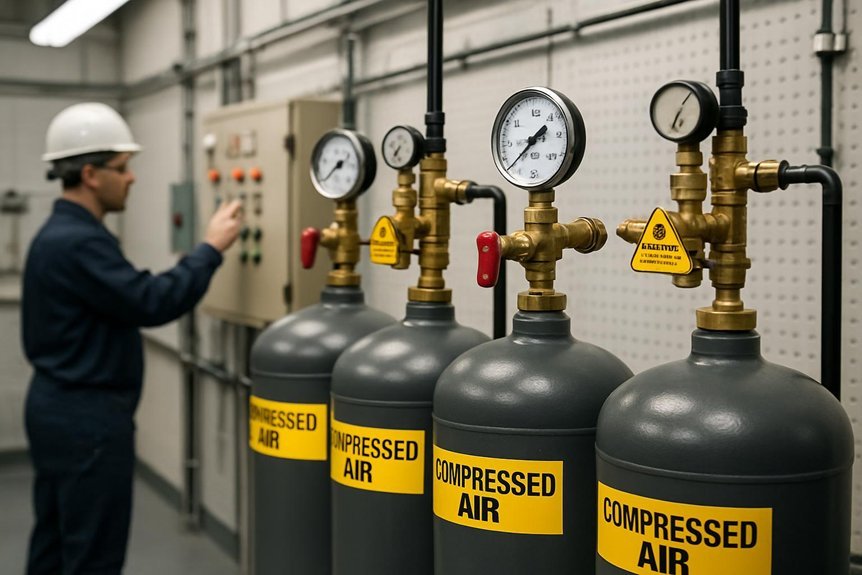
Designing a Safe Compressed-Air System requires applying the safety principles from our prior discussion to the arrangement and operation of all components. We approach this task with a disciplined methodology that emphasizes reliability and risk reduction. Our design considerations center on source integrity, filtration, lubrication control, piping layout, and accessibility for inspection. We specify pressure boundaries, fail-safes, and redundancy where warranted, ensuring consistent performance under varying loads. Components are selected for compatibility, sturdiness, and clear labeling to prevent misrouting. We assess system scalability to accommodate growth without compromising safety or control. Layout prioritizes containment of potential leaks, minimized energy loss, and straightforward maintenance. By documenting interfaces, responsibilities, and test procedures, we facilitate safe operation throughout the system’s life cycle.
Set and Verify Proper Operating Pressures
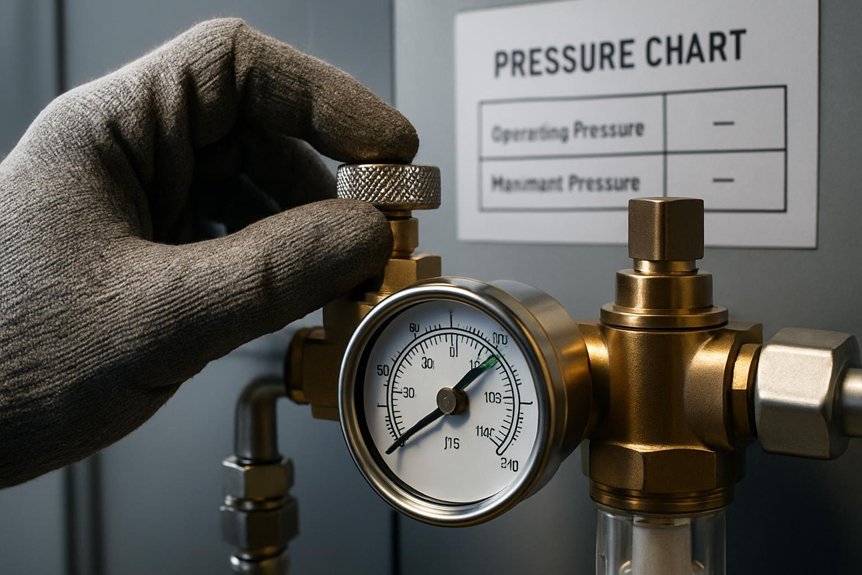
How do we guarantee safety and performance when establishing operating pressures? We set target pressures based on tool requirements, system design, and manufacturer specifications. Our approach centers on documenting approved set points and maintaining consistent delivery through calibrated controls. We establish baseline operating ranges, then align primary regulators, secondary reliefs, and intermittent actuators to those values. We communicate these set pressures to operators and integrate them into procedure checklists. Regular verification becomes routine: we verify gauges under nominal load, confirm gauge accuracy against reference standards, and record any deviations. We implement ring-fenced tolerances to prevent over or under-pressurization, and we adjust only after written authorization. Throughout, we emphasize traceability, reproducibility, and safety-compliant change control to sustain reliable performance.
Protective Gear and Safe Blasting Practices
We apply the safety discipline built around verified operating pressures to the supervision of protective gear and blasting procedures, ensuring that appropriate PPE is selected, maintained, and used consistently. We address protective gear and safe blasting by enforcing standard equipment checks, clearly defined roles, and プrotocol adherence. Our approach reduces exposure risk and supports controlled, repeatable outcomes.
- Verify PPE compatibility with blasting parameters and compressive loads.
- Conduct pre-use inspections, documenting defects and corrective actions.
- Enforce procedures that minimize exposure, maintain spacing, and regulate initiation timing.
Routine Inspection and Leak Management
We perform routine inspections and monitor systems for leaks to maintain optimal performance. We’ll track pressure levels regularly and verify gauges, connections, and hoses for anomalies. When issues arise, we repair promptly and safely to minimize risk and downtime.
Inspect for Leaks Early
Regular inspection of the compressed air system detects leaks early, reducing energy waste and preventing equipment damage. We, the safety team, emphasize proactive leak detection and disciplined early inspection to sustain performance and reliability.
- Identify obvious and hidden leaks during routine checks, documenting findings for trend analysis.
- Prioritize rapid repair of any detected leak to minimize pressure loss and energy consumption.
- Verify repair integrity with follow-up testing, ensuring no recurring symptoms and maintaining system efficiency.
Our approach combines visual audits with functional tests to confirm sealing integrity and performance. By committing to early inspection, we curb incremental energy costs and extend asset life. Communicate anomalies promptly, update maintenance records, and educate operators on leak warning signs to sustain continuous improvement.
Track Pressure Regularly
To maintain system reliability, we monitor pressure continuously as part of routine inspection and leak management. We track pressure at multiple points across the distribution network to detect deviations from baseline. We establish acceptable ranges and record readings at defined intervals to monitor rates of change, enabling early fault detection. Our method includes comparing current values with historical trends and assessing ambient effects, equipment load, and seasonal variation. We perform regular calibration of gauges and install redundant sensors where feasible to ensure measurement integrity. When pressure drift exceeds established thresholds, we initiate visual verification, data logging review, and compensating adjustments within safe operating limits. This disciplined approach supports leak control, equipment longevity, and consistent end-use performance.
Repair Promptly and Safely
How promptly should repairs be initiated when a leak or fault is detected during routine inspection and leak management? We, the safety team, emphasize disciplined response to protect system integrity and personnel. Timely actions minimize energy loss, prevent equipment damage, and reduce risk exposure. Our approach is precise, documenting conditions, selecting compatible tools, and applying approved procedures.
- Assess fault severity immediately and classify urgency.
- Verify tool compatibility and isolate the affected circuit before intervention.
- Implement corrective measures, verify repair integrity, and re-test to confirm safe operation.
Key concepts include repair timing and tool compatibility to ensure consistent outcomes. We maintain strict adherence to established standards, use calibrated instrumentation, and follow lockout-tagout protocols. By acting promptly and safely, we sustain performance, minimize downtime, and uphold continuous airflow reliability.
Safe Operation Procedures You Must Follow
Safe operation procedures are essential to prevent injury and equipment damage when handling compressed air. We, as stewards of this system, specify core practices that must be followed to ensure consistency and safety. We insist on proper equipment selection, pressure validation, and secure hose connections before use. We mandate depressurization during maintenance, verification of exhaust paths, and the use of approved PPE where required. We require lockout-tagout principles for servicing and clear, documented handoffs between workers to preserve continuity of control. We emphasize operational redundancy by verifying backup controls, pressure relief devices, and isolation methods are functional. We document procedures, perform routine audits, and address deviations promptly so that safe operation remains uninterrupted during all tasks.
Training, Signage, and Emergency Response Planning
We will outline the essential Training Requirements and Roles, then describe clear Signage Placement and Clarity to guide behavior and prevent errors. We will also establish Emergency Response Procedures that enable rapid, coordinated actions when incidents occur. Our goal is to guarantee everyone understands responsibilities, sees unambiguous indicators, and can act promptly under pressure.
Training Requirements and Roles
What essential training requirements and defined roles are needed to ensure safe use of compressed air, and how should signage and emergency response planning be integrated into a cohesive program?
We outline training requirements and assign roles responsibilities to avoid gaps in safety. Our program emphasizes hands-on qualification, periodic refreshers, and competency assessments for all operators. Roles and responsibilities include designated supervisors, safety coordinators, and line workers, each with documented authorities and required competencies. Signage and emergency planning are implemented through formal procedures, drills, and accessible guidelines. The objective is to maintain risk awareness, incident reporting, and continuous improvement.
- Training validation and records management
- Role-specific competencies and accountability
- Regular drills, reviews, and corrective actions
Signage Placement and Clarity
Effective signage supports the trained program by clearly locating required information where operators work and by reinforcing the roles defined for training and emergency response. We prioritize signage placement and clarity to ensure quick recognition and accurate compliance. Signage visibility is optimized through strategic positioning, legible typography, and standardized color coding that aligns with safety protocols. Color coding aids rapid interpretation of hazards, PPE requirements, and operating limits, reducing miscommunication. We also verify consistency across zones to prevent confusion during routine tasks and drills. The accompanying table below illustrates essential sign attributes and placement guidelines for high- and low-traffic areas, ensuring uniform understanding. Please review together to confirm that our signage system remains current and effective for all operators.
| Sign Attribute | Placement Guidance |
|---|---|
| Visibility | Eye level, well-lit locations |
| Color Coding | Standardized, color-consistent signs |
Emergency Response Procedures
Emergency Response Procedures encompass training, signage, and planning to assure rapid, coordinated action during incidents. We outline our approach to emergency response, emphasizing preparedness, prompt communication, and validated protocols. Our framework integrates incident-specific roles, resource allocation, and performance metrics to assure consistency across teams.
- Training exercises simulate scenarios, verify competencies, and reinforce first aid procedures and emergency evacuation steps.
- Signage and audible alerts guide occupants, identify muster points, and support swift evacuation while minimizing confusion.
- Emergency response planning synchronizes procedures with outside responders, documents contact trees, and maintains equipment readiness.
We commit to continuous review, drills, and after-action critiques to improve safety outcomes and reduce response times during real incidents.
Frequently Asked Questions
How Often Should You Replace Air Hoses and Fittings?
We replace hoses and fittings every year, or immediately when wear, cracks, or leaks are detected; our inspection frequency is quarterly, and we document findings to guarantee proactive maintenance and prevent failures.
Can Compressed Air Cause Invisible Burns or Injuries?
Yes, compressed air can cause invisible burns or injuries. We remind you, “prevention is better than cure,” as we warn about invisible burns and air bursts, and we instruct you to control pressure, wear protection, and secure hoses.
Are There Age or Certification Requirements for Operators?
Yes, there are age verification and operator certification requirements. We require age verification to confirm eligibility, and operator certification to ensure competency. We emphasize formal, precise procedures and compliance when validating credentials for all operators.
What Should You Do if a Leak Is Detected?
If a leak is detected, we isolate the line and shut down equipment, then follow emergency steps, notify maintenance, and log the incident; perform maintenance schedule reviews, replace damaged components, and verify safety signage is visible and up-to-date.
How to Store Compressed Air Equipment Safely When Not in Use?
We keep safeties visible: we store compressed air equipment in designated racks, perform storage maintenance, and ensure equipment labeling before any use. We lock levels, drain residuals, and verify caps are secure for continued protection.
Conclusion
We must always treat compressed air as a controlled energy source. By following our design, set pressures, protective practices, and proactive inspections, we prevent harm and preserve system integrity. Consider the anecdote of a pilot who trusts gauges only to learn one faulty needle can ignite a catastrophe; our validated gauges prevent that flight from failing. With clear procedures, training, and drills, we turn potential risk into repeatable safety. Together, we keep every operation precise, compliant, and secure.