Did you know that choosing the right air compressor can substantially impact your workflow and efficiency? Portable and stationary models each have distinct advantages and limitations that directly influence their suitability for various applications. Understanding these differences is essential for making an informed decision that aligns with your operational needs. As we compare their design, performance, and cost factors, you’ll discover which type best supports your specific tasks and long-term goals.
Key Takeaways
- Portable compressors are compact, lightweight, and mobile, ideal for on-the-go tasks; stationary compressors are large, fixed, and suited for continuous use.
- Portable units are suitable for light to medium tasks like tire inflation and small repairs, while stationary units handle high-volume, heavy-duty applications.
- Stationary compressors offer higher power, capacity, and durability, whereas portable models focus on ease of transport and quick setup.
- Portable compressors generally cost less upfront but may have higher maintenance costs; stationary ones require a larger initial investment but are more durable long-term.
- Mobility, ease of use, and application demands influence choice; portable units prioritize flexibility, stationary units emphasize stability and continuous operation.
How Do Portable and Stationary Air Compressors Differ in Design?
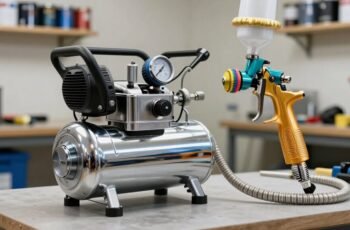
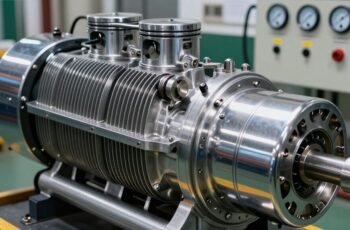
While both portable and stationary air compressors serve the same fundamental purpose of generating compressed air, their designs differ considerably to meet distinct operational needs. Portable compressors are compact, lightweight, and built with integrated handles or wheels, enabling mobility and ease of transport. They typically feature smaller tanks and simplified components to reduce weight, often employing electric or small gasoline engines. In contrast, stationary compressors are larger, more robust, and designed for fixed installation. They incorporate sizable tanks and durable frames, often with dedicated cooling systems and multiple-stage compression mechanisms for higher efficiency. Their design emphasizes stability and capacity, minimizing vibrations and ensuring continuous operation in industrial environments. This fundamental architectural divergence reflects the core functional differences driven by their respective applications.
Which Tasks Are Best Suited for Portable Compressors?
Portable compressors are ideally suited for tasks that require flexibility, mobility, and quick setup in diverse environments. They excel in situations where equipment needs to be moved frequently or used across multiple sites. These compressors are particularly effective for light to medium-duty applications, such as tire inflation, pneumatic tool operation, and small-scale surface preparation. Their compact design allows rapid deployment and minimal downtime. To clarify their suitability, consider the following:
| Task Type | Suitability | Key Benefit |
|---|---|---|
| Tire Inflation | Excellent | On-the-go convenience |
| Construction Sites | Good | Mobility across uneven terrain |
| Automotive Repairs | Excellent | Quick, portable air supply |
| Small-Scale Painting | Suitable | Easy setup in confined areas |
| Maintenance Tasks | Good | Flexibility in various environments |
When Should You Choose a Stationary Air Compressor?
When your operations demand high power output or continuous airflow, a stationary air compressor becomes essential. These systems are designed for sustained performance, making them ideal for industrial applications that require reliable, long-term operation. Recognizing these needs helps determine when a stationary unit is the most efficient choice.
High Power Requirements
Determining the appropriate compressor type hinges considerably on power demands; high power requirements often necessitate stationary units. These compressors are designed for substantial airflow and higher pressure outputs, which portable models typically cannot sustain efficiently. Stationary compressors feature larger motors, reinforced frames, and robust components that handle continuous, heavy-duty operation without overheating or performance degradation. When industrial processes, manufacturing, or extensive workshop tasks demand consistent high-volume air flow, stationary units guarantee reliability and efficiency. Their design allows for better heat dissipation and system integration, essential for demanding applications. In contrast, portable compressors are limited by size and power capacity, making them unsuitable for environments where sustained high power is essential. Therefore, for tasks exceeding moderate pressure and volume needs, stationary compressors are the logical choice.
Continuous Operation Needs
Continuous operation demands are a critical factor in selecting an air compressor, as sustained, long-term use requires equipment that can reliably maintain consistent airflow without overheating or performance drops. Stationary compressors are designed with enhanced cooling systems, larger motors, and robust components that support extended runtime without compromise. They typically feature higher duty cycles, enabling continuous operation across multiple shifts or demanding workloads. These units also offer greater durability and stability, essential for industrial applications where downtime is costly. When operational consistency and reliability over long periods are priorities, a stationary compressor ensures steady airflow and minimizes maintenance interruptions. Consequently, if your tasks involve prolonged, continuous use, choosing a stationary compressor is the rational, technically sound decision.
Comparing Performance: Power, Capacity, and Longevity
Portable air compressors generally offer lower power outputs and limited capacity compared to stationary units, which are designed for sustained, high-demand applications. Power output, measured in horsepower or CFM (cubic feet per minute), is typically reduced in portable models, restricting their ability to handle continuous or heavy-duty tasks. Capacity, reflected in tank size and maximum pressure, also tends to be smaller, limiting runtime and overall efficiency. Longevity differences are notable; stationary compressors often feature more durable components and robust cooling systems, enabling extended use with minimal maintenance. In contrast, portable units prioritize lightweight design and ease of transport, which can compromise durability and lifespan over time. Consequently, performance characteristics are closely aligned with specific application needs and operational expectations.
Cost Considerations: Initial Investment and Operating Expenses
When evaluating costs, we consider the initial purchase price, which often favors portable units for lower upfront expenses. Operating expenses, including maintenance, repairs, and energy consumption, considerably impact long-term affordability. Analyzing these factors helps determine the most cost-effective choice for specific application requirements.
Purchase Price Differences
The initial purchase price of compressors varies considerably between portable and stationary models, directly impacting budget considerations. Portable compressors generally cost less upfront, often due to simplified construction and smaller capacities, making them accessible for smaller-scale or intermittent use. Stationary compressors, however, involve higher initial investments driven by larger tanks, more robust components, and enhanced durability for continuous operation. These costs can be markedly higher, especially for industrial-grade models designed for long-term, high-volume use. The price disparity influences decision-making, especially when initial capital outlay is a primary concern. While portable units offer affordability and flexibility, stationary systems justify their higher cost through superior capacity, longevity, and reliability in demanding environments. Understanding these price differences aids in aligning equipment choices with operational needs and financial constraints.
Maintenance and Repair Costs
Maintenance and repair costs considerably influence the overall expense profile of compressor systems, impacting long-term operational budgets. Portable compressors typically incur higher repair costs due to their exposure to harsher environments and frequent mobility, which increases wear and tear. Conversely, stationary units often benefit from more accessible maintenance schedules and centralized repair facilities, reducing downtime and associated costs. Key factors include:
- Component durability: Stationary compressors generally feature more robust components designed for continuous operation, lowering frequency of repairs.
- Accessibility: Stationary systems allow easier access for routine inspections, decreasing labor time and costs.
- Environmental exposure: Portable units face greater risks from dust, moisture, and physical impact, leading to increased maintenance needs.
Understanding these differences helps in evaluating long-term financial commitments beyond initial purchase prices.
Energy Consumption Expenses
Energy consumption is a significant factor influencing the total cost of ownership for both portable and stationary compressors. Portable units typically operate at lower power levels, leading to reduced energy costs, but their efficiency may decline under heavy, continuous use. Stationary compressors usually have higher power ratings, resulting in increased energy expenses, especially during prolonged operation. The design and motor efficiency directly impact energy consumption; more efficient models can offset higher initial investments through lower operating costs. Additionally, the duty cycle and workload demands influence ongoing expenses. To optimize cost-effectiveness, it’s crucial to evaluate the compressor’s energy profile relative to its application. Ultimately, understanding the trade-offs between upfront capital and long-term energy expenses enables more informed purchasing decisions aligned with operational needs.
Ease of Use and Mobility: Pros and Cons
While portable air compressors excel in providing mobility, their ease of use often involves trade-offs related to setup and operation complexity. They typically require more time for connection, initial calibration, and safety checks, which can hinder quick deployment. Additionally, their smaller tanks and power sources necessitate frequent rest periods or recharging, impacting efficiency during continuous tasks. Conversely, stationary compressors are designed for stability and ease of operation, often featuring automated controls and integrated safety systems that streamline use. However, their immobility limits flexibility, especially in dynamic work environments.
- Portable units demand careful setup, including hose connections and pressure adjustments
- Mobility enhances on-site versatility but can complicate storage and transport
- Stationary models prioritize simplicity and durability over portability
Making the Right Choice: Factors to Consider for Your Needs
Choosing between a portable and stationary air compressor depends on a careful assessment of your specific operational requirements. We recommend evaluating factors such as airflow demand, pressure requirements, and work environment. For high-volume tasks or continuous use, stationary compressors often provide greater power and durability, making them suitable for industrial settings. Conversely, portable units excel in scenarios demanding mobility, flexibility, and quick setup. Consider space constraints—stationary models require dedicated installation space, while portable units offer ease of transport. Budget considerations also play a critical role; initial costs, maintenance, and operational expenses vary greatly. Ultimately, aligning compressor features with your workload intensity, environmental conditions, and operational frequency ensures an informed choice that optimizes efficiency and minimizes downtime.
Frequently Asked Questions
What Safety Features Are Common in Portable and Stationary Air Compressors?
We find that common safety features include pressure relief valves, automatic shut-off mechanisms, thermal overload protection, safety guards, and clear warning labels, ensuring safe operation and preventing overpressure, overheating, and accidental contact, which are essential for both portable and stationary compressors.
How Do Maintenance Requirements Differ Between Portable and Stationary Models?
We find that portable compressors demand more frequent inspection of hoses, filters, and connections due to mobility-induced wear, while stationary models require scheduled lubrication and electrical system checks, reflecting their different operational environments and maintenance accessibility.
Can Portable Compressors Handle Heavy-Duty Industrial Tasks?
Portable compressors are like nimble acrobats; they handle light to moderate tasks efficiently but often lack the power and durability for heavy-duty industrial applications, which typically demand stationary units designed for continuous, high-capacity performance.
What Are the Environmental Impacts of Each Type of Compressor?
Portable compressors generally have a smaller environmental footprint due to lower energy consumption and emissions, while stationary compressors, though more efficient for large-scale use, may produce higher emissions and require more resources for installation and operation.
Are There Specific Brands Known for Durability in Both Compressor Types?
We find that brands like Ingersoll Rand, Campbell Hausfeld, and Quincy stand out for durability across both portable and stationary compressors, ensuring reliable performance even under demanding conditions, making them ideal choices for professional and industrial applications.
Conclusion
Ultimately, choosing between portable and stationary compressors hinges on your specific needs. While portability offers convenience, it might deceive you into thinking it’s always the better choice—until durability and capacity remind you otherwise. Conversely, stationary units demand a larger upfront investment but excel in long-term performance. So, we recommend weighing your workload carefully; sometimes, the most mobile solution isn’t the most efficient—just the easiest to carry around.