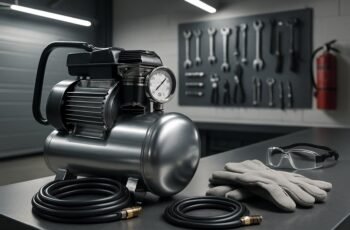
We know safety can feel slow, but rushing a start-up often trips us up later, so we’ll verify outlets, pressures, and leaks before any work. We’ll wear ANSI eye/ear protection and proper clothing, keep walkways clear, and label hazards. We’ll monitor gauges, calibrate regulators, and log data to prevent surprises. Daily hose and fitting checks, depressurize before moving, and enforce zero-energy maintenance with near-miss reviews to drive continual improvements—there’s more to cover beyond basics.
Key Takeaways
- Verify outlets, pressures, and connections; inspect hoses and gauges before powering tools to prevent leaks and failures.
- Wear ANSI eye/ear protection, remove loose items, organize cords, and maintain a clean, labeled work zone for safer startup.
- Regularly monitor regulator settings and gauge readings; log pressures and maintenance actions to detect trends.
- Inspect hoses, fittings, and quick-detach components daily; depressurize before moving hoses and store off floors.
- Implement Lockout/Tagout during maintenance and document energy isolation procedures to protect workers.
What a Safe Starting Setup Looks Like for Shop Air Compressors
A safe starting setup for shop air compressors begins with verifying outages, pressures, and connections before any tool is powered. We, together with you, check gauges, confirm line pressure matches the unit’s rating, and inspect hoses for wear or kinks. We power the system last, after confirming all outlets are secured and valves are closed. We verify that the petcock or drain is closed, then slowly open the supply to monitor for leaks and abnormal noises. We log initial pressure, temperature, and cycle counts to guide maintenance. This approach enables Safe startup and minimizes surprises during operation, promoting Quiet operation during continuous run. By documenting steps and conditions, we reduce downtime and ensure predictable performance with each use.
PPE and Workspace Practices That Prevent Injuries
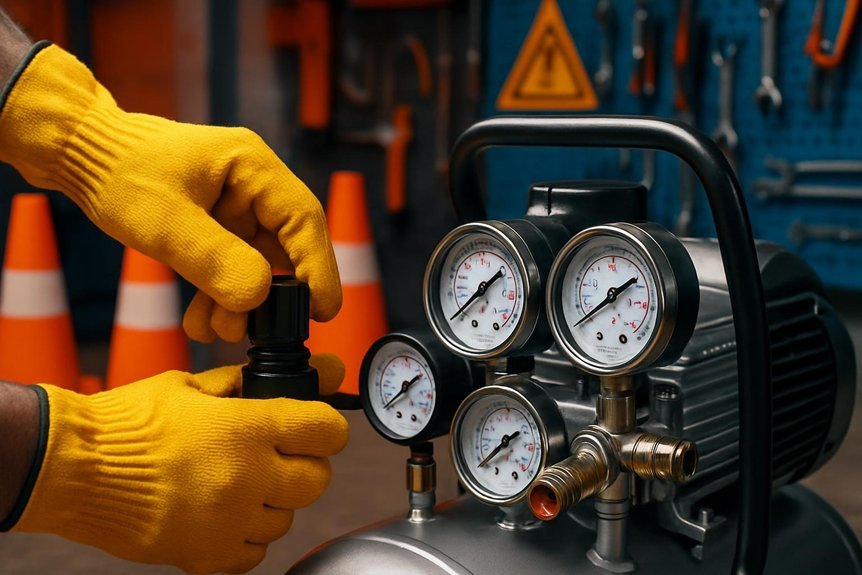
Have we considered how simple PPE choices and workspace habits reduce risk before the first tool is powered? We answer yes, because small safeguards compound into big safety gains. We outline ppe best practices and address workspace hazards with a data-driven mindset, focusing on prevention over reaction.
- Wear ANSI-rated eye protection and hearing protection, then verify fits before use.
- Ensure gloves, clothing, and footwear resist abrasion and pinch points; remove loose items.
- Organize cords and hoses to maintain clear walkways and reduce trip risks.
- Establish a dedicated, clean work zone; label hazards and review the setup before startup.
Mastering Pressure Management and Regulator Use
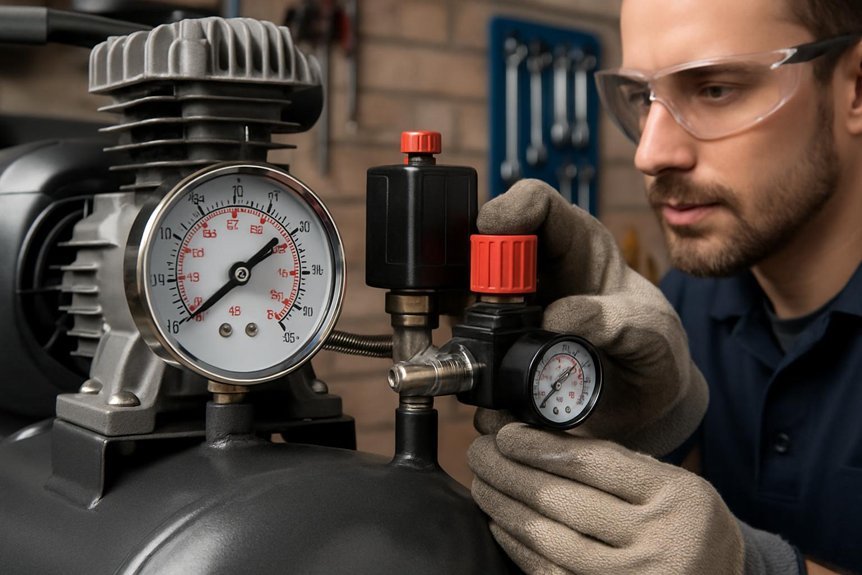
How can we master pressure management and regulator use to prevent tool damage and injuries? We approach this with disciplined checks and data-backed practices. First, we set a baseline pressure for each tool and verify it with the regulator before each session. Second, we perform regular regulator tuning to minimize fluctuations that cause tool wear or sudden bursts. Third, we monitor gauges for steady readings; any drift prompts immediate recalibration or retesting. We document pressure outcomes and adjust procedures to maintain optimal performance. We use pressure control strategies that reduce peak loads and extend component life. Finally, we train staff on recognizing pressure anomalies and executing safe shutdowns, ensuring consistent, protected operation across all tasks.
Hoses, Fittings, and Quick-Detach Safety Essentials
We’ll start by examining hoses for handling hazards and ensuring proper routing, guarding against kinks, leaks, and wear. We’ll verify fittings fit securely and use compatible connections with correct torque and sealant practices to prevent failures. We’ll also review quick-detach safety, ensuring depressurization, proper coupling, and associated failing-safe checks before any disconnection.
Hoses Handling Hazards
A hose is more than a conduit—it’s a potential hazard if misused. We approach hose handling with vigilance, prioritizing secure connections, controlled pressures, and clear paths to reduce trip risks. Our emphasis on leak detection prevents hidden failures from becoming blasts or sprays, protecting crew and equipment.
- Inspect hoses daily for cuts, kinks, and wear; retire damaged lines immediately.
- Routinely test for leaks using safe methods, documenting findings and corrective actions.
- Use proper fittings and compatible quick-detach components to minimize sudden decoupling.
- Depressurize and disconnect before moving or storing hoses, and store off floors to prevent abrasion.
Fittings Fitment Safety
Fittings fitment safety hinges on choosing compatible components and ensuring secure connections at every joint. We document compatibility across hoses, fittings, and couplings before use, verifying thread types, pressure ratings, and material compatibility. We apply standardized torque specs and engage ongoing inspection schedules to detect wear, cracks, or corrosion. Our approach emphasizes safety ergonomics, designing tools and layouts that minimize awkward reach, excessive force, and repetitive strain during assembly. We train teams to verify inset seals, O-rings, and locking mechanisms, replacing degraded parts promptly. We favor quick visual checks coupled with measurable tests, such as leak tests at operating pressure and functional pull tests on connections. By prioritizing fittings fitment, we reduce sudden disconnections, air leaks, and injury risk.
Quick-Detach Connection Safety
Quick-detach connections save time, but they demand rigorous attention to hose, fitting, and coupling integrity beforeand during use. We review connection safety to prevent sudden releases, hose bursts, and tool misfires. Our approach combines inspection, testing, and proper maintenance data to minimize risk.
- Inspect all quick detach components for wear, cracks, and corrosion before each use.
- Verify compatibility of hoses, fittings, and regulators with the compressor’s pressure rating.
- Exercise gradual pressure testing after assembly to confirm seal integrity.
- Replace damaged couplings immediately and document replacement intervals for ongoing prevention.
Lockout/Tagout and Energy Isolation for Maintenance
We start by outlining our Lockout/Tagout basics and why they protect every maintenance task on the air compressor. We’ll lay out Energy Isolation steps as the concrete, repeatable sequence that prevents unexpected energization. By following these proven practices, we reduce injury risk and align with compliance data and best practices.
Lockout/Tagout Basics
Lockout/Tagout (LOTO) is our primary method for safely isolating energy sources during maintenance. We, meaning the team, share how proper LOTO reduces risk and protects everyone. Our approach relies on clear procedures, verified energy isolation, and independent verification before work begins. Data shows that disciplined LOTO practices correlate with fewer injuries and near-misses. In this section, we outline basics that support a proactive safety culture and accurate risk assessment.
- Identify all energy sources and potential hazards before any maintenance.
- Apply appropriate lockout devices and tag vehicles, machines, and circuits.
- Verify zero-energy conditions through independent checks.
- Document steps, lockout durations, and conditions for re-energizing.
Energy Isolation Steps
Are you ready to minimize risk by isolating all energy sources before maintenance begins? We approach energy isolation with a disciplined checklist: identify all energy sources, including electrical, pneumatic, hydraulic, and thermal, then plan sequence and verification. We apply lockout awareness to ensure devices can’t reenergize during work, and we attach tags that communicate status and responsible parties. Our team confirms de-energization, dissipates residual energy, and tests the equipment to verify zero energy before any touch. We document each step, assign accountability, and refresh training regularly to sustain lockout awareness. This process reduces unexpected startup, protects personnel, and documents compliance for audits. By following precise isolation steps, we improve safety culture and prevent injuries during maintenance.
Routine Inspection, Maintenance, and Fault Prevention
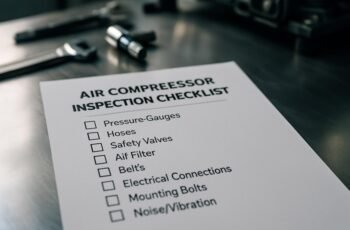
Routine inspection, maintenance, and fault prevention are essential to keep workshop air compressors safe and reliable. We approach this with precise, data-driven steps, emphasizing routine calibration and maintenance scheduling to minimize downtime and wear.
Routine inspection and maintenance keep workshop air compressors safe, reliable, and ahead of wear through data-driven calibration and scheduling.
1) Schedule regular calibration checks against manufacturer specs to ensure pressure and flow accuracy.
2) Implement a maintenance calendar that tracks filter, lubricant, and valve replacements before performance drops occur.
3) Inspect belts, housings, and electrical connections for wear or corrosion and address any anomalies immediately.
4) Log all findings and interventions, reviewing trends to forecast failures and optimize preventive actions.
Together, these practices reduce unexpected outages, extend component life, and support safer operation by catching issues early.
Troubleshooting Common Hazards and Near-Miss Prevention
When hazards show up, we address them with targeted, data-driven troubleshooting and near-miss prevention. We begin with hazard recognition, scanning the system for abnormal noises, pressure spikes, temperature rise, or vibration patterns that diverge from baseline. Next, we collect objective indicators: gauge readings, time-to-failure logs, and maintenance history, then compare against manufacturer specs and industry benchmarks. If a near miss occurs, we perform near miss analysis to identify root causes and control gaps, documenting corrective actions and verification steps. We prioritize fixes that reduce likelihood and severity, such as installing guards, isolating power, and enhancing interlocks. Finally, we share findings with the team, update procedures, and retrain to sustain proactive safety culture and continuous improvement.
Frequently Asked Questions
How Often Should You Replace Worn Compressor Belts and Hoses?
We replace worn belts and hoses every 6–12 months, or sooner if wear is evident, to meet wear belt replacement and hose inspection cadence goals, and we monitor noise PPE thresholds during inspections for proactive prevention.
What Noise Levels Require Hearing Protection Beyond PPE Basics?
We’d say once noise measurement hits 85 dB, hearing protection becomes essential beyond basic PPE. Like a ticking metronome warning us, sustained exposure wears hearing; we measure, restrict, and protect—because safer workspaces prevent costly, cumulative damage.
How Should You Store Compressed Air for Long-Term Reliability?
We store compressed air properly by drying, draining moisture, and using reliable oil separation to prevent corrosion and moisture buildup; we maintain fixed pressures, monitor filters, and schedule regular dumps and moisture tests for long-term reliability.
Are There Recommended Relocation Guidelines to Minimize Vibration Transfer?
We relocate to minimize vibration transfer, applying relocation vibration guidelines and equipment isolation practices. We deliberately position mounts and decouple foundations, monitoring ground resonance, to reduce energy transmission and protect compressor longevity and operator comfort.
How Can You Safely De-Energize an Idle Compressor for Storage?
We de-energize an idle compressor by disconnecting power, releasing pressure, and securing it for storage; follow lockout-tagout and drain all vessels, then store with guards in place to ensure storage safety and prevent accidental startup.
Conclusion
We conclude with a precise, preventive mindset: safety thrives on verified setups, disciplined energy control, and continuous data logging. By starting with outlet checks, regulator calibration, and leak audits, we reduce incidents before they happen. For example, a shop reduced hose failures by 40% after daily hose inspections and a near-miss review prompted updated lockout procedures. Keep walkways clear, document near-misses, and insist on zero-energy maintenance to sustain safer operations for everyone.