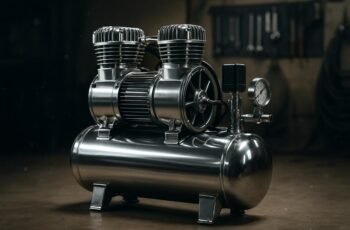
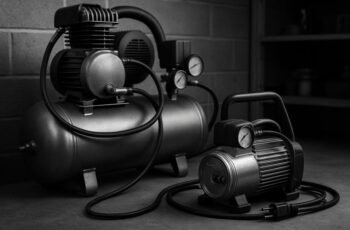
Interestingly, a coincidence in our shop shows oil-lubricated and oil-free units sometimes coexist in the same workflow. We explain how continuous lubrication reduces wear and supports longer runtimes, while oil-free designs rely on coatings and tight tolerances to keep air clean. Yet each choice drives maintenance, filtration, and cost considerations differently. If you’re optimizing uptime and air quality, the trade-offs matter now more than ever, and our concise framework can guide your next step.
Key Takeaways
- Oil-lubricated compressors use continuous oil lubrication to reduce wear; oil-free units rely on coatings and tolerances to avoid lubricant in the air path.
- Oil carryover must be filtered in oil-lubed systems, while oil-free designs deliver cleaner air with easier downstream filtration.
- Lubricated models often provide steadier pressure under fluctuating demand and can tolerate longer runtimes with proper maintenance.
- Oil-free compressors typically require more frequent servicing but offer lower contamination risk and simpler maintenance of the air path.
- Total cost of ownership depends on upfront price, maintenance needs, and compatibility with application cleanliness requirements.
Oil-Lubricated vs Oil-Free: Which Is Right for Your Shop?
Oil-lubricated and oil-free compressors differ mainly in how they manage internal friction and contaminant control. We consider shop needs, air quality, and maintenance demands to decide which type suits us. Oil-lubricated models use continuous lubrication to reduce wear, potentially improving long-term reliability under heavy use, but they introduce oil carryover that must be filtered from the output. Oil-free units avoid lubricant in the delivery path, delivering cleaner air with simpler downstream filtration. For many shops, oil purity targets determine feasibility, with oil-free systems simplifying compliance for sensitive processes. However, oil-lubricated designs often exhibit longer service intervals for certain components when duty cycles are high. Filter lifespan and routine oil management become critical factors in total cost and uptime.
Performance and Longevity: How Each Type Handles Real-World Load
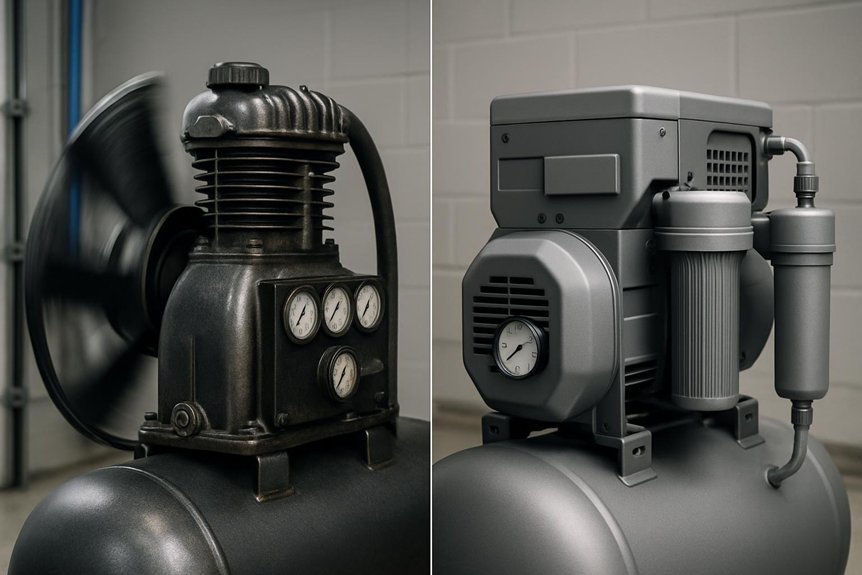
How do they perform under real-world load? We compare oil-lubricated and oil-free units by measuring sustained output, efficiency, and component wear. Oil-lubricated systems typically exhibit steadier pressure under fluctuating demand due to centralized lubrication, which sustains higher oil performance and load tolerance over time. They often tolerate extended runtimes with lower surface friction, though lubrication duration can demand scheduled maintenance to prevent degradation. Oil-free designs, by contrast, rely on surface coatings and engineered tolerances, delivering lower maintenance but potentially greater wear when heat or sudden surges occur. Real-world loads reveal tradeoffs: oil performance advantages converge with longer service life under demanding cycles for lubricated models, while oil-free units may show higher maintenance frequency in severe duty. Overall longevity aligns with operating profile and maintenance discipline rather than a single design bias.
Air Quality and Contamination: Why Oil-Free Matters to You
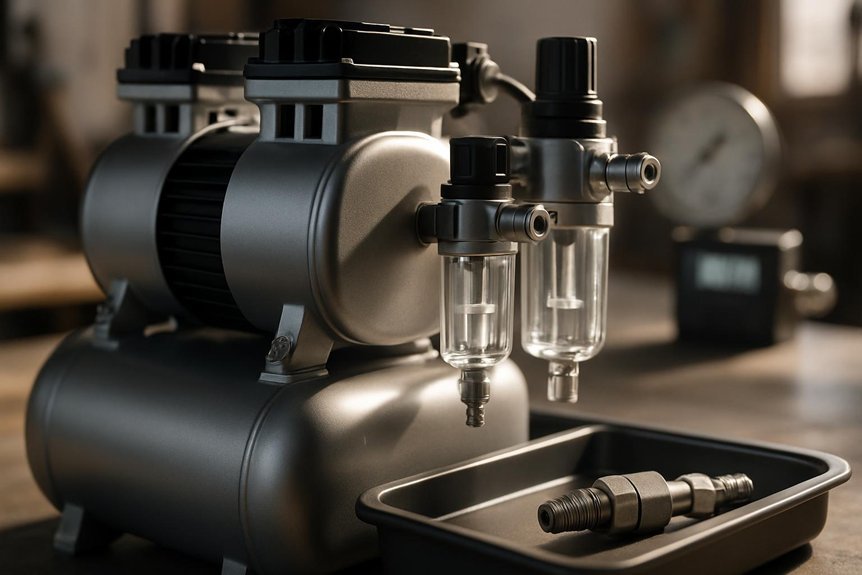
What about air quality matters to your operation? We assess contaminants that influence finished-air purity and downstream tool performance. Oil-free systems inherently reduce oil carryover, lowering risk to critical components and product quality. Our focus is on maintaining consistent oil quality and maintaining filtration standards that prevent particulates from entering the workflow. A disciplined lubrication strategy supports stable air standards and minimizes contamination risk, while clearly defined exchange intervals keep filters and separators effective. By comparing approaches, we quantify how air quality directly affects uptime and precision.
- oil quality control and monitoring
- filtration standards alignment and validation
- lubrication strategy and exchange intervals planning
Maintenance and Downtime: What to Expect Over Time
We’ll outline how wear and tear trends affect maintenance planning and downtime for both oil-lubed and oil-free compressors. We’ll compare expected service intervals, common failure points, and how these influence the servicing schedule over time. By the end, you’ll have a clearer view of what to anticipate and how to optimize uptime.
Wear and Tear Trends
Wear and tear trends for oil-lubricated versus oil-free compressors emerge from how lubrication interacts with moving parts and sealing surfaces. We observe distinct wear patterns driven by lubrication presence, contact geometry, and thermal management. Oil-lubricated models tend to exhibit smoother motion, reduced metal-to-metal scoring, and slower seal wear under proper maintenance. Oil-free designs rely on coatings and dry seals, which can show comparatively higher initial wear rates but benefit from reduced contamination risk in clean environments. Over time, load cycles and ambient conditions shape degradation of bearings, pistons, and gaskets. Monitoring vibration, temperature, and oil quality remains essential to anticipate performance decline and downtime. Proactive checks minimize surprises and sustain efficiency.
- wear patterns
- seal wear
- maintenance indicators
Downtime and Servicing Schedule
Downtime and servicing schedules for oil-lubricated versus oil-free compressors hinge on routine maintenance intervals, component accessibility, and expected wear trajectories. We present a concise comparison to frame downtime scheduling and servicing intervals, focusing on predictability, cost, and operational impact. Oil-lubricated units typically require oil changes and filter replacements at defined hours, with extended intervals possible at steady loads. Oil-free designs emphasize filter checks and humidity management, often yielding shorter, more frequent servicing cycles. Practical downtime planning aligns with manufacturer guides and historical performance data, balancing production uptime with part availability. The table below illustrates a representative snapshot for planning purposes.
| Parameter | Outlook |
|---|---|
| Downtime scheduling | Oil-lubricated: longer slots; Oil-free: more frequent. |
| Servicing intervals | Oil-lubricated: oil/filter-based; Oil-free: filter/air-path checks. |
Cost of Ownership: Upfront, Ongoing, and Hidden Costs
We compare the total cost of ownership by examining upfront purchase impact, ongoing maintenance patterns, and any hidden service fees. We’ll outline how upfront price, routine service, parts replacement, and energy use contribute to long-term costs for oil-lubricated versus oil-free models. Our aim is to present a clear framework for evaluating total expenses beyond the sticker price.
Upfront Purchase Hit
What’s the upfront cost difference between oil-lubed and oil-free compressors, and how does that shape total ownership? We quantify the upfront price gap and its impact on cash flow, not just sticker price. Oil-free units typically cost more initially, reflecting advanced materials and tighter tolerances that promise simpler maintenance. Yet, the higher upfront price can be offset by fewer consumables and lower immediate service needs, improving predictable budgeting. We assess how this choice influences long term reliability through design quality, component wear, and warranty depth. To aid comparison, consider:
- Upfront price differential and its effect on net present value
- Expected service intervals and part substitution costs
- Compatibility with future expansion and reliability expectations
Maintenance Cost Patterns
Maintenance cost patterns emerge as a key component of total ownership. We examine how oil-lubed and oil-free designs influence ongoing expenses, factoring in maintenance cost, parts, and labor. Oil-free units typically reduce routine lubrication needs, lowering recurring costs but potentially increasing consumable replacements or gasket refreshes if seals wear differently. Oil-lubed systems may incur higher ongoing lubrication, filter, and drain replacement costs, yet can benefit from longer intervals between major overhauls with robust warranty coverage. We compare service intervals, accessibility of parts, and technician familiarity, emphasizing predictable budgeting. Warranty coverage shapes risk exposure for both designs, affecting perceived lifetime costs. We advise buyers to quantify annual maintenance, align intervals with operating hours, and document warranty terms to optimize total ownership economics.
Hidden Service Fees
Hidden service fees can quietly inflate the total cost of ownership, often outside the headline price. We examine these charges to separate them from upfront and ongoing expenses, focusing on install, maintenance, and replacement cycles. Hidden costs arise from overlooked items such as spare parts, service contracts, and diagnostic visits that aren’t initially disclosed. We also consider ancillary risks, including oil leaks and degraded oil seals, which can trigger unexpected maintenance and downtime. By forecasting these factors, we gain a clearer picture of true life-cycle cost. Staying vigilant helps avoid surprise bills and improves budgeting accuracy.
- Hidden labor and diagnostic fees
- Replacement parts and service contracts
- Contingencies for oil leaks and oil seals failures
Noise, Vibration, and User Experience in a Workshop
When we compare oil-lubricated and oil-free compressors in a workshop setting, noise, vibration, and user experience are key, tangible factors that influence daily operations and safety. Our assessment focuses on measurable outputs, not perceptions. Noise levels vary with pump design, enclosure, and cooling, defining permissible work zones and hearing protection needs. We document a noise comparison by octave-band analysis and A-weighted equivalent sound pressure, ensuring reproducibility across tasks. Vibration patterns reflect mounting integrity, footpads, and frame stiffness, directly affecting tool stability and component wear. User experience emerges from accessibility of controls, maintenance intervals, and predictability of performance. In sum, technicians benefit from quantifiable, consistently tracked metrics that align with safety standards while minimizing downtime and fatigue.
Quick Decision Framework: Pick the Right Compressor for Your Use Case
What criteria matter most when choosing between oil-lubricated and oil-free compressors for a given use case? We present a quick decision framework grounded in reliability, cost of ownership, and performance metrics. We evaluate oil capacity and startup energy alongside maintenance demands, environmental conditions, and expected duty cycle. Our approach helps align technology with application needs, avoiding overpurchasing or underperforming systems.
- Consider oil capacity implications for lubrication longevity and downstream filtration
- Assess startup energy to estimate electrical demand and ramp stability
- Align duty cycle, CFM requirements, and noise constraints with compressor type
Frequently Asked Questions
How Do Oil-Free Units Handle Moisture Compared to Oil-Lubed Models?
We handle moisture differently: oil-free units rely on moisture removal through filtration and desiccant or refrigerant cooling, while oil-lubed systems use oil separation. In oil-free moisture control, we emphasize oil free filtration and rigorous drying.
Can Oil-Free Compressors Reach the Same Pressure and CFM Ratings?
Oil-free receivers can reach similar peak pressure and CFMs as oil-lubed units, but real-world duty cycles differ. We’ll consider oil free pressure and oil free CFMs under load, factoring efficiency, insulation, and maintenance for accuracy.
Do Oil-Free Systems Require Different Filtration or Drying Setups?
Yes, oil-free systems typically require different filtration and drying setups. We ensure robust oil filtration and moisture control to prevent contaminants, since absence of oil alters condensate and particulate management in the compression stream.
Are Oil-Free Compressors Safer for Fragrance-Sensitive Environments Than Oil-Lubed?
Oil-free compressors are safer for fragrance-sensitive environments. We align with safe materials and allergy considerations, avoiding oil aerosols. Like a shield, we minimize contamination risk, ensuring clean downstream air for sensitive users and regulated processes.
What Maintenance Surprises Exist With Long-Term Oil-Free Operation?
We’ll note that long-term oil-free operation can surprise with increased bearing wear and valve deposits; schedule maintenance proactively with maintenance scheduling and monitor oil-free durability, filters, and seals to prevent performance loss and unexpected downtime.
Conclusion
We’ve laid out the tradeoffs, so you’re not guessing when the next choice sits on your bench. Oil-lubed units promise steady torque and longer runtimes under heavy use, but demand oil management and filtration. Oil-free models deliver cleaner air with simpler filters, yet can struggle with sustained heat and surge. In the end, your duty cycle, filtration quality, and maintenance discipline decide. Choose based on real-world loads, then prepare for disciplined upkeep to unlock true performance. The right call awaits.