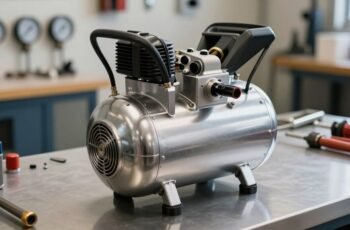
Imagine a manufacturing plant where energy costs sharply rise due to outdated compressors operating at full capacity. We recognize that selecting an energy-efficient air compressor involves more than just comparing horsepower ratings. It requires a detailed analysis of features, capacity, and maintenance practices that can greatly impact operational costs over time. Exploring these factors thoroughly can help you make informed decisions that optimize performance and reduce waste—crucial considerations that merit closer examination.
Key Takeaways
- Prioritize compressors with Variable Speed Drive (VSD) technology to adjust output based on demand and save energy.
- Choose the right size by analyzing airflow needs and avoiding over- or under-capacity units.
- Opt for high-efficiency motors and advanced control systems to optimize performance and reduce operational costs.
- Regular maintenance, including leak detection and filter replacement, is essential for maintaining energy efficiency.
- Consider long-term energy savings and total cost of ownership rather than just initial purchase price.
What Makes an Air Compressor Energy-Efficient?
What exactly determines an air compressor’s energy efficiency? It primarily hinges on how well the device converts electrical or mechanical energy into compressed air with minimal losses. Key factors include the compressor’s design, such as its compression method—reciprocating, rotary screw, or centrifugal—each impacting efficiency differently. The motor’s efficiency also matters, as high-performance motors reduce energy waste. Additionally, the compressor’s capacity to maintain ideal operating conditions, like consistent pressure levels, minimizes unnecessary energy use. Advanced control systems that adjust operation based on demand further enhance efficiency by avoiding over-compression or idling. Overall, an energy-efficient compressor minimizes energy consumption relative to output, achieved through optimized mechanical design, high-quality components, and intelligent control strategies.
Key Features to Look for in Energy-Saving Air Compressors
When choosing energy-efficient air compressors, key features like Variable Speed Drive (VSD) technology and high-efficiency motors greatly influence operational efficiency. VSD adjusts motor speed to match demand, reducing energy waste, while high-efficiency motors maximize power consumption during continuous operation. Prioritizing these features guarantees ideal energy performance and cost savings.
Variable Speed Drive Technology
Variable Speed Drive (VSD) technology has become a critical feature in energy-efficient air compressors, as it allows the motor speed to dynamically adjust based on actual demand. This adaptability minimizes energy waste during low load conditions, leading to significant operational savings. VSD-equipped compressors maintain ideal pressure levels efficiently, reducing wear and extending equipment lifespan. To visualize VSD impact, consider the following:
| Demand Level | Motor Speed Adjustment |
|---|---|
| Low | Reduced speed, lower energy use |
| Moderate | Intermediate speed, balanced efficiency |
| High | Full speed, maximum output |
This precise control results in reduced power consumption, lower operational costs, and improved system reliability—key factors for selecting energy-efficient compressors.
High-Efficiency Motor Options
Have you considered how high-efficiency motors can considerably reduce energy consumption in air compressors? These motors utilize advanced design features, such as optimized windings, improved magnet materials, and reduced iron losses, to maximize electrical-to-mechanical energy conversion. Unlike standard motors, high-efficiency options often operate at higher power factors, minimizing reactive power and reducing electrical strain on your system. They also produce less heat, leading to lower cooling requirements and extended motor lifespan. When selecting an energy-efficient compressor, look for motors rated as IE3 or higher according to IEC standards, which indicates superior efficiency levels. Incorporating these motors into your system can result in significant operational savings, improved reliability, and a smaller carbon footprint—making them an essential component in sustainable compressed air solutions.
How to Choose the Right Size and Capacity for Your Needs?
Selecting the appropriate size and capacity for an air compressor is critical to guarantee ideal performance and energy efficiency. To determine the correct specifications, we must analyze your operational demand, airflow requirements, and duty cycle. Oversized units lead to unnecessary energy consumption, while undersized models cause insufficient pressure and system stress.
Consider these factors:
- Flow rate (CFM): Match to your peak air demand to prevent underperformance.
- Pressure requirements (PSI): Ensure your compressor exceeds your maximum operating pressure.
- Duty cycle: Select a compressor rated for continuous operation if needed.
- Application scope: Larger capacities suit industrial applications; smaller ones fit light-duty tasks.
- Future expansion: Account for potential increases in demand to avoid premature upgrades.
Accurate sizing optimizes energy use and prolongs compressor lifespan.
Maintenance Tips to Keep Your Air Compressor Running Efficiently
Maintaining ideal performance requires systematic attention to critical components such as filters, seals, and lubrication. Regular filter replacement prevents airflow restrictions, while leak detection reduces energy waste; lubrication ensures smooth operation and minimizes wear. Consistent checks and timely maintenance are essential to sustain efficiency and extend the compressor’s lifespan.
Regular Filter Replacement
Why is regular filter replacement essential for maintaining an air compressor’s efficiency? Over time, filters trap dust, debris, and moisture that can impair airflow and increase energy consumption. When filters become clogged, the compressor works harder, reducing efficiency and risking component wear. Regular replacement guarantees ideal airflow, prevents overheating, and maintains consistent pressure levels. It also reduces the risk of contaminants entering downstream systems, preserving product quality and extending equipment lifespan.
- Prevents airflow restriction and pressure drops
- Maintains consistent compressor performance
- Reduces energy consumption and operational costs
- Minimizes wear and tear on internal components
- Ensures cleaner, contaminant-free compressed air
Check for Leaks
Even small leaks in an air compressor system can substantially reduce efficiency by allowing compressed air to escape, which forces the compressor to work harder to maintain desired pressure levels. To identify leaks, we conduct systematic pressurization and use soap solution on fittings, joints, and hoses—bubbles indicate leaks. Ultrasonic leak detectors can also enhance detection accuracy, especially for minor leaks. Once located, leaks should be promptly sealed with appropriate fittings or sealants to prevent pressure drops. Regularly inspecting the entire system ensures early detection of deteriorating connections or worn components. Eliminating leaks not only conserves energy but prolongs compressor lifespan and reduces operational costs. Precise leak management is essential for maintaining maximum efficiency and ensuring the system performs at peak levels.
Lubrication Maintenance
How often do we check and replace the lubrication in our air compressors? Regular lubrication maintenance is critical for optimal efficiency and longevity. Proper lubrication reduces friction, minimizes wear, and prevents overheating. We recommend inspecting lubricant levels daily and replacing oil every 500-1000 hours of operation, depending on compressor load and environmental conditions. Consistent checks help identify contamination or viscosity changes early. To ensure precise lubrication, consider the following:
- Use manufacturer-recommended oils to prevent equipment damage
- Monitor oil temperature to avoid degradation
- Regularly drain accumulated condensate to prevent contamination
- Check for oil leaks around seals and fittings
- Maintain a detailed lubrication schedule for preventive maintenance
Adhering to these practices ensures reliable performance and energy efficiency.
Comparing Different Types of Air Compressors for Energy Savings
Selecting the appropriate air compressor type is essential for maximizing energy efficiency, as each design offers distinct operational advantages and limitations. Rotary screw compressors operate continuously with minimal fluctuations, providing high efficiency in large-scale applications due to their stable flow and lower power consumption during extended use. Reciprocating compressors, while capable of delivering high-pressure outputs, tend to exhibit higher energy use due to their cyclic operation and greater mechanical losses. Centrifugal compressors excel in handling large volumes with lower specific energy consumption at high capacities, making them suitable for steady, high-demand environments. However, their efficiency diminishes at partial loads. By understanding these differences, we can identify the compressor type that aligns best with specific operational demands, optimizing energy savings and operational costs.
Practical Steps to Maximize Energy Efficiency During Operation
Optimizing energy efficiency during compressor operation involves implementing specific practices that reduce unnecessary energy consumption and enhance overall performance. Precise control strategies and maintenance routines are key to achieving this. Regularly monitoring operating parameters ensures the compressor runs within ideal ranges, preventing wastage. Properly sizing the compressor to match demand avoids over-pressurization and excess energy use. Additionally, employing variable speed drives allows for real-time adjustment of motor speed based on load requirements, considerably reducing energy waste. Systematic leak detection and repair prevent pressure drops that cause unnecessary cycling. Finally, maintaining clean, dry intake filters reduces airflow restrictions, ensuring efficient operation.
- Use variable speed drives for load-dependent adjustments
- Conduct routine leak detection and repairs
- Monitor operating parameters continuously
- Maintain clean intake filters and cooling systems
- Properly size compressors to match demand
Cost Considerations: Balancing Upfront Investment and Long-Term Savings
Investing in energy-efficient air compressors requires careful consideration of initial costs versus long-term operational savings. Higher upfront expenses often reflect advanced technologies like variable speed drives and precision componentry, which improve efficiency and reduce energy consumption over time. While these units typically carry a higher purchase price, their lower energy use results in substantial savings on electricity bills and maintenance costs over their lifespan. Evaluating total cost of ownership involves analyzing payback periods, factoring in energy savings, reduced downtime, and extended equipment life. It is crucial to balance the immediate financial impact against projected operational efficiencies. Strategic investment in higher-efficiency models can ultimately lead to significant cost reductions, but this requires a thorough understanding of energy consumption patterns and maintenance requirements aligned with long-term financial planning.
Common Mistakes That Reduce Air Compressor Energy Efficiency
While choosing energy-efficient air compressors is an essential step toward reducing operational costs, many common mistakes can undermine these benefits and lead to unnecessary energy consumption. These errors often stem from improper operation or inadequate maintenance. For example, running compressors at higher pressures than necessary increases energy use, while neglecting to regularly inspect and replace filters reduces airflow efficiency. Additionally, operating at a fixed capacity without considering load variability causes overuse during low-demand periods. Failing to utilize integrated control systems prevents ideal compressor cycling, and ignoring system leaks results in significant energy waste. Addressing these issues involves proper system design, routine maintenance, and implementing advanced control strategies to guarantee energy efficiency is maintained throughout the compressor’s lifespan.
Frequently Asked Questions
How Does Ambient Temperature Affect Air Compressor Energy Efficiency?
Higher ambient temperatures reduce air compressor efficiency by increasing cooling demands and risking overheating, which causes energy losses. Conversely, lower temperatures enhance performance, allowing compressors to operate more efficiently and conserve energy through better thermal regulation.
Are There Specific Brands Known for Energy-Efficient Air Compressors?
We understand that brands like Atlas Copco, Ingersoll Rand, and Quincy specialize in energy-efficient air compressors, offering advanced technologies and rigorous testing. These manufacturers prioritize energy savings, reliability, and innovative features, ensuring peak performance aligned with industry standards.
Can Retrofitting Old Compressors Improve Energy Efficiency?
Retrofitting old compressors can markedly improve energy efficiency, transforming their core components—like replacing valves or upgrading motors—much like upgrading a vintage engine with modern precision parts, ultimately reducing energy consumption and operational costs effectively.
How Does Humidity Impact Compressor Performance and Energy Use?
Humidity increases compressor workload by causing moisture buildup, which reduces efficiency and promotes corrosion. We find that elevated humidity levels lead to higher energy consumption and maintenance needs, emphasizing the importance of proper moisture control for peak compressor performance.
What Are the Environmental Benefits of Using Energy-Efficient Air Compressors?
Using energy-efficient air compressors reduces greenhouse gas emissions, minimizes energy consumption, and decreases operational waste. These benefits contribute to environmental sustainability, lower carbon footprints, and promote eco-friendly industrial practices, aligning operational efficiency with global ecological responsibility.
Conclusion
In the quest for an energy-efficient air compressor, precision and foresight are our guiding stars. By selecting the right features, sizing accurately, and maintaining diligently, we turn the machinery into a well-tuned symphony of performance. Avoiding common pitfalls guarantees our investment yields long-term dividends. With a calculated approach, we harness efficiency like a finely engineered engine—powerful, reliable, and optimized for sustainable operation. The path is clear; success lies in meticulous, informed choices.