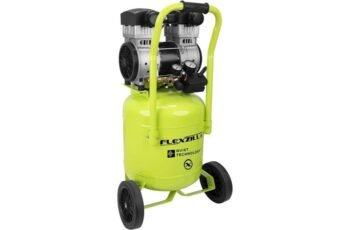
We’ll assess the CS3080 air compressor pump by comparing its 17.5 CFM maximum rating with its specified 16.94 CFM output at 900 RPM, then review its construction, operating range, and motor requirements. We’ll also weigh its practical advantages against details buyers should verify, including mounting, drive, tank compatibility, and the listed weight. Those checks can determine whether this pump fits your setup.
Key Takeaways
- The CS3080 is a three-cylinder, single-stage pump rated for up to 17.5 CFM; listed output is 16.94 CFM at 900 RPM.
- It is recommended to run at 800–1,000 RPM and 115 PSI; maximum airflow is not guaranteed at every operating condition.
- Cast-iron construction, three intake filters, and an oil-level sight glass support durability and routine maintenance.
- It is designed for 5–7.5 HP motors and listed 220–230 V, 20 A supply; verify motor, mounting, and drive compatibility.
- Confirm tank fit, dimensions, fittings, duty cycle, weight, and parts availability before purchase; the listed 4.54 g weight appears unreliable.
17.5 CFM Maximum Output
The CS3080 lists a maximum airflow of 17.5 CFM, with a specified output of 16.94 CFM at 900 RPM. We can use these figures to distinguish Peak airflow from the stated operating output: the maximum is a listed ceiling, while the 900 RPM figure ties delivery to a defined speed.
This distinction helps us assess whether the pump’s airflow suits your tools and workload. Its recommended speed range is 800–1,000 RPM, and its recommended operating pressure is 115 PSI. Rated capacity should accordingly be considered alongside operating conditions; the listed maximum alone doesn’t establish output at every speed or pressure.
Detailed features
Beyond its airflow rating, the CS3080 uses a cast-iron cylinder and crankcase to support durability under heat and pressure fluctuations. This Cast Iron Construction forms the pump’s main structural housing, while industrial-grade alloy components are designed for demanding operating conditions.
We can check lubricant level through the oil-level sight glass, making Sight Glass Monitoring a straightforward part of routine maintenance. Three intake filters supply incoming air to the three-cylinder, single-stage pump.
Precision-machined components are intended to limit friction, energy loss, vibration, and noise. A protective coating helps resist moisture and chemical exposure. The pump is designed for 5–7.5 HP motors and 800–1,000 RPM operation.
Pros and Cons
We’ll weigh the CS3080’s cast-iron construction, three-cylinder design, and rated airflow against its operating requirements and compatibility limits.
Its 16.94 CFM output at 900 RPM and 115 PSI rating offer useful benchmarks, but you’ll need a compatible 5–7.5 HP motor and suitable power supply.
We’ll separate these practical advantages from limitations and note where the listed specifications leave uncertainty.
Pros
With its cast-iron cylinder and crankcase, the CS3080 is built for durability under demanding operating conditions. We also value its 17.5 CFM maximum airflow and compatibility with motors up to 7.5 HP. Cast Iron Durability supports sustained use, while Broad Applications span HVAC, refrigeration, manufacturing, automotive systems, and pneumatic tools.
| Feature | Practical advantage |
|---|---|
| Three cylinders | Supports airflow delivery |
| 115 PSI rating | Suits common shop tasks |
| Three intake filters | Provides multiple intake points |
| Oil sight glass | Lets us check oil level |
| Protective coating | Helps resist moisture and chemicals |
Precision-machined components are designed to reduce friction, energy loss, vibration, and noise. The 800–1,000 RPM recommended range gives us clear operating guidance for compatible setups.
Cons
Despite its durable construction and broad airflow capacity, the CS3080 has several limitations to keep in mind. We’d verify motor and mounting requirements before purchase, since the listed 5–7.5 HP range and 220–230 V, 20 A supply may not suit every workshop.
Limited compatibility also deserves attention: broad claims covering piston, rotary, and scroll systems don’t establish fit with a specific compressor.
Some unclear specifications complicate planning, including the wide 65.1–100-gallon tank range and a listed weight of just 4.54 g, which appears unreliable. We’d confirm dimensions, fittings, duty cycle, and weight with the seller before installation or operation.
Concluding thoughts
For applications that match its operating range, the CS3080 offers a cast-iron, three-cylinder design rated for up to 17.5 CFM and 115 PSI, with a recommended 5–7.5 HP motor and 800–1,000 RPM speed. We’d match its output to the tools and duty cycle we plan to run, rather than treating maximum airflow as continuous capacity.
The sight glass and three intake filters support routine maintenance, while the cast-iron construction may suit demanding installations. Before buying, we’d verify mounting, drive, electrical supply, and tank compatibility. Confirming parts availability and service requirements also matters for long term reliability and ownership considerations.
Frequently Asked Questions
What Type of Oil Does the CS3080 Pump Require?
We can’t confirm the CS3080’s required Lubricant Type or Oil Viscosity from the provided specifications. Check the pump’s manual or manufacturer before filling it; don’t assume standard compressor oil is suitable for this model.
How Often Should the Pump’s Oil Be Changed?
We don’t have a verified factory interval, so follow the manufacturer’s manual. For an Oil Change Schedule, inspect oil regularly; through the sight glass, monitor clarity and level, and change promptly if it darkens, clouds, or contains debris.
Does the CS3080 Include a Motor or Mounting Hardware?
We can’t confirm that a motor or mounting hardware comes with the CS3080; the listed included component is the pump only. Verify both items with the seller before purchase, especially for your installation requirements.
What Pulley Size Is Needed to Achieve the Recommended Operating Speed?
We can’t specify a pulley diameter without motor RPM. For pulley sizing for target RPM, use motor speed and pulley ratio: compressor RPM equals motor RPM × driver-pulley diameter ÷ pump-pulley diameter; target 800–1,000 RPM. Like gears turning, match diameters accordingly.
Is the CS3080 Pump Compatible With a Specific Air Compressor Tank?
We can’t confirm compatibility with a specific tank without its tank capacity, mounting dimensions, and pressure rating. The CS3080 listing specifies 65.1–100 gallons and 115 PSI; compare your tank’s specifications before installation or operation.
Conclusion
The CS3080 is a sturdy three-cylinder engine for a workshop’s air supply, but its headline 17.5 CFM is a peak, not a promise at every speed. We’d treat its specified 16.94 CFM at 900 RPM and 115 PSI as the more useful road map, then match the pump to a 5–7.5 HP motor. Before setting sail, we’d verify mounting, electrical, tank, drive, and weight details; compatibility keeps this cast-iron workhorse on course.