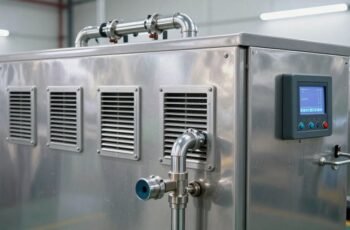
Did you know that choosing the wrong tank type can substantially impact your compressor’s efficiency and safety? Many users overlook the subtle differences between horizontal and vertical tanks, which affect stability, space, and accessibility. Selecting the proper size and features requires a detailed understanding of your airflow needs and safety standards. We’ll explore these critical factors to help you make an informed decision that optimizes performance and longevity—an essential step in ensuring your system operates reliably under demanding conditions.
Key Takeaways
- Determine tank size based on your peak airflow needs and tool usage to ensure efficiency and reduce compressor cycling.
- Choose between horizontal or vertical tanks based on available space and mobility requirements.
- Select material (steel or aluminum) considering durability, weight, and corrosion resistance.
- Verify safety features like pressure relief valves and compliance with standards such as ASME or ISO.
- Consider additional accessories like automatic drains, gauges, and quick-connect fittings for optimal system performance.
What Are the Key Types of Air Compressor Tanks and How Do They Differ?
Understanding the key types of air compressor tanks is essential for selecting the right equipment for specific applications. There are primarily two types: horizontal and vertical tanks. Horizontal tanks are more stable and easier to access, suitable for stationary setups with ample space. Vertical tanks, on the other hand, are compact, making them ideal for limited space environments and mobile units. The design affects not only space requirements but also pressure distribution and durability. Additionally, tanks come in different materials, such as steel or aluminum, influencing weight, corrosion resistance, and lifespan. The choice between these types hinges on operational needs, space constraints, and environmental factors. Recognizing these differences allows us to optimize performance and guarantee safety in various industrial and commercial settings.
How to Determine the Right Size and Capacity for Your Projects
Selecting the appropriate size and capacity for your air compressor tank depends on accurately evaluating your operational demands. To determine this, we analyze your peak airflow requirements, which depend on the tools and equipment you’ll operate simultaneously. Larger tanks provide longer periods of stable pressure, reducing compressor cycling frequency, but may be unnecessary for intermittent tasks. Conversely, smaller tanks are suitable for light-duty applications with short bursts of airflow. We also consider the compressor’s CFM rating at specific pressure levels, ensuring the tank’s volume supports continuous operation without pressure drops. Capacity calculations should align with project scope, ensuring the tank can sustain your typical workload without excessive cycling or pressure fluctuations. Precise sizing optimizes efficiency, reduces wear, and enhances overall system performance.
What Materials and Construction Features Should You Consider for Durability?
When choosing a durable air compressor tank, it’s vital to evaluate the materials used in its construction, as these directly influence longevity and resistance to corrosion. Steel remains the standard due to its strength and durability, especially when appropriately treated with corrosion-resistant coatings like epoxy or paint. Aluminum tanks offer a lightweight alternative with excellent corrosion resistance, though they may be less robust under high-pressure conditions. Additionally, the construction features such as reinforced seams, welded joints, and quality fittings play key roles in structural integrity. Thicker gauge steel or seamless construction can prevent failure under stress. Overall, selecting a tank with high-quality materials and sound construction features guarantees long-term performance, reduces maintenance needs, and enhances safety.
How to Evaluate Safety Features and Compliance Standards
Evaluating safety features and compliance standards is essential to guarantee that an air compressor tank operates reliably and meets regulatory requirements. We start by examining the tank’s design certifications, such as ASME or ISO compliance, which confirm adherence to safety protocols. Pressure relief valves are critical; they must be properly rated and functional to prevent over-pressurization. Inspect for sturdy construction and quality welding, ensuring structural integrity under operational stresses. Look for safety labels indicating compliance with local standards and manufacturer warnings. Regular testing and maintenance records also provide insight into ongoing safety practices. By thoroughly assessing these elements, we can ensure the tank’s safety features are robust, reducing risks of failure and ensuring long-term, compliant operation.
Which Additional Features and Accessories Enhance Tank Performance?
Enhancing tank performance often involves integrating additional features and accessories that improve functionality and durability. For instance, moisture management systems like automatic drains or desiccant filters prevent corrosion and maintain air quality, directly impacting longevity. Pressure gauges and regulators provide precise control, guaranteeing consistent output and reducing wear on connected tools. Safety valves, such as pressure relief valves, protect the tank from over-pressurization, minimizing failure risks. Additionally, vibration isolators or pads dampen operational noise and mitigate stress on structural components. Quick-connect fittings facilitate efficient tool switching without compromising system integrity. Incorporating these features ensures peak performance, reduces maintenance, and extends the tank’s service life, making them essential considerations for engineers seeking reliability and efficiency in compressed air systems.
How to Budget and Choose the Best Air Compressor Tank for Your Needs
When budgeting for an air compressor tank, we must consider both initial costs and long-term value based on usage demands. Selecting the appropriate size involves analyzing your airflow requirements to guarantee efficiency without unnecessary expense. Precise assessment of these factors enables ideal investment tailored to your operational needs.
Budgeting for Air Tanks
How do you determine the right budget for an air compressor tank that meets your specific needs? First, assess the required capacity and pressure ratings based on your intended applications. Larger tanks with higher PSI ratings generally cost more due to increased material and manufacturing complexity. Next, analyze the operational costs, including efficiency and durability, which influence long-term expenses. Material selection—such as cast iron versus aluminum—also impacts upfront costs and longevity. Establish a cost-performance ratio by comparing features against your budget constraints, ensuring you prioritize essential specifications without overspending on non-critical features. By systematically evaluating these factors, you can allocate an appropriate budget that balances initial investment with operational reliability, ultimately selecting a tank optimized for your workload while maintaining cost efficiency.
Choosing the Right Size
What size air compressor tank is truly appropriate for your specific applications? Determining this requires a careful analysis of your air demand, duty cycle, and operational patterns. Smaller tanks, typically 1-20 gallons, suffice for light tasks such as inflating tires or small pneumatic tools, where short bursts of air are needed. Larger tanks, 30-80 gallons, support continuous or heavier use, providing stability in pressure and reducing compressor cycling. For industrial or high-demand environments, tanks exceeding 80 gallons ensure consistent airflow and minimal pressure fluctuation. To choose correctly, we must evaluate the volume of air your tools consume per minute and your workflow’s duration. Proper sizing minimizes energy consumption, reduces wear, and guarantees reliable performance, aligning tank capacity with operational requirements for peak efficiency.
Frequently Asked Questions
How Often Should I Perform Maintenance on My Air Compressor Tank?
We recommend inspecting and draining your air compressor tank monthly to prevent moisture buildup and corrosion, while conducting a thorough internal check annually to guarantee structural integrity and peak performance, adjusting frequency based on usage intensity and environmental conditions.
What Is the Typical Lifespan of an Air Compressor Tank?
Typically, an air compressor tank lasts 10 to 15 years, but this depends on usage, maintenance, and environment. Regular inspections and prompt repairs can extend its lifespan, ensuring safety and peak performance over time.
Can I Convert a Tank From One Type to Another?
We can convert a tank from one type to another, but it requires precise modifications and safety checks. While technically feasible, we must analyze material compatibility, pressure ratings, and structural integrity to guarantee safe, compliant transformation.
How Do Temperature Fluctuations Affect Tank Safety?
Temperature fluctuations can markedly impact tank safety by causing expansion and contraction, which stress the material, potentially leading to cracks or leaks. Regular monitoring and pressure relief systems are essential to mitigate risks associated with these temperature changes.
Are There Specific Certifications I Should Look for When Buying a Tank?
We recommend looking for tanks certified by recognized standards organizations like ASME or ISO, as they guarantee safety, durability, and compliance with industry regulations, helping prevent failures and ensuring reliable performance under varying operational conditions.
Conclusion
Choosing the right air compressor tank is like assembling a finely tuned instrument—every component must harmonize for ideal performance. By understanding key types, sizes, materials, safety features, and accessories, we guarantee a system that’s both efficient and reliable. Thoughtful selection minimizes downtime and maximizes longevity, turning your compressor setup into a symphony of precision. Ultimately, informed decisions are the cornerstone of sustained productivity and safety in any compressed air application.