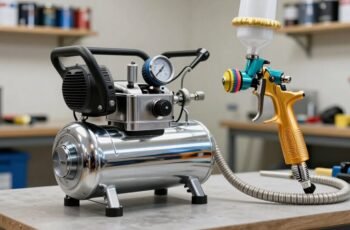
Imagine a workshop filled with the hum of machines, each requiring precise, reliable air pressure to function ideally. As professionals, we recognize that selecting the right high-pressure air compressor involves careful analysis of technical specifications and operational needs. With so many variables—pressure capacity, tank size, power source, and safety features—it’s essential to approach this decision with a clear understanding of the factors that influence performance and longevity. Let’s explore what truly matters when choosing a compressor that meets your demands.
Key Takeaways
- Determine the required pressure (PSI) and airflow (CFM) based on your specific industrial or tool needs.
- Choose the compressor type (reciprocating, diaphragm, or rotary screw) suited for your application and desired output.
- Consider tank size and pressure ratings to ensure adequate runtime and compatibility with your equipment.
- Evaluate power options (electric, gas, PTO) for portability, operational environment, and energy efficiency.
- Prioritize safety features, ease of maintenance, and noise/vibration levels for reliable, safe, and efficient operation.
What Is a High-Pressure Air Compressor and How Does It Work?
A high-pressure air compressor is a device designed to generate and store compressed air at pressures considerably higher than standard models. It operates through a compression mechanism, typically involving a piston or rotary screw, which reduces the volume of incoming atmospheric air. As air is compressed, its pressure and temperature increase, necessitating cooling systems to maintain operational stability. The compressed air is then stored in a high-strength tank capable of withstanding elevated pressures. This process involves precise control of intake valves, compression chambers, and safety devices to prevent over-pressurization. The compressor’s efficiency hinges on the design of these components, ensuring consistent pressure output and minimal energy loss. Overall, high-pressure air compressors are engineered for applications demanding elevated air pressures, requiring meticulous control and robust construction.
Key Factors to Consider When Choosing a High-Pressure Compressor
When selecting a high-pressure compressor, understanding the critical factors that influence performance, reliability, and safety is essential. Key considerations include the compressor’s duty cycle, which determines continuous operation capability and impacts longevity. We must evaluate the materials used in construction, ensuring corrosion resistance and structural integrity under high-pressure conditions. Power requirements are also essential; selecting an adequately rated motor prevents overheating and inefficiency. Noise levels and vibration damping influence operational safety and workplace comfort. Additionally, ease of maintenance and component accessibility affect long-term reliability. Finally, safety features such as pressure relief valves, automatic shutoff, and robust control systems are non-negotiable for safe operation. Thoroughly examining these factors helps us make informed decisions aligned with application demands and operational constraints.
Understanding Pressure Ratings and Tank Sizes
Understanding pressure ratings and tank sizes is fundamental to selecting a high-pressure air compressor that meets your operational demands. Pressure ratings specify the maximum air pressure the unit can safely generate, essential for applications requiring specific PSI levels. Tank sizes determine the volume of compressed air stored, impacting operational efficiency and cycle frequency. To visualize:
- A 50-gallon tank offers extended runtime for continuous tasks.
- A 3000 PSI rating ensures compatibility with high-demand industrial tools.
- Smaller tanks (e.g., 10 gallons) deliver rapid bursts but require frequent refilling.
Assessing these parameters helps optimize performance, prevent overloading, and guarantee safety. Precise understanding of pressure ratings and tank capacities allows for tailored solutions aligned with your specific application needs.
Selecting the Right Power Source and Portability Options
Choosing the appropriate power source and portability options is essential to guaranteeing your high-pressure air compressor aligns with operational requirements and mobility needs. Power sources typically include electric motors, gas engines, or PTO (power take-off) drives, each offering distinct advantages regarding availability, noise levels, and power consistency. Electric compressors provide reliable, maintenance-friendly operation ideal for stationary setups, while gas-powered units offer portability in remote or outdoor environments where electrical access is limited. Portability features—such as wheels, handles, and compact design—enhance mobility but may compromise capacity or power. When selecting, consider the operational environment, power accessibility, and the frequency of transportation. Balancing these factors ensures your compressor delivers consistent performance while maintaining ease of movement when needed.
Differentiating Between Types of High-Pressure Compressors
High-pressure compressors come in various configurations, each designed to meet specific industrial and operational demands. Understanding these differences helps optimize performance and efficiency.
- Reciprocating compressors employ pistons within cylinders, providing high pressure in short bursts, ideal for small-scale or precision applications.
- Diaphragm compressors use a flexible membrane to generate pressure, offering contamination-free output essential for pharmaceutical or food processing industries.
- Rotary screw compressors utilize intermeshing screws to deliver continuous, high-volume air flow at elevated pressures, suitable for large-scale manufacturing or long-term operation.
Each type’s design influences factors like maintenance, energy consumption, and operational stability. Recognizing these distinctions allows us to select the right compressor tailored to specific pressure, volume, and application requirements.
How to Assess Your Specific Application Needs
To accurately determine the right high-pressure compressor for your needs, we must first thoroughly evaluate the specific requirements of your application. This involves analyzing parameters like required flow rate, pressure levels, and duty cycle. We need to identify the maximum working pressure and continuous versus intermittent operation demands, as these influence compressor durability and performance. Additionally, consider the nature of the compressed air, including moisture content, contaminants, and temperature stability, to select appropriate filtration and cooling options. Understanding the operational environment—such as space limitations, noise restrictions, and power availability—further refines our assessment. By systematically examining these technical factors, we can align equipment specifications with application demands, ensuring efficiency, reliability, and cost-effectiveness in our high-pressure air system.
Tips for Comparing Features and Pricing Effectively
Once you’ve identified the key operational parameters for your application, the next step is to compare compressor features and pricing with a strategic approach. Focus on critical factors such as efficiency, durability, and maintenance costs. To do this effectively:
- Evaluate technical specifications like flow rate, pressure capacity, and energy consumption to identify performance differences.
- Analyze warranty terms and service agreements to understand long-term reliability and support.
- Compare upfront costs against total cost of ownership, including operational expenses over the compressor’s lifespan.
Common Mistakes to Avoid When Buying a High-Pressure Compressor
When investing in a high-pressure compressor, overlooking common pitfalls can lead to costly mistakes and operational inefficiencies. Selecting an undersized unit causes inadequate performance, while overestimating needs results in unnecessary expense. Ignoring compatibility with existing systems can create integration issues, and neglecting future scalability limits operational flexibility.
| Mistake | Consequence | Prevention |
|---|---|---|
| Choosing the wrong capacity | Reduced efficiency, higher costs | Conduct precise load calculations |
| Overlooking maintenance needs | Premature failure, downtime | Prioritize accessible maintenance features |
| Ignoring energy efficiency | Elevated operational costs | Opt for units with proven efficiency metrics |
Maintaining and Operating Your High-Pressure Air Compressor Safely
To guarantee safe operation, we emphasize the importance of regular safety inspections that identify potential issues before they escalate. Proper maintenance procedures are critical to maintaining the compressor’s integrity and performance over time. By adhering to these practices, we can minimize risks and optimize the compressor’s longevity and safety.
Regular Safety Inspections
Regular safety inspections are essential for ensuring the reliable and safe operation of high-pressure air compressors. These inspections help identify potential issues before they escalate, minimizing risk and downtime. Key inspection points include:
- Checking for leaks and pressure drops, which indicate seal or valve failures that could compromise safety.
- Inspecting pressure relief valves for proper function, preventing over-pressurization hazards.
- Examining electrical components for signs of wear, corrosion, or loose connections that could cause short circuits or malfunctions.
Proper Maintenance Procedures
Have you ever wondered why proper maintenance is critical to the safe and efficient operation of high-pressure air compressors? Consistent maintenance ensures that all components function within specified parameters, reducing the risk of failure or hazardous conditions. We emphasize regular inspection of pressure relief valves, lubricants, and filters, as well as monitoring temperature and vibration levels. Proper lubrication minimizes wear on critical parts, preventing overheating and mechanical breakdowns. Additionally, timely replacement of worn or damaged parts maintains system integrity and safety. Calibration of pressure gauges and safety devices guarantees accurate readings and reliable operation. Adhering to manufacturer-recommended maintenance schedules not only prolongs compressor lifespan but also ensures compliance with safety standards, ultimately safeguarding operators and optimizing performance.
Frequently Asked Questions
What Maintenance Is Required for Long-Term Compressor Reliability?
We recommend regularly inspecting and replacing filters, checking oil levels, draining moisture traps, and monitoring pressure gauges. Consistent lubrication and timely part replacements prevent wear, ensuring long-term reliability through proactive maintenance and thorough system analysis.
How Do Noise Levels Vary Between Different Compressor Models?
We find that quieter models, like oil-free compressors, emit considerably less noise—around 70 dB—compared to traditional piston types exceeding 90 dB, making them ideal for noise-sensitive environments while maintaining performance efficiency in demanding applications.
Are There Environmental Considerations When Operating High-Pressure Compressors?
Environmental considerations include managing noise pollution, controlling emissions, ensuring energy efficiency, and proper waste disposal. We analyze these factors to minimize ecological impact, optimize operational sustainability, and comply with regulations during high-pressure compressor use.
What Are the Warranty and Service Options Available?
Think of warranty and service options as a sturdy safety net beneath a tightrope. We evaluate coverage duration, repair responsiveness, and technical support quality, ensuring our equipment stays reliable, minimizing downtime, and optimizing operational efficiency.
How Do I Determine the Best Compressor Brand for Durability?
We determine the best compressor brand for durability by analyzing customer reviews, industry reputation, material quality, and warranty coverage. We prioritize brands with consistent performance, proven longevity, and strong after-sales support to guarantee reliable, long-term operation.
Conclusion
As we navigate the complexities of selecting the right high-pressure air compressor, think of it as choosing a precise instrument tuning to your unique demands. By analyzing pressure needs, tank capacity, and power options, we guarantee ideal performance—like a well-calibrated engine running smoothly. Avoiding common pitfalls and prioritizing maintenance is akin to fine-tuning a machine for longevity. Ultimately, a thoughtful choice fuels efficiency, safety, and durability, powering your operations with confidence and precision.