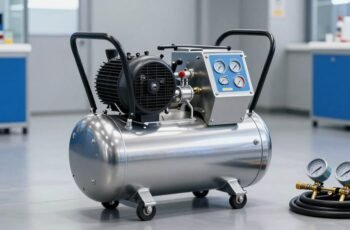
Like a well-tuned engine, choosing the right portable air compressor requires careful consideration of multiple technical factors to guarantee peak performance. We recognize that balancing capacity, size, and power sources involves precise analysis, especially when safety and durability are at stake. As we explore the essentials of selecting a compressor that meets your specific needs, it becomes clear that informed decisions are crucial—yet the complexities involved may surprise you.
Key Takeaways
- Determine your required airflow (CFM) and pressure (PSI) based on intended tasks and tools.
- Choose the appropriate compressor type (reciprocating, rotary screw, or centrifugal) for your usage needs.
- Consider tank size and portability to ensure continuous operation and ease of transport.
- Verify power source compatibility and duty cycle to match your work environment.
- Prioritize safety features, maintenance accessibility, and budget to select a durable, efficient model.
What Are Portable Air Compressors and How Do They Work?
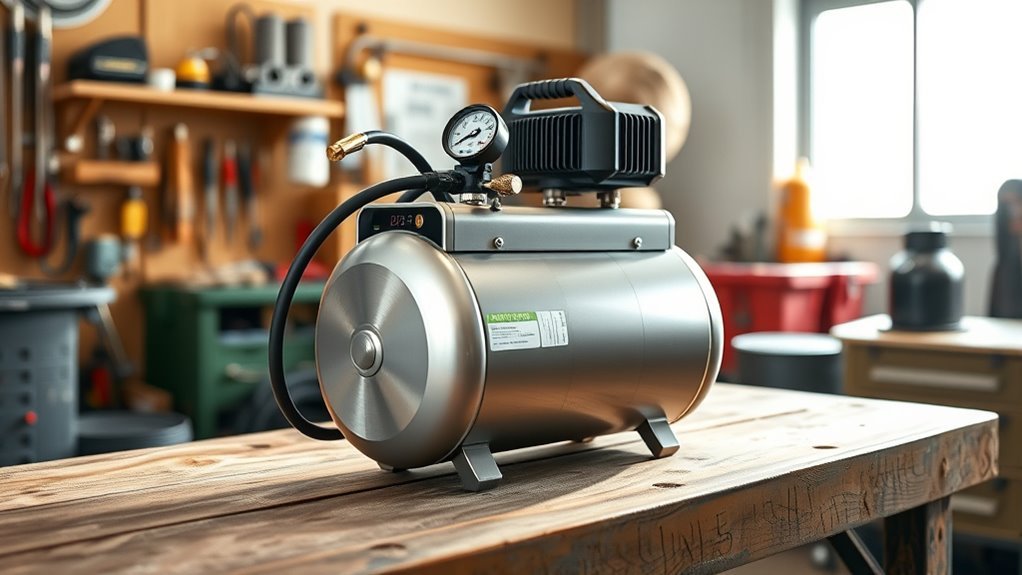
Portable air compressors are compact, self-contained devices designed to generate and store compressed air for various applications. They operate by drawing in ambient air through an intake valve, then using a motor-driven pump—typically a piston, rotary screw, or scroll mechanism—to compress the air. The compression process increases air pressure, which is stored in a high-pressure tank until needed. When activated, a pressure switch or control system regulates the release of compressed air, powering tools or inflating objects. These devices are engineered for mobility, with features such as lightweight construction and integrated handles. Precise control of pressure levels and airflow rates guarantees compatibility with specific tools or tasks. Understanding this fundamental operation helps in selecting a compressor that meets your performance and portability requirements efficiently.
Different Types of Portable Air Compressors and Which One Is Right for You
Choosing the right type of air compressor depends on the specific tasks and environments you’ll encounter, as each design offers distinct advantages and limitations. Understanding these variations helps guarantee ideal performance and efficiency.
- Reciprocating (Piston) Compressors: Ideal for high-pressure applications; suitable for automotive repairs and small-scale tasks. They are robust but tend to be noisy and less efficient over extended use.
- Rotary Screw Compressors: Designed for continuous operation; perfect for industrial or construction sites requiring large volume air delivery. They operate quietly and with high efficiency but are generally more expensive and bulkier.
- Centrifugal Compressors: Best for large-scale, high-volume needs such as manufacturing plants. They offer high efficiency and rapid airflow but are less portable and require significant power sources.
Selecting the appropriate type hinges on balancing power, portability, and task-specific requirements.
Key Features to Consider When Buying a Portable Air Compressor
When selecting a portable air compressor, understanding the key features that influence performance, durability, and usability is essential to making an informed decision. Critical features include airflow rate, pressure capacity, power source, tank size, and portability. These factors determine the compressor’s efficiency, suitability for specific tasks, and ease of transport.
| Feature | Importance |
|---|---|
| Airflow Rate | Affects how quickly air is delivered for tasks |
| Pressure Capacity | Determines maximum pressure output for applications |
| Power Source | Impacts mobility and compatibility with power supplies |
| Tank Size | Influences runtime and continuous operation |
| Portability | Ensures ease of transport and storage |
How to Choose the Best Portable Air Compressor for Your Budget
Since budgets vary widely among consumers, evaluating the cost-effectiveness of different portable air compressors is essential to making an informed purchase. To optimize value within your budget, consider these factors:
Evaluating cost-effectiveness helps you choose the right portable air compressor within your budget.
- Performance-to-Cost Ratio: Assess the compressor’s airflow (CFM) and pressure (PSI) relative to its price, ensuring it meets your specific operational needs without overspending.
- Durability and Quality: Invest in models with robust materials and reputable brands to avoid frequent replacements, which can inflate long-term costs.
- Additional Features: Prioritize essential features like portability, noise level, and ease of maintenance, balancing these against the initial investment to maximize utility for your budget.
A precise evaluation of these parameters ensures a cost-effective, suitable choice aligned with your financial constraints.
Essential Safety Tips for Using a Portable Air Compressor
Operating a portable air compressor safely requires strict adherence to established procedures to prevent accidents and equipment damage. We must always verify the compressor is properly grounded to avoid electrical hazards. Before use, inspect hoses and fittings for wear, cracks, or leaks—any compromised components should be replaced immediately. When operating, set the pressure regulator within manufacturer-recommended limits to prevent over-pressurization, which can cause bursting or damage. Always wear appropriate personal protective equipment, including eye protection and hearing guards, to mitigate injury risks. Confirm the work area is well-ventilated and free of debris to minimize fire hazards. Finally, turn off and disconnect the compressor before performing maintenance or adjustments, and never bypass safety features, as these are critical for safe operation.
Maintenance Tips to Keep Your Portable Air Compressor in Top Condition
Maintaining peak performance requires consistent checks of oil levels, air filter cleanliness, and moisture drainage. These practices prevent component wear, guarantee efficient operation, and extend the compressor’s lifespan. Implementing routine maintenance is essential for reliable, long-term functionality.
Regular Oil Checks
How often should we check the oil level in our portable air compressor to guarantee peak performance? Regular inspections are essential for ideal operation and longevity. We recommend checking the oil before each use or every 8-10 hours of continuous operation, whichever occurs first. During inspection, focus on:
- Oil Level: Ensure it’s within the recommended range using the dipstick or sight glass, topping up if necessary.
- Oil Quality: Look for dark, contaminated, or gritty oil, which indicates it’s time for a change.
- Oil Condition: Verify there are no signs of emulsification or water contamination, which can impair compressor function.
Consistent, precise oil checks prevent unnecessary wear, overheating, and mechanical failure, ensuring reliable performance over the compressor’s lifespan.
Clean Air Filters
Since clean air filters are vital for ideal compressor performance, regular inspection and maintenance are essential. Dirty filters restrict airflow, increasing motor strain and reducing efficiency. To maintain peak operation, inspect filters weekly and replace or clean them based on usage and environmental conditions. Proper maintenance prevents dust and debris from entering the compressor, minimizing component wear and potential damage. Consider the following for filter maintenance:
| Maintenance Action | Impact on Performance |
|---|---|
| Regular Inspection | Ensures unobstructed airflow |
| Scheduled Replacement | Prevents clogging and inefficiency |
| Proper Cleaning | Extends filter lifespan |
| Environmental Monitoring | Adapts cleaning frequency to conditions |
| Use of Compatible Filters | Ensures effective filtration |
Adhering to these practices guarantees longevity, efficiency, and reliable performance of your portable air compressor.
Drain Moisture Frequently
Regularly draining moisture from your portable air compressor prevents water buildup within the tank and lines, which can lead to corrosion, reduced efficiency, and potential equipment failure. Effective moisture management involves systematic removal of accumulated water to maintain ideal operation.
- Schedule Regular Draining: Establish routine intervals based on usage and humidity levels to prevent water stagnation.
- Use Drain Valves Properly: Ensure drain valves are fully opened during maintenance to facilitate complete water expulsion.
- Inspect for Residual Moisture: After draining, check the tank and lines for remaining moisture, addressing any persistent buildup promptly.
Consistent moisture drainage preserves compressor longevity, maintains air quality, and ensures peak performance, making it a critical aspect of ongoing maintenance.
Common Mistakes to Avoid When Purchasing a Portable Air Compressor
When selecting a portable air compressor, it’s crucial to avoid common pitfalls that can compromise performance and durability. Overestimating capacity leads to inadequate airflow, while underestimating size results in unnecessary bulk. Ignoring power source compatibility causes operational issues, especially in remote settings. Failing to take into account duty cycle impacts longevity, risking overheating during continuous use. Finally, neglecting maintenance requirements hampers lifespan and efficiency.
| Mistake | Impact | Solution |
|---|---|---|
| Overestimating capacity | Insufficient airflow for tasks | Match compressor cfm to needs |
| Ignoring size | Excessive weight, reduced portability | Prioritize portability features |
| Overlooking power source | Incompatibility with work environment | Verify power compatibility |
| Neglecting duty cycle | Overheating, reduced lifespan | Choose appropriate duty cycle |
| Skipping maintenance checks | Decreased efficiency, equipment failure | Follow regular maintenance schedule |
FAQs About Portable Air Compressors: What You Need to Know
Understanding common mistakes in selecting portable air compressors helps clarify what key information to take into account before making a purchase. Addressing FAQs ensures informed decisions.
Knowing common pitfalls in choosing portable air compressors helps make smarter, more informed purchasing decisions.
- What is the ideal CFM for my needs? Knowing the required airflow helps select a compressor that maintains consistent pressure during operation, avoiding underperformance or unnecessary size.
- How does tank size impact performance? Larger tanks provide more compressed air, reducing motor cycling and maintaining steady pressure, essential for continuous tasks.
- What are the maintenance requirements? Regular upkeep, such as oil changes and filter replacements, prolongs lifespan and ensures optimal efficiency, preventing costly breakdowns.
Frequently Asked Questions
How Long Does a Typical Portable Air Compressor Last Before Needing Replacement?
Typically, a portable air compressor lasts between 3 to 10 years, depending on usage, maintenance, and quality. Regular servicing, appropriate storage, and avoiding overuse can extend its lifespan, ensuring peak performance before replacement becomes necessary.
Can Portable Air Compressors Be Used for Industrial Purposes?
Think of a portable air compressor as a versatile tool—yes, it can be used for industrial purposes, but only when its specifications match the demands of high-volume, continuous operation, ensuring safety, efficiency, and durability in demanding environments.
What Is the Ideal Noise Level for a Portable Air Compressor?
We find that an ideal noise level for a portable air compressor is under 70 decibels, as it balances effective operation with minimal noise pollution, ensuring safety, compliance, and user comfort during prolonged or frequent use.
Are Portable Air Compressors Suitable for Powering Pneumatic Tools?
We find portable air compressors suitable for powering pneumatic tools, as demonstrated by a construction team efficiently operating nail guns and impact wrenches on-site, thanks to adequate CFM and PSI ratings tailored for such demanding applications.
How Do I Store My Portable Air Compressor During Off-Season Periods?
We store our portable air compressor in a clean, dry, and temperature-controlled environment during off-seasons. We drain the tank completely, disconnect power, and perform regular maintenance checks to prevent corrosion and guarantee peak performance when in use again.
Conclusion
Choosing the right portable air compressor is like selecting the perfect tool for a complex puzzle. It requires analyzing your needs, understanding technical specs, and balancing performance with safety. By carefully considering features and avoiding common pitfalls, we guarantee our investment is efficient and reliable. When we match the compressor’s capabilities to our tasks, we build a foundation of precision and safety—transforming a simple purchase into a powerful asset that seamlessly fits into our workflow.