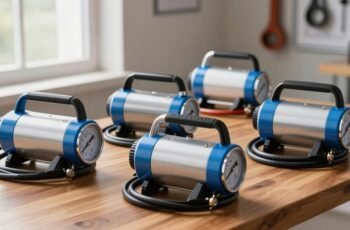
When evaluating the costs associated with industrial air compressors, it’s essential to understand the various types, their technical differences, and how these factors influence pricing. From initial purchase to ongoing operational expenses, every element impacts the total cost of ownership. By analyzing these components in detail, we can better determine which models suit specific industrial needs and budget constraints—an essential step before making any significant investment.
Key Takeaways
- Compressor type (reciprocating, rotary screw, centrifugal) significantly influences overall cost and application suitability.
- Price ranges vary from $3,000 for small units to over $200,000 for large-scale industrial models.
- Features like advanced control systems, safety components, and accessories increase initial investment.
- Long-term costs include energy consumption, maintenance, and potential upgrades or refurbishments.
- Used or refurbished compressors can offer cost savings with proper inspection and warranty considerations.
What Types of Industrial Air Compressors Are Available and How Do They Differ?
There are several primary types of industrial air compressors, each designed to suit specific operational requirements based on their mechanism and performance characteristics. The main categories include reciprocating, rotary screw, and centrifugal compressors. Reciprocating compressors operate through pistons driven by a crankshaft, providing high-pressure output suitable for intermittent use and smaller-scale applications. Rotary screw compressors utilize twin helical screws rotating within a casing, offering continuous operation with moderate to high flow rates, ideal for manufacturing and process industries. Centrifugal compressors employ high-speed impellers to generate large volumes of compressed air, making them suitable for large-scale, high-demand environments. Each type differs in terms of efficiency, maintenance needs, and application scope, making understanding these distinctions critical for selecting the right equipment for specific industrial processes.
How Much Do Industrial Air Compressors Typically Cost?
Industrial air compressor prices vary considerably based on their type, capacity, and features, with initial investments typically ranging from a few thousand to several hundred thousand dollars. Small, portable units designed for light-duty tasks generally cost between $3,000 and $10,000, offering capacities up to 30 CFM. Mid-range, stationary models with higher flow rates and enhanced durability range from $10,000 to $50,000, suitable for manufacturing and industrial applications. Large-scale, high-capacity compressors—such as screw or centrifugal types with capacities exceeding 200 CFM—can cost $50,000 to over $200,000, reflecting their complexity, power requirements, and advanced control systems. Precise costs depend on specific configurations, such as oil-free versus oil-lubricated mechanisms, pressure ratings, and integrated automation features.
What Factors Influence the Price of an Air Compressor?
Several key factors directly influence the price of an air compressor, reflecting the complexity and sophistication of the unit. First, compressor type—reciprocating, rotary screw, or centrifugal—significantly impacts cost due to differing engineering complexities and performance capabilities. Second, power requirements—measured in horsepower or kilowatts—affect pricing, as higher power units demand more durable components and advanced motor technology. Third, additional features like moisture filters, variable speed drives, or integrated cooling systems increase complexity and, consequently, cost. Material quality also plays a role; high-grade cast iron or stainless steel components elevate prices due to durability and precision manufacturing. These factors interplay to determine the final price, reflecting both performance expectations and manufacturing intricacies.
How to Determine the Right Compressor Size and Capacity for Your Needs?
To select the appropriate compressor size, we begin by accurately evaluating your peak and average air demand, including flow rates and pressure requirements. We then compare these specifications with compressor performance data to confirm compatibility. This systematic approach guarantees that the chosen unit will meet operational needs without unnecessary oversizing or inefficiency.
Assess Your Air Demand
Understanding your actual air demand is essential before selecting a compressor, as it directly influences the equipment’s size and capacity requirements. Accurate assessment involves quantifying your specific usage patterns and operational demands.
First, evaluate the *air flow requirements* for each tool or process, measured in CFM (cubic feet per minute), ensuring you account for peak and average loads. Second, analyze the *duty cycle*, which indicates how long the compressor operates at a given load, affecting size and cooling needs. Third, consider *pressure requirements*, typically in PSI, to confirm the compressor can sustain consistent output under operational conditions.
This detailed analysis enables precise matching of compressor specifications to your actual demand, preventing oversizing that increases costs or undersizing that hampers productivity.
Match Compressor Specifications
Once you’ve accurately assessed your air demand, the next step involves matching your operational requirements with the appropriate compressor specifications. To do this effectively, consider key parameters such as airflow rate, pressure, and duty cycle. For example:
| Parameter | Typical Range | Impact on Selection |
|---|---|---|
| Airflow (CFM) | 10 – 200+ CFM | Determines compressor size and capacity |
| Pressure (PSI) | 90 – 150+ PSI | Ensures sufficient force for applications |
| Duty Cycle (%) | 50 – 100% | Affects compressor durability and runtime |
Precision in matching these specs guarantees peak performance, energy efficiency, and longevity of your compressor system. Proper alignment minimizes operational costs and prevents over- or under-sizing.
What Features and Accessories Affect Compressor Pricing?
Pressure and flow capabilities directly impact compressor pricing by determining operational range and efficiency, with higher demands requiring more advanced components. Control and monitoring features, such as digital interfaces and remote diagnostics, add to costs through increased complexity and automation. Safety accessories like pressure relief valves and emergency shutoffs further influence pricing by enhancing system reliability and compliance.
Pressure and Flow Capabilities
What specific pressure and flow capabilities do we need to take into account when evaluating compressor prices? These parameters directly influence both performance and cost. First, the maximum pressure, measured in psi or bar, determines the compressor’s ability to operate in high-demand applications, with higher pressures increasing complexity and expense. Second, the flow rate, typically in CFM or m³/min, indicates the volume of compressed air produced, affecting size and power requirements. Third, pressure stability and regulation features impact operational efficiency and longevity, often adding to initial investment. Precise control over these capabilities guarantees compatibility with specific industrial processes, but also raises upfront costs. Consequently, understanding these technical specifications is vital for accurately evaluating the value and suitability of different compressor models.
Control and Monitoring Features
How do control and monitoring features influence the overall cost of industrial air compressors? These features considerably impact pricing by enhancing operational efficiency, reliability, and ease of maintenance. Advanced control systems, such as microprocessor-based PLCs, enable precise regulation of pressure, temperature, and load management, which can reduce energy consumption and prolong equipment lifespan. Monitoring capabilities—including sensors for vibration, temperature, and pressure—allow for real-time diagnostic data, facilitating predictive maintenance and minimizing downtime. Additional accessories like remote monitoring interfaces, data logging, and sophisticated alarms further escalate costs but offer substantial operational advantages. Overall, incorporating high-tech control and monitoring systems elevates initial investment, but it delivers long-term savings through optimized performance, reduced energy costs, and improved system reliability.
Additional Safety Accessories
Among the various factors influencing compressor costs, additional safety accessories play a critical role in enhancing operational security and compliance. These accessories can substantially impact the overall price by adding layers of protection and control. Key safety features include:
- Pressure Relief Valves – Prevent over-pressurization, safeguarding equipment and personnel.
- Emergency Shutoff Systems – Enable rapid system shutdown during unsafe conditions, reducing risk.
- Safety Interlock Devices – Ensure that certain operations only proceed under safe conditions, minimizing accidental hazards.
These accessories involve precise engineering and rigorous testing, which contribute to higher costs but are essential for meeting safety standards and reducing liability. Their inclusion can influence the compressor’s initial price and long-term operational expenses.
Are There Cost-Effective Alternatives or Used Options?
Several cost-effective alternatives and used options can markedly reduce initial investment without compromising performance. Reconditioned or refurbished compressors often undergo rigorous testing, restoring critical components to meet OEM standards, providing reliable performance at a considerably lower price point. These units typically come with warranties, guaranteeing peace of mind. Additionally, purchasing from reputable suppliers specializing in used equipment allows for detailed inspections and accurate assessments of operational integrity. Alternatives like smaller or less advanced models can also be suitable, especially for intermittent or low-demand applications, reducing upfront costs. However, it’s essential to evaluate the compressor’s lifecycle, energy efficiency, and compatibility with your operational requirements. A thorough analysis of these factors ensures cost savings do not come at the expense of long-term reliability or efficiency.
How to Budget for Maintenance and Operating Costs Over Time?
Effective budgeting for maintenance and operating costs requires a thorough understanding of the compressor’s lifecycle and performance demands. To accurately forecast expenses, we analyze several key factors:
Thorough understanding of compressor lifecycle and demands is essential for accurate maintenance and operating cost forecasting.
- Scheduled Maintenance Intervals: Regular tasks like filter replacements, lubrication, and inspections are predictable costs that accumulate over time.
- Operational Hours: Increased runtime correlates with higher wear and tear, leading to more frequent repairs and component replacements.
- Energy Consumption: Operating efficiency impacts electricity costs; optimizing load management can reduce long-term energy expenses.
Frequently Asked Questions
Are There Warranty Options Available for Industrial Air Compressors?
Yes, warranty options are available for industrial air compressors, typically covering parts and labor for a specified period. We recommend reviewing manufacturer policies, considering extended warranties for added security, and understanding coverage limitations to guarantee ideal, long-term operational support.
How Does Energy Efficiency Impact Long-Term Compressor Costs?
Energy efficiency reduces long-term compressor costs by up to 30%, as we’ve found through detailed analysis. This means investing in efficient models minimizes energy consumption, lowers operational expenses, and enhances overall system performance over the compressor’s lifespan.
What Safety Features Should I Consider When Purchasing an Air Compressor?
We consider safety features like automatic shutoff, pressure relief valves, thermal overload protection, and emergency stop controls essential for preventing accidents, ensuring operational safety, and complying with regulations, which ultimately reduces liability and maintenance costs.
Are Custom-Built Compressors More Expensive Than Standard Models?
Custom-built compressors typically cost more than standard models due to tailored components and specifications, requiring specialized engineering and materials. This investment guarantees precise performance, but it’s essential to weigh the higher initial expense against long-term operational benefits.
How Does Brand Reputation Influence Compressor Pricing?
Brand reputation substantially influences compressor pricing; reputable brands often charge a premium due to perceived quality, reliability, and advanced technology, which justifies higher costs. We consider this factor essential in evaluating long-term value and maintenance expenses.
Conclusion
In summary, understanding the extensive costs of industrial air compressors—initial purchase, maintenance, and energy consumption—is vital for making informed investments. Significantly, energy expenses can account for up to 70% of a compressor’s total lifetime cost, emphasizing the importance of selecting energy-efficient models. By analyzing these factors meticulously, we can optimize operational efficiency, reduce long-term expenses, and guarantee our systems meet specific industrial demands effectively.