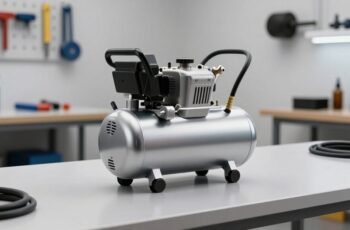
Did you know that the choice of tank shape and material can substantially influence a portable air compressor’s performance and safety? While many assume all tanks are alike, variations in design—such as vertical versus horizontal models—affect space efficiency and capacity, and materials like steel or aluminum impact durability and weight. Understanding these nuances is essential to selecting the right tank for your application, but the details often go unnoticed until it’s too late.
Key Takeaways
- Choose between vertical, horizontal, or lightweight tanks based on space, capacity, and mobility needs.
- Select tank material such as steel for durability or aluminum for lightweight portability.
- Consider capacity and pressure ratings aligned with your tools and project duration requirements.
- Opt for handheld tanks for quick, small jobs or wheeled tanks for extended, high-demand use.
- Prioritize safety and monitoring features like pressure gauges, relief valves, and corrosion-resistant coatings.
Types of Portable Air Compressor Tanks and Their Uses
Different types of portable air compressor tanks are designed to fulfill specific operational requirements, and selecting the appropriate tank depends on factors such as capacity, portability, and the intended application. Vertical tanks are commonly used for their space efficiency and stability, ideal for stationary or limited mobility tasks. Horizontal tanks offer increased capacity and are suitable for continuous use or larger tools, though they may require more space. Lightweight, portable tanks prioritize mobility, typically featuring integrated wheels and handles for ease of transport, making them suitable for on-site or remote work. Additionally, some tanks incorporate integrated air filtration or moisture separation, enhancing performance in demanding environments. Understanding these distinctions helps guarantee the chosen tank aligns with operational needs, maximizing efficiency and longevity.
How to Choose the Right Size for Your Projects
How do we determine the appropriate tank size for our projects? First, we analyze the air consumption rate of the tools involved, guaranteeing the tank can sustain continuous operation. Second, we consider the duty cycle, opting for larger tanks when high-frequency use is expected to reduce compressor cycling. Third, we evaluate project duration; larger tanks provide longer operation times without compressor shutdown, minimizing wear and energy use. The goal is to balance capacity with efficiency, avoiding over-sizing which adds unnecessary weight and cost, or under-sizing that leads to frequent compressor cycling and delays. Precise assessment of these factors ensures ideal performance, reduces operational interruptions, and extends equipment lifespan, making the choice of tank size a critical step in project planning.
Portable Air Compressor Tank Features to Consider
When selecting a portable air compressor tank, evaluating key features that influence performance, durability, and ease of use is essential. We focus on tank material quality, as steel offers strength and longevity, while aluminum provides lightweight portability. Capacity and pressure ratings directly impact operational efficiency, guaranteeing the tank can handle specific tasks without compromising safety. The inlet and outlet fittings must be secure and compatible with various tools, reducing leaks and downtime. A reliable pressure gauge allows for precise monitoring, preventing over-pressurization. Additionally, portability features like reinforced handles or wheels enhance maneuverability in different environments. Finally, considering safety features such as relief valves and corrosion-resistant coatings guarantees the tank’s longevity and safe operation under demanding conditions.
Comparing Handheld and Wheeled Air Tanks
Handheld and wheeled air tanks serve distinct operational needs, and choosing between them requires careful consideration of portability, capacity, and application scope. Handheld tanks excel in mobility and quick deployment, making them ideal for small-scale tasks or confined spaces. Wheeled tanks, however, offer considerably larger capacity and stability, supporting prolonged use and higher air demands.
Handheld tanks are perfect for quick jobs; wheeled tanks excel in extended, high-demand projects.
Consider these key factors:
- Portability: Handheld tanks are lightweight and easy to carry, but limited in volume.
- Capacity: Wheeled tanks provide higher PSI and larger volume, suitable for continuous operation.
- Application Scope: Handheld units are best for small repairs, while wheeled tanks serve industrial or extensive projects, emphasizing efficiency and endurance.
Choosing the right type depends on balancing these technical needs with operational requirements.
Best Materials and Construction for Durability
When selecting a durable portable air compressor tank, heavy-duty steel construction provides essential strength and resilience under pressure. Corrosion-resistant coatings are critical to extend the tank’s lifespan in varying environments, while reinforced tank designs enhance structural integrity against impacts and stress. Together, these materials and construction techniques guarantee reliable performance and long-term durability.
Heavy-Duty Steel Construction
Why is heavy-duty steel the preferred material for portable air compressor tanks? Its exceptional strength-to-weight ratio ensures the tank can withstand high pressures without deformation or failure. Steel’s structural integrity minimizes the risk of rupture under repeated stress, providing reliable performance. Additionally, steel’s inherent toughness resists impacts and rough handling in demanding environments.
Consider these key points:
- Unmatched Durability — Steel resists fatigue, ensuring long-lasting operation under continuous use.
- Structural Stability — Maintains shape and integrity, even during extreme pressure fluctuations.
- Cost-Effectiveness — Its durability reduces long-term maintenance and replacement costs.
This combination of strength, stability, and value makes heavy-duty steel the most suitable choice for durable, safe portable air compressor tanks.
Corrosion-Resistant Coatings
To guarantee long-term durability of portable air compressor tanks, selecting appropriate corrosion-resistant coatings is essential. These coatings protect against moisture and environmental exposure that cause rust and degradation. Common options include epoxy, polyurethane, and zinc-rich primers, each offering distinct corrosion barriers and adhesion properties. Epoxy coatings provide excellent chemical resistance; polyurethane offers flexibility and UV resistance; zinc-rich primers serve as sacrificial layers to prevent rust formation.
| Coating Type | Benefits | Limitations |
|---|---|---|
| Epoxy | Chemical resistance | Cracks under UV exposure |
| Polyurethane | Flexibility, UV stability | Higher cost |
| Zinc-rich | Sacrificial protection | Limited lifespan |
Reinforced Tank Design
Selecting the appropriate materials and construction techniques is critical to ensuring the durability of reinforced air compressor tanks. Proper reinforcement enhances structural integrity, minimizes failure risks, and extends service life.
Key factors include:
- High-Strength Steel Alloys: These materials withstand internal pressure and resist deformation under stress, providing long-term reliability.
- Rugged Construction Techniques: Methods like seamless welding and double-walled designs improve load distribution, reducing weak points.
- Reinforcement Patterns: Strategic ribbing or internal bracing increases resistance to fatigue and burst pressures, ensuring safety under demanding conditions.
Safety Tips for Using Portable Air Compressor Tanks
Ensuring safety when using portable air compressor tanks requires strict adherence to proper pressure settings, as over-pressurization can cause tank failure. Regular inspections identify potential issues before they escalate, maintaining equipment integrity. Implementing safe operating practices minimizes risk and enhances overall system reliability.
Proper Pressure Settings
Understanding and maintaining the correct pressure settings is essential for safe and effective use of portable air compressor tanks. Incorrect pressure levels can lead to equipment failure, safety hazards, or compromised performance. To guarantee ideal operation, consider these critical points:
- Verify manufacturer specifications: Always check the recommended PSI for your specific tank to prevent over-pressurization that could cause catastrophic failure.
- Use reliable gauges: Consistently monitor pressure with calibrated gauges to avoid accidental under or over-pressurization.
- Adjust gradually: Increase or decrease pressure gradually, observing safety protocols to prevent sudden releases that could cause injury or damage.
Adhering to these principles safeguards both operators and equipment, ensuring longevity and operational integrity.
Regular Equipment Inspections
Regular inspections of portable air compressor tanks are essential for maintaining safety and operational reliability. These inspections identify potential issues such as corrosion, cracks, or dents that could compromise tank integrity. We recommend checking for signs of corrosion on the tank’s surface, especially around weld seams and fittings. Internal inspections should be conducted periodically to detect rust buildup or contamination that could impair compressor performance. Pressure relief valves and safety devices must also be tested to guarantee they function properly, preventing over-pressurization hazards. Maintaining detailed records of inspections helps track wear patterns and schedule proactive maintenance. Regular, systematic evaluations mitigate risks of catastrophic failure, ensuring the compressor operates safely and efficiently over its service life.
Safe Operating Practices
To operate portable air compressor tanks safely, it’s essential that we follow strict procedures to minimize the risk of accidents or equipment failure. Proper safety practices protect both personnel and equipment integrity.
- Always verify the pressure gauge before use, ensuring it remains within the manufacturer’s recommended range; over-pressurization can cause catastrophic failure.
- Wear appropriate protective gear, including eye protection and hearing safeguards, to prevent injury from sudden releases or noise.
- Regularly monitor the compressor during operation for abnormal vibrations, leaks, or overheating, which indicate potential malfunctions that could escalate if ignored.
Adhering to these practices ensures a safer environment, minimizes downtime, and prolongs the lifespan of the compressor, ultimately supporting operational efficiency and safety.
Maintenance and Troubleshooting Common Issues
Maintaining a portable air compressor tank involves routine inspections and timely repairs to guarantee peak performance and safety. Regularly check for corrosion, especially around welds and fittings, which can compromise structural integrity. Monitor pressure gauges for abnormal fluctuations indicating leaks or control issues. Listen for unusual sounds during operation, such as hissing or knocking, which suggest component failure. Drain accumulated moisture from the tank regularly to prevent rust formation. Troubleshoot pressure drops by inspecting valves, hoses, and seals for leaks, replacing faulty parts as needed. Ensure safety valves function correctly by testing them periodically. Addressing these issues promptly reduces downtime and prevents potential hazards, maintaining the compressor’s efficiency and longevity. Accurate diagnostics and preventive maintenance are crucial for reliable operation.
Top Brands and Models in Portable Air Tanks
Several brands stand out in the portable air tank market due to their reputation for durability, efficiency, and innovative features. These brands consistently deliver reliable performance under demanding conditions, making them top choices for professionals and enthusiasts alike.
- Ingersoll Rand: Known for robust construction and high-pressure capacity, their tanks excel in industrial applications, ensuring longevity and consistent airflow.
- DeWalt: Combining portability with advanced safety features, DeWalt tanks offer excellent durability and user-friendly design, reducing operational risks.
- California Air Tools: Recognized for low noise operation and energy efficiency, their tanks are ideal for extended use in sensitive environments.
These brands exemplify technical excellence, providing models that meet rigorous standards for performance and reliability.
Cost Considerations and Budget-Friendly Options
While premium portable air tanks often deliver superior performance, budget-conscious buyers must carefully evaluate cost considerations to guarantee they select an option that balances affordability with essential features. Cost analysis should prioritize tank capacity, maximum pressure, and durability, as these directly impact utility and lifespan. Lower-cost models typically use thinner materials or simplified construction, which may reduce longevity but still meet basic inflation or pneumatic needs. It’s *vital* to assess the trade-offs between initial purchase price and ongoing maintenance or replacement costs. Additionally, evaluating warranty terms, brand reliability, and user reviews provides insight into long-term value. By systematically analyzing these factors, consumers can identify cost-effective options that fulfill operational requirements without unnecessary expenditure.
Tips for Transporting and Storing Your Air Tank
Transporting and storing your air tank properly is essential to guarantee safety and prolong its lifespan. Proper handling minimizes risks of damage, leaks, or accidents, ensuring reliable performance over time. When transporting, secure the tank upright in a stable vehicle compartment, using straps or padding to prevent movement. Avoid rough handling or exposure to extreme temperatures, which could compromise the tank’s integrity. For storage, keep the tank in a dry, ventilated area away from direct sunlight and corrosive substances. Regularly inspect for signs of corrosion or wear.
- Ensure stability during transport to prevent structural damage.
- Store in a controlled environment to prevent corrosion.
- Perform routine inspections to catch issues early.
Frequently Asked Questions
How Long Can a Portable Air Compressor Tank Operate Continuously?
A portable air compressor tank typically runs continuously for about 15 to 30 minutes, depending on its capacity and cooling system. Proper maintenance and adequate ventilation are essential to prevent overheating and guarantee safe, sustained operation.
Are Portable Air Tanks Suitable for Industrial or Heavy-Duty Tasks?
While portable air tanks excel in versatility, they’re generally designed for light to moderate tasks, not heavy-duty industrial use. For intense applications, we recommend specialized, larger capacity systems that guarantee durability, safety, and efficiency under demanding conditions.
What Are the Environmental Impacts of Different Tank Materials?
We analyze environmental impacts of tank materials; steel tanks are recyclable but energy-intensive, aluminum ones are lightweight and recyclable, while composites offer corrosion resistance but pose recycling challenges, affecting sustainability and lifecycle environmental footprint.
Can Portable Air Compressor Tanks Be Used Underwater or in Extreme Conditions?
Absolutely, portable air compressor tanks aren’t designed for underwater or extreme conditions; they’re like fragile glass in a storm. We analyze their materials and pressure ratings, ensuring use remains safe, effective, and within specified environmental parameters.
How Do I Safely Dispose of or Recycle an Old or Damaged Air Tank?
We recommend depressurizing the tank completely, then consulting local hazardous waste facilities for proper disposal or recycling procedures. Never puncture or burn the tank, and always follow safety protocols to prevent accidents or environmental harm.
Conclusion
Choosing the right portable air compressor tank is like fine-tuning a machine—precision and understanding guarantee peak performance. By considering size, material, and features, we optimize reliability and efficiency for every task. Regular maintenance keeps the engine humming smoothly, preventing unexpected breakdowns. Ultimately, selecting the ideal tank transforms your toolkit from a collection of parts into a symphony of power and precision, ready to tackle any project with confidence and control.