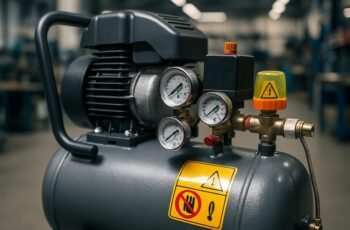
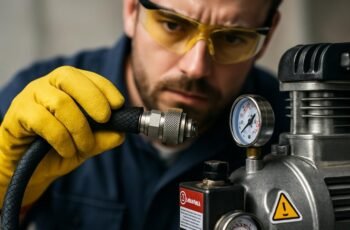
Air compressors pose unique fire risks we must address with precision. We’ll identify ignition sources, vent and store safely, and control heat hotspots through careful setup and leaks prevention. Regular maintenance, vigilant monitoring of temps and pressures, and robust interlocks are essential. In emergencies, we stop, isolate ignition sources, and inform responders. We’ll review our steps to prevent recurrence and keep you from overlooking critical safeguards as we move forward.
Key Takeaways
- Identify and control ignition sources by mapping heat origins, electrical faults, and flammable vapors during setup and operation.
- Ensure safe setup, venting, and storage by following manufacturer specs, stable placement, proper venting, and ventilation away from ignition sources.
- Implement rigorous maintenance routines with daily inspections, log monitoring, cleaning, and timely lubrication to prevent heat buildup and leaks.
- Conduct emergency response planning with immediate shutdowns, source isolation, alarms, evacuations, and post-incident reviews.
- Prioritize confinement risk assessment and leak control to minimize hotspots and energy interaction in all stages of operation.
What Makes Air Compressors Fire Risks Unique
Air compressors present unique fire risks because they compress and store energy in a confined space, heating components and driving fuels into ignition-ready states. We approach this with a precise, preventative mindset, outlining why the risk stands apart. The core factor is energy density: rapid compression raises temperatures, while stored air and oil create potential fuel sources. This combination can ignite from hot surfaces, sparks, or electrical faults. Unlike unrelated topic discussions, we focus on mechanisms relevant to our equipment and operations, avoiding filler discussion that clouds clarity. We emphasize venting, cooling, and robust leaks control to minimize hotspots. Routine maintenance targets bearings, seals, and electrical connections, preventing heat buildup. By detailing controls, we help you recognize vulnerabilities and act before a fire starts.
Identifying Common Ignition Sources and Hazards
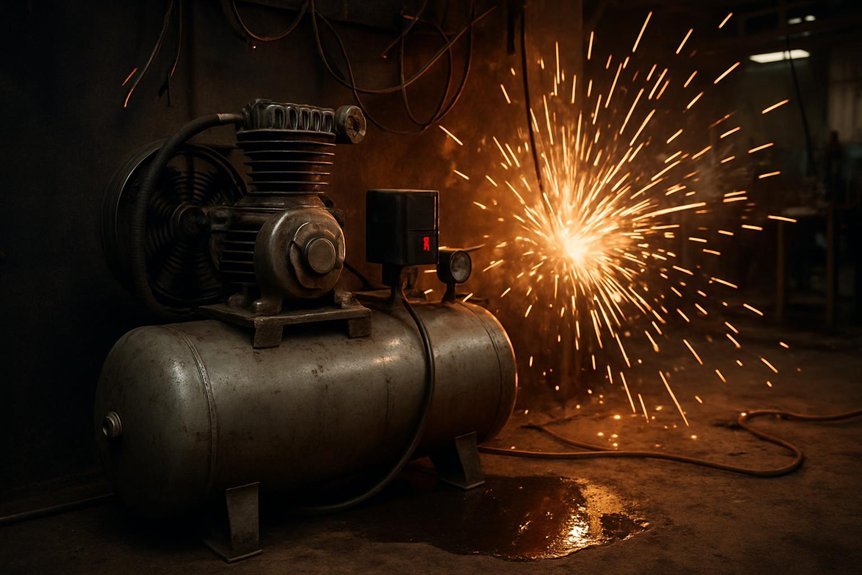
Common ignition sources in air compressor systems spring from heat, sparks, and flammable vapors that can accumulate in confined spaces. We identify ignition sources through a structured approach: first, map all potential heat sources, electrical faults, and chemical vapors present during operation; second, assess environments for confinement, ventilation, and residue buildup; third, quantify ignition probability with observable criteria and historical data. We conduct hazard assessment methods that emphasize routine inspection, equipment condition, and process steps that create hotspots or leaks. Remaining risks are documented, prioritized, and controlled with engineering and administrative controls before operation resumes. By documenting findings, we improve prevention and training, ensuring workers understand how and where ignition could occur. This disciplined identification of ignition sources supports safer, compliant practices.
Safe Setup, Venting, and Storage Practices
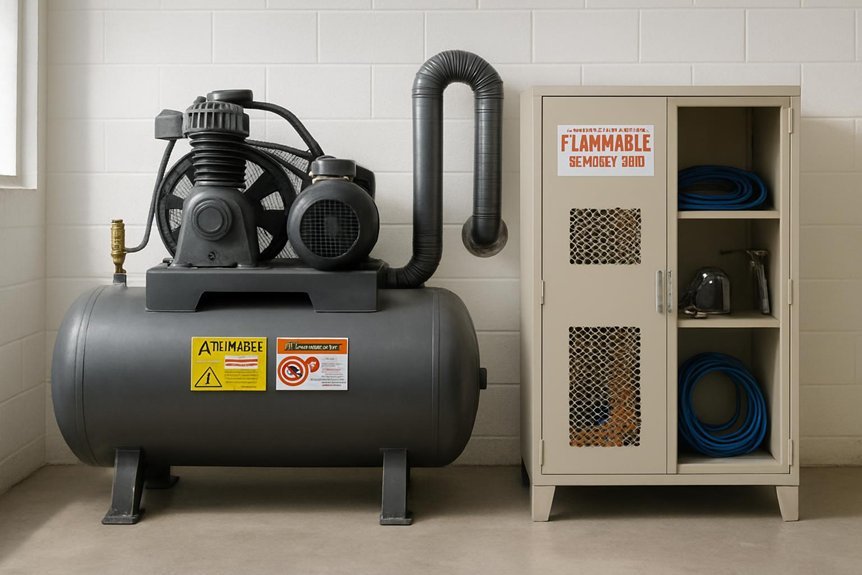
How can we ensure safe setup, venting, and storage? We align placement with manufacturer specs, using stable surfaces and proper vibration isolation. We route lines to avoid kinks, leaks, or contact with heat sources, and verify electrical supply matches rating before startup. Venting should occur to an open, unobstructed area, away from ignition sources, with exhaust directed away from personnel. Store hoses, fittings, and chemicals in labeled, closed containers, off the floor, and away from heat or flames. Keep clutter to a minimum to prevent trips, and never use unrelated topic items as makeshift supports. Regular inspections catch wear or damage early, preventing nonessential discussion from masking real risks. Our approach is deliberate, documented, and focused on minimizing fire hazards.
Maintenance Routines That Prevent Fires
Maintenance routines that prevent fires must be rigorous and routine. We, as readers and practitioners, commit to a disciplined cadence that minimizes fire hazards in every shift. We start with a daily inspection: belts, hoses, fittings, and electrical cords checked for wear, heat, or leaks. We log temperatures and pressures to detect anomalies that signal developing faults. We execute straightening, cleaning, and dust removal to prevent buildup that feeds fires. We schedule oil and lubricant changes per manufacturer specs, monitoring for contamination and viscosity shifts. We isolate motors during maintenance, verify ventilation, and test safety interlocks. We document results, track trends, and address deviations promptly. We train staff, rotate duties, and update checklists to sustain two word ideas: proactive discipline, continuous vigilance.
Emergency Response and Incident Prevention Steps
What immediate steps do we take when a fire starts or an alarm sounds, and how do we prevent escalation? We act swiftly, verify the alert, and initiate our plan. We shut down the air compressors safely, isolate the source, and alert the designated responders. We evacuate occupants, account for personnel, and keep exits clear. Our priority is emergency response that minimizes damage and injury, while incident prevention measures reduce recurrence. We communicate clearly, document the incident, and review procedures afterward. Fire safety hinges on preparedness, training, and disciplined action.
| Step | Action | Outcome |
|---|---|---|
| 1 | Stop equipment | Prevents fuel and heat buildup |
| 2 | Alert responders | Speeds containment |
| 3 | Evacuate and secure | Ensures safety |
Frequently Asked Questions
Do Air Compressors Emit Invisible Flammable Vapors Besides Oil?
Yes, they can emit invisible vapors beyond oil fumes, including solvent residues or cleaning agents. We monitor intake, seals, and leaks, testing air for invisible vapors, and strictly separate oil systems from solvents to prevent ignition risks.
How Do Fire Codes Differ for Stationary vs. Portable Units?
Yes, fire codes differ: stationary unit rules focus on fixed installation, ventilation, and static fuel containment; portable unit rules emphasize mobility, shutdown during transport, and portable fuel limits. We handle stationary differences, portable differences with consistent, preventative methods.
Are There Specific PPE Requirements for Compressor Fire Emergencies?
We do have specific PPE requirements for compressor fire emergencies: we require eye protection, flame-resistant gloves, and a respirator or suitable mask, plus hearing protection. PPE guidelines emphasize situational awareness and emergency protocols to prevent injuries.
What Role Do Electrical Panels Play in Compressor Fire Risk?
Electrical panels considerably raise compressor fire risk due to arcing; consider that electrical faults cause about 40% of industrial fires. We monitor voltage safety, inspect panels, and shut power before maintenance, preventing ignition and protecting personnel.
Can Extinguishers Damage Compressor Components During a Fire?
Extinguishers can cause damage if sprayed directly at hot compressor components, so we assess extinguisher impact before use and target flames, not equipment. We mitigate risk by keeping access clear and protecting critical compressor components during discharge.
Conclusion
We’ve focused on what makes air compressor fires unique, the usual ignition sources, and how proper setup, venting, and storage dramatically cut risk. Regular checks, temperature and pressure monitoring, and sound interlocks keep hotspots from forming. In emergencies, we stop, isolate, and alert. Here’s a visual to guide you: compressed air systems in facilities with poor venting show a 40% higher fire incidence than well-vented setups. Stay methodical, stay preventative, and keep routines unwavering.