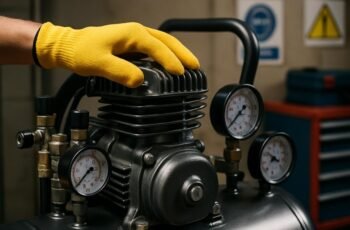
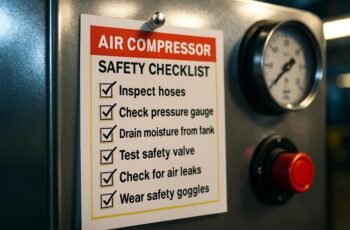
We should quietly acknowledge the risks that come with workplace air compressors and not overlook any detail that keeps people safe. We’ll examine guard enclosures, shutoff accessibility, and routine checks to prevent injuries before they happen. Our approach is precise, proactive, and data-driven, focusing on inspection, operation, and emergency readiness. If we miss a step, a small oversight can escalate quickly, so we’ll keep you involved and prepared to act when issues surface. Let’s start with the fundamentals.
Key Takeaways
- Regularly inspect gauges, hoses, fittings, and safety valves; log deviations and schedule corrective actions to prevent leaks and bursts.
- Ensure proper guarding and accessible shutoffs; conduct routine inspections to mitigate exposure to moving parts and unexpected starts.
- Verify power isolation and release stored air during pre-start checks; test emergency shutdowns and control functions before operation.
- Use appropriate PPE and control hazards (flying debris, hot surfaces, pressure releases) with training on checks, hose handling, and communications.
- Implement clear emergency procedures: rapid shutdown, site security, data gathering, and post-incident reviews to improve safety protocols.
What Makes Workplace Air Compressors Dangerous
Air compressors pose several hazards because high-pressure air can cause injuries if misused or poorly maintained. We, as readers and practitioners, examine how dangerous hazards arise from design flaws, system pressure, and operator error. First, high-pressure components can rupture or release bursts if gauges, hoses, or fittings fail, creating lethal force and flying debris. Second, improper maintenance accelerates wear, leading to leaks, overheating, and sudden shutdowns that trap workers in dangerous situations. Third, pressure-relief devices must function correctly; failures here convert normal operation into blast risk. Fourth, inadequate guarding and inaccessible shutoffs increase exposure to moving parts and sudden starts. Lastly, training gaps leave employees unaware of safe shutoff procedures and hazard recognition, amplifying risk across tasks.
How to Inspect and Prep Compressors for Safe Use
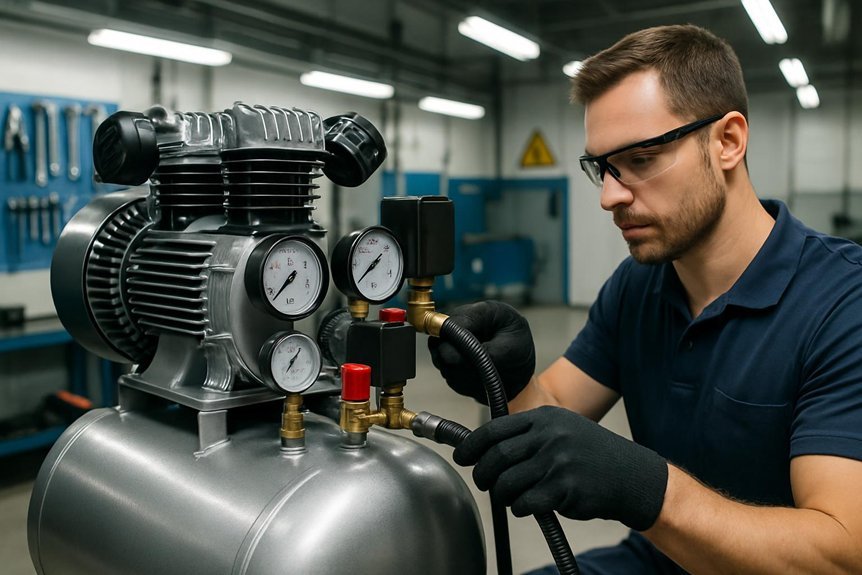
Regular inspections and careful preparation set the foundation for safe compressor use. We begin with inspection readiness: verify gauges, hoses, fittings, and safety valves are intact and legible. We confirm fluid levels, filter condition, and oil viscosity, documenting any deviations. Next, we perform pre start checks, isolating power, releasing stored air, and inspecting for leaks or unusual noises. We test controls, pressure relief, and emergency shutdown mechanisms to ensure immediate response if needed. We verify belts, couplings, and guards are secure, then confirm ventilation and exhaust paths meet clearance requirements. We review electrical wiring for damage, corrosion, or loose terminals, and ensure compliance with applicable standards. Finally, we log findings, schedule corrective actions, and recheck critical items before resuming operation. This disciplined routine minimizes risk and supports reliable performance.
Safe Operation Practices for Daily Tasks
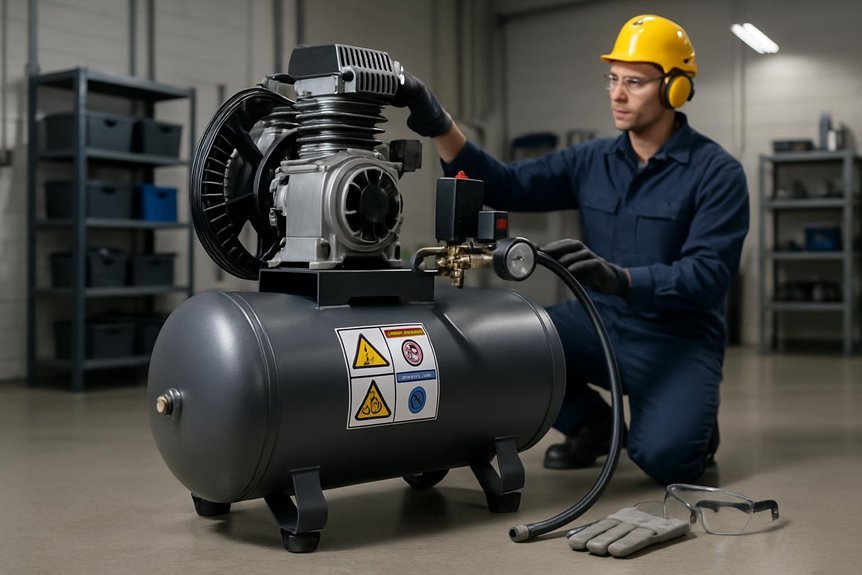
To operate daily tasks safely, we apply the checks we established during setup to routine use. We verify connections, gauge readings, and pressure settings before each task, ensuring consistency with device manuals. We maintain a disciplined sequence: start, monitor, calm shutdown, and document deviations. During operation, we keep noise and vibration levels within designed tolerances, avoiding hurried adjustments that create risk. We conduct brief, focused inspections of hoses and couplings at intervals, replacing worn components promptly. We align workflow with load profiles to prevent overuse and overheating, and we isolate the compressor when not actively needed. Our approach emphasizes safe operation and reliable performance, reducing downtime and injuries while maximizing efficiency in daily tasks.
PPE, Hazards, and Protective Measures to Implement
We must wear appropriate PPE, assess all hazards, and implement protective measures before starting work. We approach PPE as a control layer, selecting eye, ear, and respiratory protection based on task-specific risks, noise levels, and possible aerosols. Hazards include flying debris, hot surfaces, pressure releases, and confined-space ingress risks, so we tailor PPE to defeat each threat without hindering movement. We implement protective measures such as lockout/tagout, proper guarding, ventilation where needed, and regular equipment inspections to verify line pressures and fittings. Training reinforces routine checks, safe handling of hoses, and clear communication cues. We document observations, adjust controls for changing conditions, and review near-misses promptly to prevent recurrence. Clear, deliberate actions reduce risk and strengthen overall safety culture.
Emergency Procedures and Incident Response Steps
In an emergency, we act quickly and methodically to minimize harm and protect lives. We establish clear roles, gather essential data, and follow predefined steps so responses are consistent and effective. Our emergency planning emphasizes rapid shutdown, isolation of equipment, and notification to supervisors and responders. We prioritize securing the site to prevent escalation and protect bystanders, while maintaining accurate situational awareness. We document time-sensitive decisions and preserve potential evidence for incident investigation, ensuring we can learn from each event. After action, we review procedures, update contact lists, and adjust training as needed. We emphasize communication, debriefing, and corrective actions to reduce recurrence, reinforcing a culture of proactive preparedness and continuous improvement across all compressor-related operations.
Frequently Asked Questions
How Do I Choose the Right Size Compressor for My Job?
Choosing capacity depends on demand; we’ll calculate runtime, duty cycle, and peak CFM. We’ll select PSI ratings accordingly, ensuring system pressure meets tool requirements while leaving headroom. We’ll verify with test runs and adjust as needed.
What Maintenance Schedule Keeps Compressors Safe Long-Term?
We’d ignore maintenance cadence at our peril, so we schedule it rigorously: daily checks, weekly filter and oil changes, monthly belt and gauge tests, quarterly full system audits, and annual compressor rebuilds to maximize component longevity and safety.
Are There Common Myths About Air Compressor Safety?
We debunk myths vs reality by spotting safety gear myths and testing assumptions: common beliefs don’t always hold up under inspection, and we stay proactive, emphasizing evidence-based precautions, proper PPE, and disciplined procedures rather than vague folklore.
How Often Should Audible Alarms Be Tested?
We test audible alarms monthly as part of routine audible alarm testing, ensuring reliability; alarm maintenance scheduling should include quarterly and annual checks, documenting results, and promptly addressing any discrepancies to maintain consistent system performance for reader safety.
What Training Is Required for New Operators?
We require formal training for new operators, covering safety rules, lockout/tagout, and equipment fundamentals; completion grants operator qualifications. We assess competency through hands-on evaluations, documentation, and periodic refreshers to ensure ongoing adherence to training requirements.
Conclusion
We understand workplace air compressors pose real risks, but proactive design, inspection, and operation keep them in check. Regular checks of gauges, hoses, and safety valves, plus lockout/tagout and proper PPE, slash incident chances. Consider this: compressed-air injuries occur in about 1 of every 1,000 hours of use in some industries, underscoring the need for vigilance. By enforcing clear procedures, rapid shutdowns, and post-incident reviews, we continuously strengthen safety, training, and safeguards.