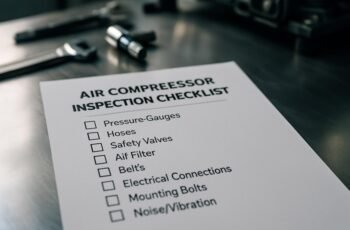
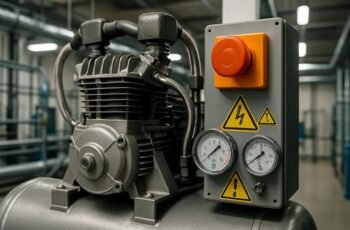
Chances are you’ve never mapped every stored-energy risk a single air compressor can pose, from sudden launches to hot surfaces. We’ll outline clear safety principles, PPE, lockout/tagout, and disciplined startup and shutdown checks so hazards are seen before they become incidents. If we don’t nail these basics now, a routine task can turn costly or injurious. Let’s build a practical, accountable plan you can implement with confidence.
Key Takeaways
- Understand air compressor dangers, including high-pressure projectiles, hot surfaces, stored energy, and ignition risks from fumes, sparks, or static.
- Follow lockout/tagout, verification, and documented procedures to safely isolate energy before maintenance or startup.
- Use proper PPE and protective practices; wear eye/ear protection, gloves, and secure seals and guards to prevent injuries.
- Implement disciplined shutdown, pressure checks, and guard inspections to maintain safe operation and readiness.
- Establish routine maintenance and quick-start checks with clear roles, loggings, and stoppage steps to reduce hazards.
What Makes Air Compressors Dangerous?
Air compressors are powerful tools, and their dangers aren’t obvious at first glance. We study how pressure, heat, and confined spaces create risk, so you stay safer. First, high-pressure air can launch objects, causing injuries or eye damage, even without a visible leak. Second, hot surfaces, moving belts, and stored energy can trigger burns or lacerations during setup or maintenance. Third, oil vapor, fuel residues, and electrical faults risk hazardous ignition when combined with sparks or static. Fourth, improper ventilation lets fumes accumulate, compromising breathing and fire safety. Finally, improper guarding or clumsy connections can lead to sudden releases. We emphasize controlled startup, pressure checks, and routine maintenance, so you understand how each factor contributes to overall risk and how to mitigate it with deliberate steps.
Core Safety Principles Everyone Should Know
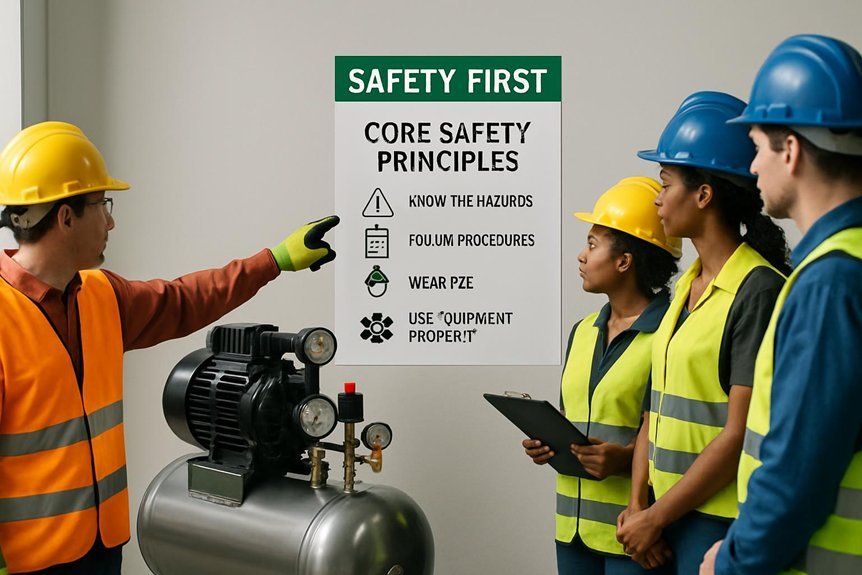
We’ve identified the core safety principles that apply across all air compressor tasks, and we’ll apply them consistently to every step you take. We communicate expectations clearly, verify system readiness, and lock out hazards before work begins. We assess risk with a structured approach, prioritizing controls that reduce exposure to pressure, noise, and moving parts. We maintain good housekeeping to prevent trip hazards and ensure proper ventilation. We follow manufacturer instructions, perform pre-use checks, and use qualified personnel for maintenance or repairs. We recognize topic drift and stay focused on essential safeguards, avoiding unrelated safety trivia that distracts from core risk management. Clear signaling, immediate correction of unsafe conditions, and documented procedures keep operations predictable and safer for everyone involved.
PPE and Personal Best Practices for Compressed Air
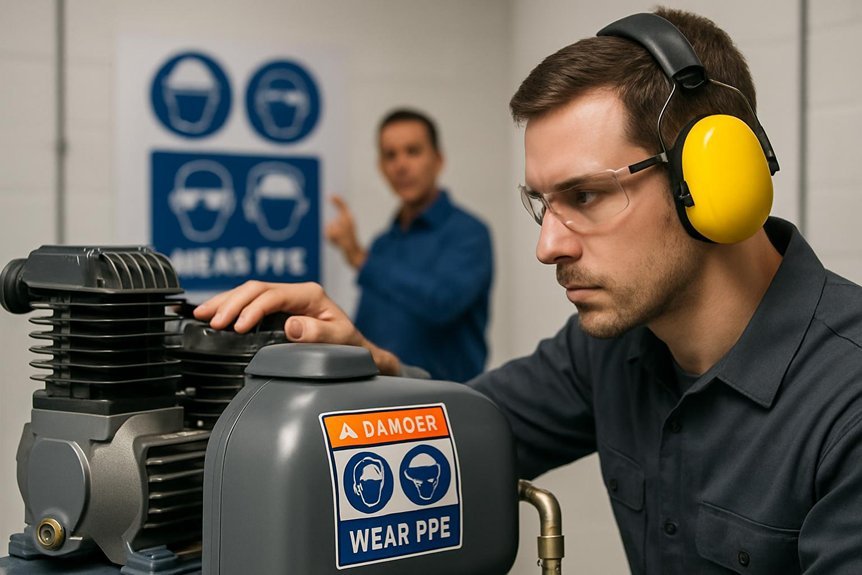
Do we consistently protect ourselves from the hazards of compressed air by wearing the right gear and following disciplined habits? Yes, and we guide you through practical PPE and best practices. Our approach is precise: select PPE basics that fit, inspect before use, and replace damaged gear promptly. Respirator use is reserved for true needs, with fit testing and user seals checked at every shift. We always seal connections, manage pressure, and avoid direct nozzle contact. Training reinforces disciplined routines, from donning to doffing, and documenting inspections.
| Item | Purpose | Reminder |
|---|---|---|
| Eye protection | Shield debris | ANSI-rated faceshields |
| Hearing protection | Limit noise | Earplugs or muffs |
| Gloves | Hand safety | Cut and impact resistant |
Lockout/Tagout Basics for Servicing
We’ll cover Lockout/Tagout Essentials, focusing on how to implement Servicing Lockout Procedures and follow Energy Shutdown Protocols to protect everyone involved. By outlining clear steps, responsible roles, and verification checks, we set expectations for a safe, compliant workflow. If anything isn’t confirmed off, we pause work and recheck all energy sources before proceeding.
Lockout/Tagout Essentials
Lockout/Tagout (LOTO) basics are essential for anyone servicing air compressors. We present these essentials in a clear, methodical sequence, so you can implement them without hesitation. First, identify energy sources—electrical, mechanical, and stored pressure—and confirm de-energization before work begins. Next, apply proper lockout devices and tagout notices, ensuring all affected tasks are paused until verification. We emphasize two word discussion ideas: plan, isolate, verify. Then, perform tagout verification to confirm zero-energy state and prevent unexpected re-energization. We require documented procedures that align with manufacturer instructions and recognized standards, and we recommend routine audits to maintain compliance. Finally, restore energy only after all safety checks pass, and remove Lockout/Tagout devices following established reenergization steps.
Servicing Lockout Procedures
When servicing air compressors, we apply Lockout/Tagout (LOTO) basics to ensure zero- energy conditions before any work begins. Our approach is firm, methodical, and verifiable, with clear steps we all follow. First, we identify all energy sources and assign responsibility for each. Then we isolate the equipment using appropriate disconnects, valves, and pins, followed by lockout devices and tags that communicate status. We test the absence of energy, ensuring components cannot re-energize. Throughout, we maintain clear communication with coworkers to prevent surprises. We emphasize servicing lockout as a routine precaution, not a one-off check. Tools calibration is integrated, confirming gauges, meters, and safety devices read correctly before work starts. Documentation records the completed controls and verification results for accountability.
Energy Shutdown Protocols
Are we prepared to halt all energy sources safely before any servicing begins? We’ll outline Energy Shutdown Protocols with clear steps and accountability. First, verify authorized personnel and establish a pre-job briefing. Identify all energy forms—electrical, pneumatic, hydraulic, thermal—then isolate them using approved energy controls. Apply locks and tags, test for zero energy, and document the status. Communicate the shutdown plan to the team, assign roles, and confirm revocation needs. During service, follow established shutdown drills to rehearse responses to unexpected energization. Maintain a clean, orderly work area, monitor for residual energy, and review procedures after completion. These energy protocols minimize risk, ensure compliance, and protect workers while you diagnose, repair, or adjust equipment.
Safe Startup and Shutdown Procedures
We start our Safe Startup by following a clear Startup Procedure that covers each step, checks, and actions before the first pressurization. We then outline the Shutdown Sequence Essentials to ensure depressurization and lockout is completed before any maintenance. Finally, we perform Pressure and Guard Checks to confirm proper gauges, safety devices, and guarding are in place and functioning before returning to standby.
Startup Procedure Steps
What are the essential steps to start a compressor safely and reliably? We outline a precise startup sequence that begins with a safety briefing and ends with stable operation. We verify power, inspect for leaks, and confirm guards are in place. We set controls to idle, perform prestart checks, then slowly engage the starter, monitoring pressure rise and motor current. We warn nearby personnel, then bring the unit to operating pressure with controlled ramping. We log readings and confirm interlocks are functioning. We confirm no abnormal vibration or noise before full load. Post-start, we document any irregularities and reset indicators. For clarity, follow this startup table during each cycle:
| Step | Action | Verification |
|---|---|---|
| 1 | Inspect | Leaks and guards clear |
| 2 | Prepare | Controls set to idle |
| 3 | Start | Observe pressure rise |
| 4 | Load | Stable operation |
Shutdown Sequence Essentials
Shutdown sequences close the loop on safe operation after a run. We approach shutdown with the same rigor as startup, confirming control and accessibility before any action. We verify depressurization and system stability, then proceed with energy isolation to prevent unexpected re-energization. We identify and isolate the primary power source, using lockout-tagout where required, and document the status clearly. We release stored energy from components only after confirming residual pressure is within safe limits and gauges reflect zero or non-hazardous values. We sequentially secure ancillary circuits, utilities, and controls, ensuring indicators show safe states. We communicate the shutdown plan, roles, and any deviations, and we maintain situational awareness throughout. This disciplined shutdown sequencing minimizes risk, supports maintenance, and protects personnel.
Pressure and Guard Checks
How do we guarantee safe operation before and after pressurized work? We begin with disciplined pressure checks, verifying gauges match anticipated values and no leaks exist along hoses or fittings. We confirm the system has fully depressurized when required and that relief valves are correctly set. Next, we inspect guard alignment: all protective barriers aligned, secured, and free of gaps that could permit access to moving parts. We test start/stop controls, ensure warning devices function, and verify drains are unobstructed. We document findings, address deviations, and re-check after any adjustment. Throughout, we maintain a calm, methodical pace, avoiding rushed actions. This routine minimizes unexpected releases and entrapments, supporting safe startup and shutdown while safeguarding personnel and equipment.
Typical Hazards and How to Prevent Them
Typical hazards in air compressor use include sudden releases of stored pressure, moving parts, and hot surfaces that can cause injury or burns. We recognize these risks and outline concrete prevention steps. First, we implement thorough hazard recognition by inspecting gauges, relief valves, hoses, and accessories before each use, and by confirming that guards are in place and intact. We control energy sources, depressurize when performing work, and shut down equipment for any abnormal noise or vibration. We maintain clear work zones, use PPE, and follow lockout/tagout procedures. We monitor vibration as a proactive indicator of developing faults, recording patterns, and addressing imbalances promptly. Finally, we train teams to respond to leaks, nozzle damage, and overheated components, reinforcing safe operating habits through routine, documented checks.
Routine Maintenance That Protects People
Routine maintenance isn’t optional—it’s a safety-critical, proactive discipline that protects people every day. We approach routine maintenance with discipline: we schedule checks, log findings, and act on failures before they escalate. We start with a clear plan, prioritizing high-risk components—belt drives, pressure relief devices, gauges, and electrical connections. Regular equipment inspection helps us detect wear, leaks, corrosion, and abnormal vibrations early. We verify calibration, test safety shutoffs, and confirm that guards and interlocks are intact. We clean and lubricate where specified, tighten fittings to spec, and replace damaged hoses promptly. Documentation is mandatory: we record dates, observations, and actions taken. By staying systematic and persistent, we reduce downtime, extend life, and keep our crew safer during every shift.
Quick-Start Safety Checklist for Teams
Have you got a quick-start safety checklist ready for the team? We do, and we present it as a clear, collaborative tool. This quick-start checklist focuses on critical steps before we power up: confirm lockout-tagout is applied, inspect hoses and fittings, verify guards are in place, and ensure emergency stops are accessible. We verify PPE is current and available, and we brief the team on roles and responsibilities to support team alignment. We document any abnormalities and assign owners for corrective actions. We emphasize communication: STOP if anything’s uncertain, proceed only with written confirmations, and log deviations for follow-up. This approach minimizes risk, shortens startup time, and reinforces consistent practice. With disciplined adherence, everyone understands how we start safely and stay safe.
Frequently Asked Questions
How Often Should You Retrain Staff on Air Compressor Safety?
We should retrain every 12 months, with interim refreshers as needed; our retraining cadence ensures ongoing competency verification, especially after incidents or procedural changes. We’ll verify competency through tests, drills, and documented assessments, updating records promptly.
What Signs Indicate a Failing Air Regulator or Hose?
We see signs indicating failing air regulators or hoses: pressure drops, sudden cycling, unstable output, fluctuating gauge readings, audible hisses, leaks, and visible wear. Indicators of hose degradation include cracking, bulging, soft spots, and brittle, aging materials, requiring immediate replacement.
Are There Industry-Specific Safety Standards for Compressors?
We follow industry standards and equipment compliance requirements, and yes, there are sector-specific safety standards for compressors. We’ll assess risks, apply precise guidelines, and ensure our practices align with applicable codes, regulations, and documented best procedures for your context.
How Does Humidity Affect Compressor Safety and Maintenance?
We’d tell you, like a lighthouse guide, that humidity raises humidification impact and accelerates corrosion risk, so we systematically monitor condensate, drain vents, and keep moisture control tight to protect performance, safety, and maintenance schedules.
What Incident Reporting Is Required After a Near-Miss?
We require incident reporting within 24 hours of a near miss and follow our near miss protocols, documenting cause, corrective actions, and witnesses, then review with the safety team to prevent recurrence and reinforce risk awareness.
Conclusion
We’m guiding you to treat every compressor like a sleeping dragon—warning bells, guarded doors, and calm hands at the reigns. When we start, we verify, we vent, we lock out what could wake it. We keep it clean, monitored, and spoken about, so risks stay painted in shadows rather than realities. Together, we document, own, and act—turning potential hazards into routine safeguards. Stay vigilant, stay meticulous, stay safe—and let safety be our default setting.